


What poker can teach you in life
Which attributes of a successful poker player can benefit them in other aspects of their life? Our coach KTU explores this question.
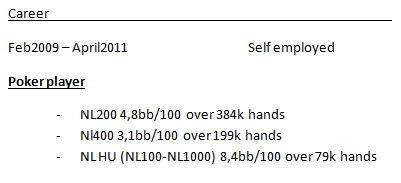 |
| Poker is not a typical section of a CV |
If you tell somebody that you are a poker player, it can lead to you receiving some funny looks - yet there are quite a few positive attributes associated with playing the game.
You read and philosophise a lot about the skills needed to beat the game sustainably, understand the variance inherent in poker, and properly invest your money.
Being able to acquire these skills and use them in your daily life, however, is the result of extensive training.
You can never stop working on yourself and improving
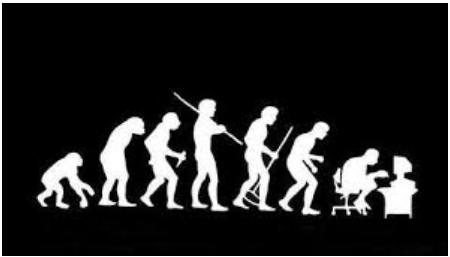 |
As a poker player you need to be rooted in the process of continually evolving; to make sure that you are as high up the food chain as possible so that you are the one that can eat and not get eaten.
Over time this leads to you taking on two attributes of successful people:
Firstly, you always look for your own mistakes first, and ask yourself what you could do better. You don't constantly blame your surroundings for your failure, ("the loser's mentality") and don't lose yourself in self-pity.
Secondly, you are constantly striving to improve yourself and are never satisfied with your game. He who stops improving is passed down the chain. You will already have followed the evolutionary process with your opponents.
"If you don't move with the times, time moves you."
A lot of people are missing these two attributes in everyday life. They only realise the consequences of their actions too late, or not at all. The cause and effect in relationships are therefore weakened and slowed down. This way you don't need to stand up for your mistakes, which can lead to you being complacent and ignoring problems for a long time. This goes on until suddenly a whole society is faced with unsolvable problems...
Making good, accurate decisions under pressure
Poker is a quick game. Most decisions need to be made in less than a minute and still be as precise as possible. Poker brings your intuition and analytical abilities into the fore: away from the tables you spend time learning poker theory and therefore train your pattern recognition. At the tables you then gather all the relevant information in a few seconds and decide which theoretical concepts need to be applied.
You aren't following your first impulse or gut instinct, but use the little time you have to check your intuitive decision and equip your game with a high degree of precision. In doing so, you combine theory with practice towards the goal of making good decisions.
Away from the tables you will often meet people who have never thought about the "quality of decisions". Some people tend to analyse too much (as well as aimlessly) until they can't even make a decision any more. Other people follow the motto: "the first thought is the right one!". Neither of these types of people wouldn't have good prospects in poker.
Thinking of money as an investment
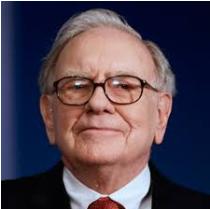 |
| Warren Buffet knows how to invest. |
Money invested properly leads to more money. Money invested the wrong way leads to less money.
As a poker player you learn to work with money. You look for profitable situations and make an investment there to increase your money.
For a lot of people money is a thing that they collect. They want to get as much as they can on their bank account and never let it go again. As a poker player you know that this "low variance" approach won't have the highest expected value.
You learn to cope with setbacks
The most important thing poker can teach you in life is this: after rainy days come sunny days and vice versa.
Not everything will always go right in poker. You will make mistakes, keep having bad luck, and then after many thousands of hands stand there empty-handed.
You learn that the lows are simply part of life; there are things that you have influence over, and others that are simply out of your control.
Discuss with us in the comments which attributes of poker players you think are positive or negative.
By ktu
