


When to check back with a flush draw
Dara O'Kearney reviews a hand played by our editor Barry Carter where he purposely took a non-GTO line.
We have 30BBs effective and are dealt KQ from early position. We open and get called by the Big Blind.
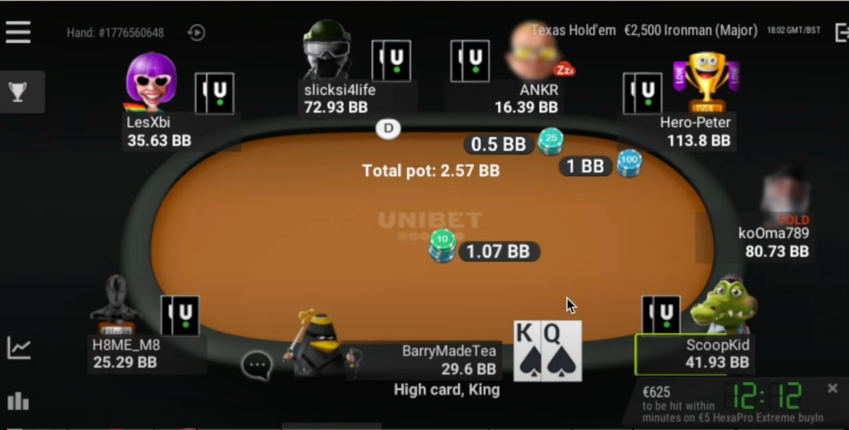
The flop is 364 which is obviously good for us because we have a strong flush draw and overcards. Most players would auto-bet this but we can't do that all the time, because if we check back and the turn brings a spade we never have a flush. I thought this was the perfect board to check back and I am pretty sure the solvers would agree because it favours a Big Blind defender. They can have 52/57 for a straight, all the sets, all the combos of two pair and all the good combo draw hands, which we cannot. We should be checking back a lot here.
Dara O'Kearney: Yeah he has all the straights and two-pairs we never have. Even a normally strong overpair goes down in value on this board. Therefore we should check behind a lot because we don't want to get check/raised.
We absolutely need to check back some flush draws for the reasons you stated. The better flush draws are the Ace high flush draws because they are drawing to the nuts and happier to call it off because he could be shoving a worse flush draw.
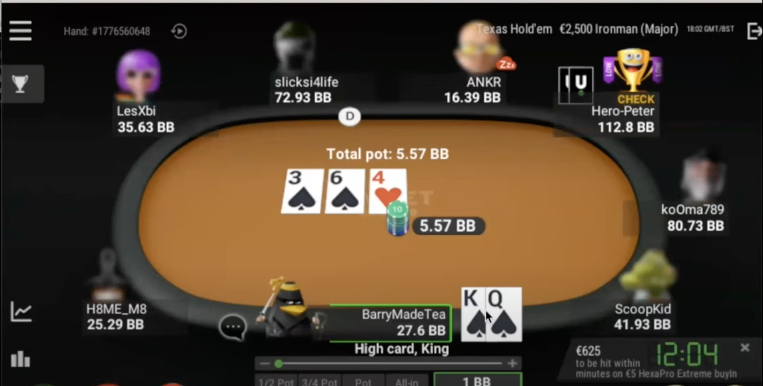
The turn is a J and he leads into us for a big sizing. Going with the same logic, raising would only fold out the bluffs of which he should have plenty, so I felt calling made sense.
Dara O'Kearney: He should lead a lot here, he should have a lot of flushes in his range. As an exploit I think I would raise here as a bluff a lot when I didn't have the flush. He should be betting small with most of his range here, the big bet sizing looks a lot like he has 6x and is trying to take down the pot. When you make a big bet size you give your opponent more incentive to raise. However, you had the flush so I agree with the call.
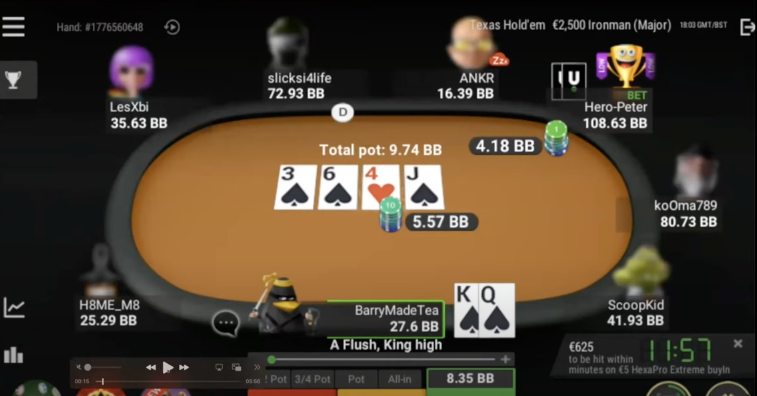
The river is a 2 which is good for his range as some random 5s get there. He checks. I think the solvers would bet big here, it strikes me as a polarised spot where we either have a monster or a bluff.
Dara O'Kearney: It would be a big bet in the solvers because you'll have the bare A for a bluff often too.
However, in-game I really didn't think he had much and I don't think the player population bluff-catches at the right frequency to overbets, so I elected to make a half pot bet.
Dara O'Kearney: Does that mean if you didn't have the flush you would shove here? Because you think he would fold.
Yes, sometimes I think I might.
Dara O'Kearney: OK. I just wanted to make the general point that you can't have it both ways. You can't say that you bet small because the person is overfolding, then not 'man up' and shove if you didn't have it. As played I think you should have bet bigger, there are not many hands that call a half-pot bet that won't call a three-quarter pot bet, for example.
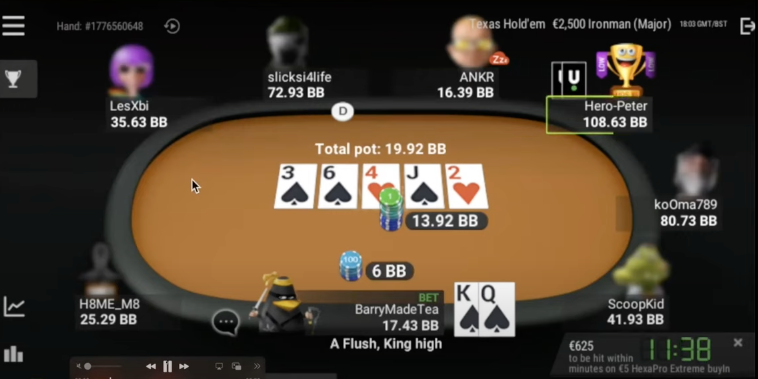
In the end he cry-called with K6.
Dara O'Kearney: All in all a well played hand, you got the result you wanted and he wasn't really supposed to call there. This is a good example of why it's valuable to know the GTO solution even if you are going to take an exploitative line. GTO is a baseline strategy that you need to know to know what you are deviating from.
Thoughts on the hand? Let us know in the comments:
