Poker and the value of money
Lee Davy wonders if the younger poker players have the respect that money deserves?

I have a friend, who has a friend, who has a son, who has been playing football for Liverpool FC since he was six years old. This year he turns 16, and it’s crunch time. He will find out if he gets a spot in the coveted Liverpool Academy, or whether he is back down the local park with his mates. If this 16-year old kid is successful, he will be rewarded with a £70,000 per year salary.
SCREEEEECCCCCHHHHH!!!!!
That’s around £1.3k per week!
You must be having a laugh?
When I was 16, I left school and started working in a factory that made kitchens. I was given a weekly salary of £31, I gave my parents £10 for lodge, and I spent the rest on beer. I don’t ever remember not having money whilst I was in that job.
What would I have done with £1.3k?
Now that’s an interesting question that relates to poker. I’ll get there, just bare with me.
Money doesn't grow on trees
I have a pretty screwed up belief system when it comes to money. As with most beliefs, I didn’t create them; instead I inherited them from my parents.
Here are my beliefs from childhood
- Money doesn’t grow on trees
- It was sparse
- You have to work hard to earn it
- I couldn’t have any
- We didn’t have any
- There wasn’t enough
- Money = power
- Money = cool
- Money = big ego
- Money = intelligence
- Money = stature
So I grew up believing that it was difficult to get hold of money, and when you got it, you wouldn’t get a lot of it. It also meant that I didn’t have much as a child in the way of material things.
How did this manifest as I aged?
Terribly.
Disrespect for money
I decided that I was going to have everything that I didn’t have when I was a child. It also affected my relationships in a bad way, with the issue of money raising its head in a negative sense all of the time. Those beliefs, coupled with a gambling problem, and I was staring down the barrel of £30,000 worth of debt.
Now what would have happened if I was given £1.3k per week?
I’m not sure, but my prognosis is not good. I know one thing for sure, my complete disrespect for money, coupled with my desire for high risk gambling, would have ended in disaster.
Which brings me to poker.
Lazy attitudes to money
I was fortunate to be working at the World Poker Tour Alpha8 event in London recently. It was a £60,000 buy-in event and I knew one of the overseas players, who told me that he had wired £120,000 to the casino so he could have a rebuy should his first attempt go awry.
Pretty standard I thought.
But that wasn’t the case.
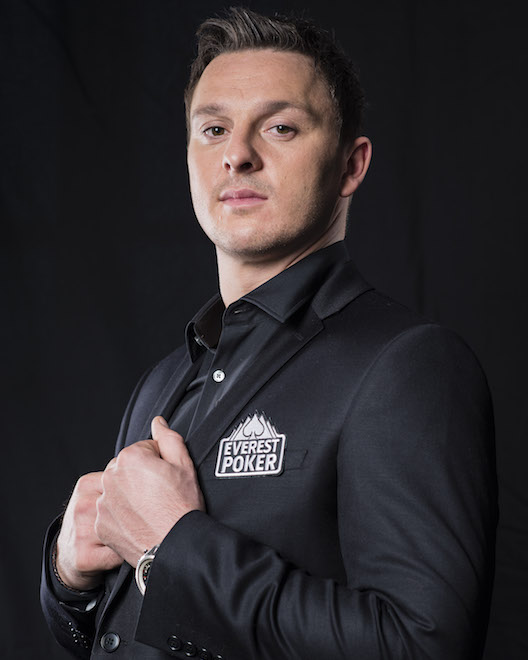
As players busted out, they had to ask other players to loan them another buy-in. During the break I spoke to Sam Trickett about this and he told me that over half the field only turned up with one bullet, but they all had intentions of firing more than one should they need to.
He continued to tell me that this happens a lot, and he believes it’s borne out of an almost lazy attitude and disrespect for money that some poker players have when they earn so much at such a young age. One suspects that Trickett was also speaking from previous experience after going broke once before in his career.
Money flows like water
I want to make something clear before I proceed. The poker community consists of millions of players from every corner of the globe. Not all them can be, or should be, tarred with the brush that I am about to use. Instead, these views come from my own experience with young poker players since I have been in the industry.
I believe there is a real problem concerning a lack of respect for money in this business, and I also believe that this disrespect for money contributes to a lot of the problems that exist in terms of cheating and scamming allegations. It’s also a reason why so many players are broke, if not on the breadline.
Money flows in and out of poker as liberally as water. The sums of money that people win are huge, in comparison to the physical exertion that one applies. Young poker players, in their early twenties are earning more money on a Sunday Grind than their parents earn in a few months.
If this is what you are used to, at such a young age, how difficult must it be to respect money. And before you fly off the handle and accuse me of attacking young poker players, I have interviewed enough of them to know that this has been a problem in the past, and I can’t see anything to change the pattern in the future.
How you earn it determines its value

In her great book “How to Become a Money Magnet” by Marie-Claire Carlyle, she talks about an interesting theory that I think might relate to the problem that some young poker players encounter.
Carlyle hypothesizes that there is an ‘energetic link’ between money and the way that it’s been exchanged. In short, how you earned it will likely determine the value that you impose on it. Going back to my parents, who felt they worked damn hard for their money - they are going to respect it, and value it more - and they did.
So what about the professional footballer?
Well, you could argue that they work hard for their money, but there is an even stronger argument that they are getting paid to do something they love. When you love football the game comes easy to you - and so theoretically they would place less value on their money and respect it less.
I think the same is true for poker.
Carlyle says: “The amount you value your money can be directly proportionate to the amount that you value what you have provided for in exchange for that money.”
Like the Premiership footballers there is a case to say that poker is a very tough sport. Long hours sitting at the table, the psychology of losing and dealing with variance - I understand that. But it’s still not really that hard when you compare it to 12-hours working on a building site is it?
Invest back in yourself

All poker players will be acutely aware that they could be doing something else that is far worse than playing poker for a living. This is why you see a lot of poker players leaving to pursue other interests when they are financially secure, and at the other end of the scale, so many players are barely keeping their head above water, and yet will never dream of finding an alternative form of employment.
There are many ways of improving your poker game, but I will leave this post with some wise words from the young British Pro, Jamie Sykes, who will be the first to admit that he fell into this category when he first entered the fray.
“There is no set structure that you can follow, so it’s very easy to fall by the wayside, or completely ignore important parts of your personality like social and personal development. Some people get extremely good at poker, but they forget to develop as an actual person, and they are incapable of having successful relationships, function in society, and be happy.”
This is so true.
Give your money to the online poker training sites, but also invest in your own development, and this includes learning and understanding how your beliefs about money affect your life.
Respecting money is not only going to improve your life, it will also improve your performance at the tables.