


Cates and Trincher make claim in Ivey edge-sorting case
Another twist in the $10.16 million case against Phil Ivey as Daniel Cates and Illya Trincher have made a claim to money seized by the Borgata.

An interesting development in the ongoing legal battle between the Borgata and Phil Ivey. When we last checked in the Borgata had frozen Ivey's winnings at the World Series of Poker and now there is a third party claim to get them back.
This all goes back to Ivey's now infamous 'edge-sorting' case in 2010 and 2012. Ivey and partner Cheung Yin Sun were able to spot imperfections on the back of playing cards playing baccarat. Ivey won $9.6 million but his winnings were ruled unlawful and he has been ordered to pay back $10.16 million to the Borgata. As a result the Borgata had Ivey's recent WSOP winnings frozen by the US Marshals Service.
Daniel Cates and Illya Trincher have filed an objection to that seizure on the grounds that they had a stake in Ivey's $50,000 Poker Players Championship 8th place cash for $124,410, and as such were due the buy-in back plus 50% of Ivey's profits. In this case that would be $87,205.
An unprecedented case
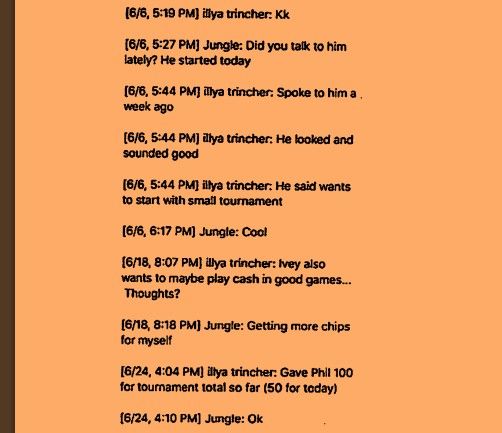
Phone logs of a conversation between the two men were used as evidence that they had a piece of Ivey in the event.
Flushdraw.net have reported on the case in detail and have suggested it could set a precedent for how future legal cases which involve staking deals could proceed. It appears that Ivey was aware his winnings could be seized, but Cates and Trincher were not. That could mean if they want to pursue their money they would have to make a claim against Ivey, not the Borgata. If the court ruled in their favour it could also open the door for poker players to avoid their legal responsibilities by claiming they were staked after a ruling against them.
The legalities of the case aside, this story might actually surprise some poker fans simply because of the fact that Phil Ivey was staked by anyone. Ivey is a player who was once an enigma considered to have incredibly deep pockets, now the court case has seemingly implied he does not have the assets to cover the $10.16 million case against him.
How should the court rule in this case? Let us know in the comments:
