


Column: How do we measure greatness in poker?
Following Daniel Negreanu recently claiming that Tom Dwan was not the great player most people think he is, Barry Carter asks if we can ever truly know how good someone is at poker?
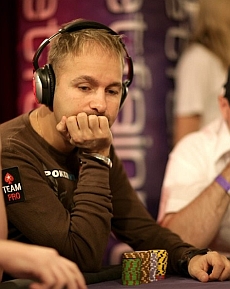 |
| Negreanu causes controversy again |
Last month an interview with Daniel Negreanu caused quite a stir in the poker community, as Kid Poker was quoted as saying he didn't rate Tom Dwan's game.
He said "I don’t think Tom is one of the best [in the world] – I don’t know if he ever was. He got elevated after his appearances on High Stakes Poker because he ran well and played well, but realistically he doesn’t put in the time or practice playing now [to be one of the best in the world].’
He went on to say: "A lot of the guys like Dwan, Phil Galfond and the Dang brothers didn’t grind their way to the very top – they just had enough money for the perfect storm when Guy Laliberté lost $17m and they all got a piece of that. Any grinders who were able to play in those games would have won that money."
It is not the first time Negreanu has caused controversy by speaking his mind and this interview appears to have upset a lot of people in the poker community. Dwan and Galfond are considered by many to be some of the best cash game players in the world, with very few people arguing otherwise.
What most people appear to have missed from this interview was that it took place not in the last few weeks, but in March during the Professionals vs Team PokerStars exhibition match. Dwan and Negreanu were on opposite sides, but still working for the same employer. The likelihood is that while it may have been based on some genuine opinion, it was most likely a bit of showmanship to hype up the match.
However it did get me thinking about how we all judge ability in poker. It is hard to argue that Michael Phelps is not a great swimmer or Lionel Messi is not a great footballer, but poker has so many unknowns that we can never be quite so sure.
It seems ludicrous that Negreanu could consider Tom Dwan anything but an amazing player, but there are so many intangibles that none of us will ever know about that we can't completely argue against him. Likewise there are players we all think are amazing, whom we discover later down the line are actually long term losers.
Respect, bias and self interest
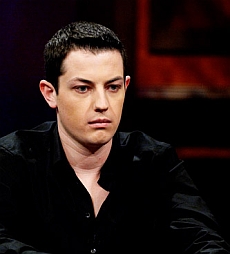 |
| Is Dwan one of the best? |
We are all heavily subject to biases in poker, so it is difficult to determine whom we should listen to on this. For example, most of us remember the amazing Dwan hand from High Stakes Poker, which for me will always make him a legend. However as Negreanu suggested, that might have just been a one off moment where he played really well and ran really well, but a standard he is not able to maintain over the long term.
Negreanu has played Dwan, maybe over thousands of hands, and knows him personally. He will know things about his game that we don't. In equal measure, there will be an element of bias in which Negreanu probably doesn't give Dwan credit in instances where he outplayed him.
The confirmation bias is very prevalent in poker; we tend to believe our losses were bad luck and our wins were skill, and in the arena of nosebleed poker this may have swayed Daniel's opinion on Dwan, as it does all of us to some extent.
We also can't trust what many of the high stakes players publicly say about each other because there is always an element of self-interest as the player pool is small. Some players do not want to show too much respect for someone they play against regularly as it might give them a confidence boost.
In other instances they might purposely needle a player to get action out of them, and in others they might be overly respectful to another to give that player a false sense of confidence against them.
Cash is king?
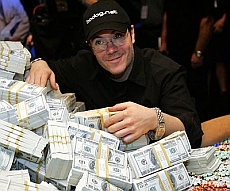 |
| Does the biggest win mean the best player? |
For many the only thing that matters is money. The best player is invariably the person who has won the most money.
Of course we all know that variance can quickly scupper this argument. By that logic Jamie Gold and Jerry Yang are two of the best players in the world.
Negreanu says it himself, suggesting that the only reason Dwan is the force he is today is because he got in at the right time to take on Guy Laliberté, who was dropping millions for fun at the nosebleed tables online.
While I agree with the notion that taking a shot at the right time and running well does not make a player instantly great, I would also suggest that the two most important skills in poker for some reason are sneered at by the pros.
Those skills are bankroll management and game selection. You can't knock Dwan for taking a well timed shot at a juicy game. Game selection is vital to survive in poker, yet often players get needled for not manning up to take on players whom they have no edge over, and get called 'bum hunters'.
I am of the opinion that a so-called great player who goes broke because they ignored game selection and/or bankroll management is not a great player at all. They are an incomplete player, no different to a boxer who has a great punch but a glass jaw.
Consistency over the long term
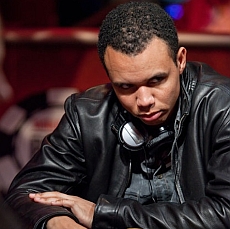 |
| Ivey is most people's #1 |
I'm not saying we cannot form opinions about how good a player is on any of the criteria above, just that we should take them all with a pinch of salt. The truth is we are never likely to know how good a player is, there are simply too many unknowns to ever provide a definitive answer.
The only thing we should ever really be looking to prove is some element of consistency. It seems Negreanu is one of the few people to publicly doubt Dwan's game, so we probably shouldn't form our opinion based on that alone. There are very few people in poker, however, who don't say Phil Ivey is the best. That overwhelming weight of opinion is probably a very reliable measure of his skill.
Likewise we should look for consistency in results over time. One good series or even one good year at the cash tables does not make someone great.
But when year on year you find yourself at the top of the cash game money rankings, or you boast bracelets and titles over the course of a long career, maybe that is enough to prove how good you are.
By Barry Carter
Read more columns by Barry Carter l Follow Barry Carter on Twitter
