


Interview with SpinLegends head coach 'coffeeyay'
KTU chats to Adam 'coffeeyay' Sobolewski about maths, HUSNGs and SpinLegends, the new staking site for Spin&Go.
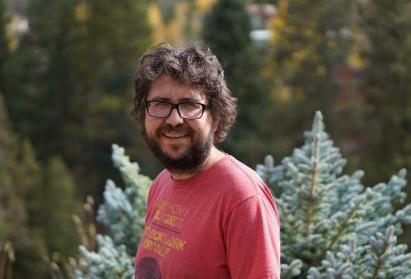
Who introduced you to poker and how long did it take you to accumulate your first $10,000 in winnings?
coffeeyay: I learned about poker from seeing it on the television when I was in high school. No specific person introduced me to the game. I played casually while I was a student, and within a year of going full time I had made my first $10K.
You are known as one of the best HUSNG players around. Why did you choose this format instead of ‘normal’ heads up cash games?
coffeeyay: I found short stacked play, which is crucial to HUSNGs, to be more interesting because it felt more ‘solvable.’ I also found I enjoyed the complexity associated with constantly varying stack depths as it forces you to always adjust to the situation.
"Your biggest downswing is always in the future"
What was your biggest downswing? Did you ever consider quitting poker?
coffeeyay: One of the most valuable lessons I've learned is that your biggest downswing is always in the future. So in that sense I can't say as it hasn't happened yet. Recently I went through a 15K downswing at $100 spins (over less than 1K games). I'm sure I've gone through bigger in the past, and I'm sure I'll go through larger ones in the future, but it's not something I think about too much. Part of our earnings as poker pros come from surviving such downswings, they're just part of the game. I've never seriously considered quitting. From the moment I first played a hand of Hold'em I always wanted to play more.
What do you consider your biggest victory in your poker career?
coffeeyay: My greatest victories have all come at the hands of my students. I spend so much time studying and helping others, that the best moments are seeing people succeed. I've had multiple long term students go from low stakes to beating high stakes and being considered some of the best players in the world. Each such student I consider to be pivotal ‘victories’ in my career.
You have a master degree in mathematics. Do you use some very advanced mathematical concepts for poker?
coffeeyay: I think a lot of people have the wrong idea about maths. They think of numbers and equations and computing things. Advanced mathematics is really about manipulating abstract concepts and being able to use rigorous logic to prove assertions. In this sense, I use such concepts all the time. I apply the type of thinking I learned in maths to how I think about poker.
In a more direct sense, my thesis was about classifying different types of knots (think of a piece of string that you play with a lot and then glue the ends together) using cohomology theory. None of this (sadly) applies to poker. On the other hand, I also have a degree in physics and occasionally I've found a couple places where I could use tricks I learned to solve physics problems to solve, or redefine, poker problems. Mostly though I think it's been good for having a refined intuition for solving situations as precisely as possible.
"It's most important to work on weaknesses"
A lot of our members struggle to find a good balance between theory work and playing. What is your approach here?
coffeeyay: I think it's important to maintain a ratio between study and play. If you track the hours you spend studying, and the hours you spend playing, this can be easy to compute. Generally something like a 3:1 ratio of play:study is good for beginning players. As you progress, you'll want to increase the amount of time you play.
What kind of theory work is most important and easiest to apply to make steady progress?
coffeeyay: I think it's most important to work on your weaknesses. As you hammer away at the weak points in your game, one by one, you grow the fastest as a player. Weak spots may each be different and involve a different approach to fixing them, but as you continue you'll find it gets easier. You'd think that eventually you'd be done with studying. But in reality, as you continue to learn you realise that what you previously categorised as your strong points you now consider weak. After that, you go back to the places you thought you had mastered and realise that there's even more to learn. Poker is so complex that the learning never ceases.
How would you rate yourself on a scale from 1-10, with 1 being “I play only exploitive and read based” and 10 is “I don’t play many exploits and stick to correct GTOish poker as much as I can”.
coffeeyay: I think this question disguises one of the most important elements of near-GTO poker. GTO looks to maximise its expectation (ie maximally exploit its opponent) given the constraint that your opponent is trying to do the same. So in reality, the two ends of your scale overlap. In many situations playing near-GTO is the same as playing exploitatively and read-based. In the end, I strongly believe that we should always be looking to maximise our expectation. GTO is simply one tool in our arsenal to do this. Because many players are quite far from GTO, I guess the closest answer I could give is something like 1 or 2 (maybe 3), but the reality is that to be able to do 1 perfectly you should know how to do 10, and in some situations playing 10 and 1 are the same thing.
"Small edges can be worth a lot"

Some cash game players are surprised that it is possible to generate edges against other regulars in $60 / $100 Spins. “It’s 25BB poker, how hard can it be?”. What’s wrong with this argument?
coffeeyay: A number of things are wrong with this. 25Bb poker is very different from 15bb poker, which is very different from 10bb poker, which is very different from 5bb poker. On the other hand, 70bb poker, 100bb poker and 150bb poker are extremely similar. So you can ask ‘you're only playing 100bb poker and no other type, how hard can it be to just learn one thing?’. On top of that, poker is very complex at all stacks because there's still so many decision nodes. There are many different lines you can take, and ranges are very wide HU, so there's a huge amount of decisions even short. There's a ton of post flop play. Push/fold only starts 5bb.
Another big thing that players miss is that edges when measured in bb/100 can be smaller than 25bb, but when measured in chips or dollars can be higher. What I mean is that if you're playing a $100 HUSNG and have 25bb (with 50bb in play between the two players) one big blind is worth approximately $4. So a small edge can mean a lot of money! If you're buying in for $100 at a cash-game, and getting 100BB, you'd need a 4 times higher bb/100 than the 25bb HUSNG player to make the same money per-hand. Our edges just look smaller at first glance, but to someone looking to make money they get magnified because each small edge is worth so much cash.
"Old habits die hard" - how are you planning to teach SpinLegends players so they get rid of the strategy or mindset problems that are preventing them from winning?
coffeeyay: In the end, as poker professionals, we should all be striving to earn as much expected money as possible. There's no other score card in poker. If a strategy earns you more money you should switch to it. I understand that some people have trouble opening their minds to new concepts, but in the end I think greed is a pretty good driving force. It's hard to say more than this, since the classic poker answer of “it depends” applies pretty well. Each person is different and has different issues, so I try to tackle each unique situation to the best of my ability.
Thanks coffeeyay we cannot wait to hear more from you and SpinLegends.
If you are interested in excelling in the best new online poker format as well as getting the bankroll to do it, submit an application to SpinLegends today.
