


"Just Shut Up and Deal" - Interview with PokerStars Pro Shane "Shaniac" Schleger
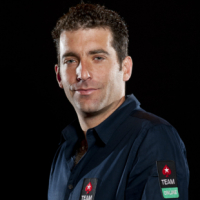
PokerStars Team Online Pro Shane "Shaniac" Schleger is an online MTT veteran who has been forced to relocate from the US to continue playing. We catch up with him to talk Black Friday, his image, super high rollers and more.
"There are fewer expert grinders online since Black Friday"
 PokerStrategy.com: What has it been like living outside the US to play online poker?
Shaniac: It's been an experience in adjustment and being taken out of my comfort zone, but that's a mostly positive thing.
I guess I still find it to be a little lonely and isolating to be in a foreign country working in a "home office", and it's still bizarre that I have to leave my own country just to play poker online.
There have been a lot of positive aspects to it too, mostly in the sense of broadening my world view and testing my ability to respond to adversity.
PokerStrategy.com: Will you be rushing back to the States when online poker returns?
Shaniac: The short answer is "yes." Mexico is fine, but my heart is still in America, and that will always be my one true home.
PokerStrategy.com: Have online tournaments gotten noticeably softer since Black Friday?
Shaniac: I would say yes, or at least they've remained beatable. There seems to be a steady stream of new money that flows into the tournament economy, and there's also the effect of many superstar players being sidelined at any given time by being on US soil. On a day-to-day basis, there are fewer expert grinders playing than there were pre-Black Friday.
"Live skills are harder to hone than the skills needed for online"
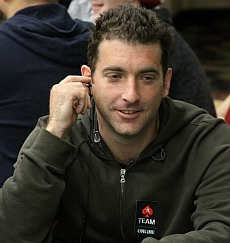 PokerStrategy.com: As someone who has played thousands of online tournaments, would you say live events would require decades, or longer, to get an accurate idea of how good a player is?
Shaniac: It's hard to answer. People say it takes thousands of tournaments to come up with a statistically meaningful sample size for live events, but I think you can look at some of the people who put up results year after year and safely assume they are "good", or are doing something very right.
I think succeeding in live poker has so much to do with functioning well "in the moment" and being psychologically on-point, so maybe the sample size argument becomes less relevant.
PokerStrategy.com: Does the sheer volume of online games it is possible to play mean online players should have perhaps the biggest advantage against their live counterparts in tournaments than in any other form of poker?
Shaniac: Not at all. Having experience with a lot of hands helps you play correctly in a lot of situations, but it doesn't really help with the things that I think are more important when you enter the live arena from an online background. I think you can do well online by playing a technically sound game.
Playing live, you need to come equipped with more soft skills that are difficult to acquire: psychological composure, the ability to make technical and non-technical reads in high-pressure situations with eight other real people staring you down, stuff like that.
For me, the skills needed to win live are a lot harder to hone (and to maintain) than the skills that make a good online player.
PokerStrategy.com: What is the main appeal of live tournaments? The money, the fun, or the prestige?
Shaniac: The money should be the only real "appeal" of any poker effort, but considering there are more reliable ways of earning an hourly rate in poker than playing live tournaments, I guess it's fair to say there is a certain underlying sexiness to the pursuit of winning a live poker tournament.
There's a glory factor, but as I have gotten older, the glory factor has become less of a draw for me (which is partly why I skip most live events and play mostly online these days).
"Super high rollers are perversely fascinating"
PokerStrategy.com: What percentage of circuit pros would you say are staked?
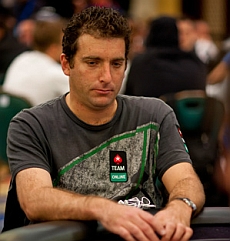 Shaniac: I don't have my finger on the pulse, but a high percentage. If you consider the prevalence of super high roller events and that almost every circuit grinder sells or trades pieces before playing those, I guess you could almost say it's pretty close to 100%.
PokerStrategy.com: What are your views on these super high roller events?
Shaniac: They're perversely fascinating. Generally what I find interesting is who plays. That's more interesting to me than the results.
I was totally engaged by the One Drop right up until the cards were in the air. Seeing who would actually wind up with a seat was exciting, but then it became less interesting to see who would win.
To a somewhat jaded spectator like me, seeing a super baller poker player win 15 to 20 times his buy-in in a high roller event is neither more exciting nor impressive than whatever it takes to have your shit together to be firing $100,000 bullets in tournaments to begin with.
PokerStrategy.com: You're quite a veteran of the online game, do you still feel like one of the new guys, or the old school (or the new old school)?
Shaniac: There's an agelessness to poker players. It doesn't matter how long you've been playing, it only matters how well you play fourth street.
"I want poker to remain fun and friendly"
 PokerStrategy.com: Alongside Daniel Negreanu, you have always struck me as one of the more outspoken and honest sponsored pros. Do you agree with this, and how important is your image in the poker community?
Shaniac: I enjoy writing and communicating with people, and I strive to be an effective communicator, and maybe that's where that reputation comes from. But in reality I don't give myself the leeway to be nearly as outspoken as Daniel!
You'd be surprised at how often I bite my tongue. My "image" within the community isn't so important to me, but having productive interactions with people is something I value.
PokerStrategy.com: I've several times heard you referred to as a "Pro's Pro" - does this mean anything to you? Is the reputation and advancement of the game important to you?
Shaniac: That's a nice designation, but I'm not sure it's accurate (I think someone like Shaun Deeb or Matt Glantz is a better example of a "pro's pro").
But I like it in the sense that I think it reflects my ability to get along with a wide variety of players in the game over the course of many years; whether it's 20-something kids who are super passionate about the game and make fun of me for being old and withered - or guys who have been playing for decades longer than me, whom I don't consider old or withered! Again, there's that agelessness in poker.
I think the "reputation and advancement" of the game is important to me in the sense that I want poker to forever remain fun and friendly for a wide variety of people, but in general people spend too much time thinking about things that are out of our control and sort of meaningless: the game's image, what's "good for poker," and whether it's a game of luck or skill.
Just shut up and deal!
