


Understanding Luck: Fooled by Randomness
The wilder the success, the more likely luck played a major role, which is something we can easily recognise in poker.

I’ve written previously about the work of Nassim Taleb and I’m sure I will again, because he is required reading for any poker player who wants to understand variance. Perhaps his most famous book in this area is Fooled by Randomness: The Hidden Role of Chance in Life and in the Markets, which argued that randomness plays a much bigger part in outcomes (especially success) than many of us can comprehend.
It’s clear why such a book would hit a nerve with poker players, given we all know that this is a game where short term luck can influence the outcome of major events. Just look at the event we are fresh off of finishing, the World Series of Poker Main Event. We have had some exemplary champions over the years, but nobody can seriously argue that winning the Main Event makes you the best player in the world the same way that winning the Olympics, the World Cup, Wimbledon, the Masters or the World Heavyweight title can in other sports. We’ve even had recreational players and people playing their first ever live tournament win the Main Event (not to mention multiple instances of people winning bracelets in formats they have never played before).
Wild success = variance
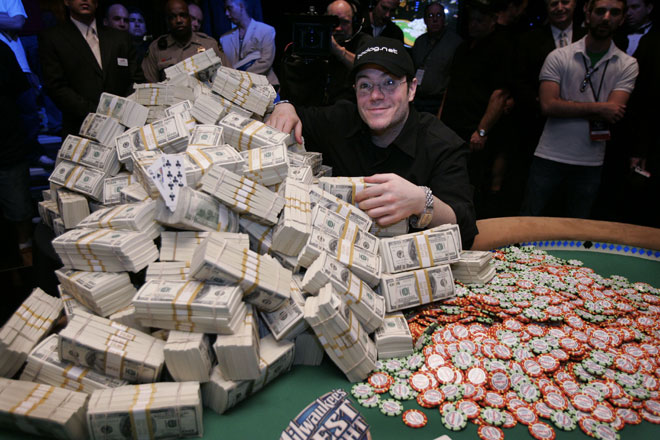
One of the central ideas in Fooled by Randomness is that small successes can be explained by talent and had work, but wild success is usually down to variance and luck.
I don’t really need to spell this out in poker but let’s do it anyway for fun. If you look at the All Time Money List you will see Jamie Gold in 55th with $12,592,641 and William Alex Foxen in 58th with $12,222,905. Foxen is currently considered one of the best most consistent players in poker, currently on top of the GPI rankings (and top 5 in the online rankings) and has held the record for the longest time at the top. Gold is considered as one of the standout examples of somebody simply running like God in the Main Event. Gold won $12 million in a single tournament, Foxen’s biggest cash just over $2 million but has a string of six-figure wins under his belt.
If you could play out Foxen’s career 1,000 times in a simulator it probably would show a lot of similar records (though he may currently be on the running hot end of these simulations), whereas you would probably never see Jamie Gold win anything of note again.
That which came with luck can be taken away with luck
This is precisely why we concentrate on ChipEV rather than cash results at SpinLegends. As we have shown, the upside of Spin & Go can be ridiculous, you can literally play a $5 game and be a millionaire in an afternoon. However, most of the time that won’t happen. A positive ChipEV result is a much smaller success in Spin & Go than winning a 1,000x multiplier, but it is a much more reliable indicator of skill.
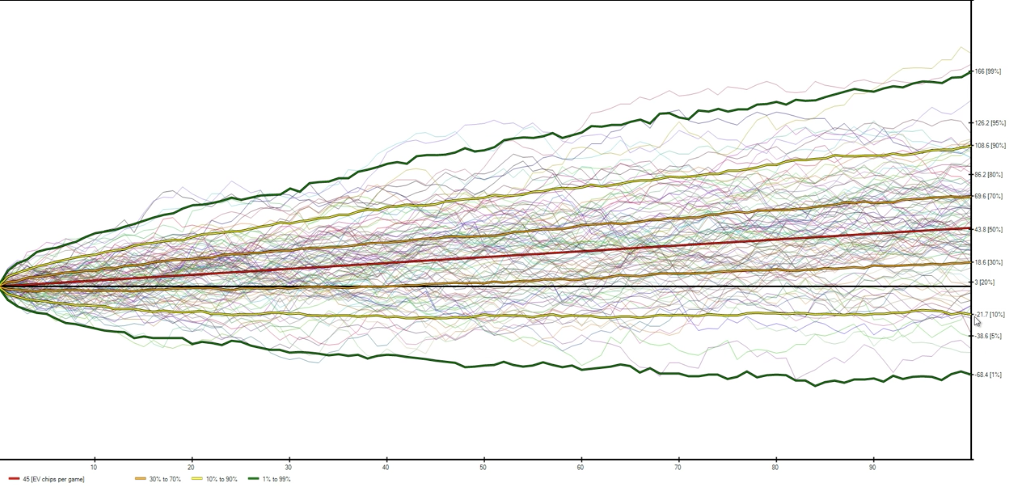
Taleb also makes the point that “that which came with the help of luck could be taken away by luck”. Again, this is something poker players should be acutely aware of. We have all seen examples of players who run insanely hot at the tables, attribute it all to skill, then either turn professional and/or play much higher stakes and lose it all because of overconfidence. Similar to lottery winners who go broke within a few years.
In these cases Taleb argues that in these case one should keep doing what is working, but limit your downside. So if you do happen to win the Main Event don’t jump into the Super High Roller tournaments just yet. Don’t jump up in stakes after a big win, or if you do set a stop loss and/or sell action.
Recognising when a result is largely due to variance is a massive skill in poker. The vast majority of mental game leaks we encounter are fueled by a misunderstanding of how big a role luck played in our wins and losses. You can also overestimate how big a role chance played in the outcome of your poker results, but that seems like the lesser of two evils in this game.
Related articles
- Understanding luck: The Matthew Principle
- Understanding luck: Four Types of Luck
- Understanding luck: Personality Traits
- Understanding luck: Hunches
- Understanding luck: Attitudes
Are you a fan of this book? Has it influenced your poker? Let us know in the comments:
