


Would elite poker players be better off on Wall Street?
A lot of top poker players have expressed an interest in trading - would they be better off putting on the shirt and tie again?
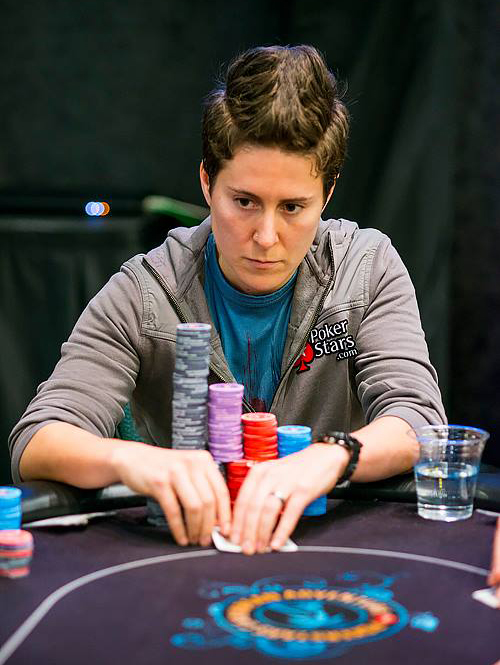
Last month Vanessa Selsbt invited anyone crushing poker to interview for her trading firm Bridgewater Associates. It was quite a surprise to see Selsbt retire from poker to work for them when she did, but no surprise to see her invite other poker players to do the same.
It makes perfect sense that Bridgewater Associates are interested in poker talent. Obviously Selbst is working out well for them. Top poker players are highly intelligent and understand risk better than most, or at least they are not afraid of it. Poker players are often contrarians and you want out of the box thinkers for roles like this.
What really surprised me was how many established poker pros publicly told Selbst they were interested on Twitter. Patrick Leonard, Chris Kruk, Mike Leah, Michael Acevedo, Daniel Zack, Nathan Gamble, Christian Harder, Andy Wilson, Randy Ohel and Jonathan Little.
In that list we have some of the game’s current biggest crushers and the reigning WSOP Player of the Year. In addition, Jonathan Little is perhaps not known for being an elite player, but he is certainly one of the most successful businessmen. In short, the list was full of people I am pretty sure are crushing their trade in poker.
With such a high number of poker crushers expressing interest, it makes me wonder whether poker is actually much tougher to make a living in than we think, or is it just that elite players are mostly interested in making more money, whatever the method?
A cap on poker winnings?
It is very clear that there is a cap on poker winnings. If you ignore the outliers in the Main Event, even the Super High Rollers are probably winning less than we think. A player like Jason Koon has just over $4 million in live winnings in 2022 so far, but when you factor in that his average buy-in might be $25,000, he will play lots of six-figure buy-in events this year, plus he will be swapping/selling pieces – his take home may well be much less, and that is before tax.
I think the fact that poker winnings have a cap and the game is getting tougher is no surprise. Perhaps the biggest surprise to outsiders is just how much work is involved in poker. It used to be the case that the college dropout would gravitate to poker in order to avoid the 9-5 in an office. These days elite players grind really long hours and spend almost as much time looking at solvers – is it really as much of an escape from ‘real work’ as we once thought?
Ultimately though I think the answer is that elite players like solving problems and like to treat making money like a game. If there is a game out there where you can make more money than in poker, of course they are going to be interested. I don’t think it is greed at all, I just think poker players are wired this way.
Will we see a mass exodus to trading from the elite? I doubt it, I think all of the players mentioned above are poker lifers and ultimately the autonomy that comes with poker will sway them back in this direction. But good poker players know a thing or two about game selection, so don’t be surprised if some of the move over to a different game entirely once in a while.
Would you make the move from poker to trading? Let us know in the comments:
