


How overconfidence could be your downfall
Grigoriy 'ahlinpoker' Skrypnik continues to unravel the mystery of our brain's perception distortions.
We continue discussing cognitive distortions and how they affect our poker play. The first two important ones were described in my previous article.
Supporting your own theories at any cost
Often we've been told that success in poker lies in our own hands, we just need to invest time in working on our game. In other words: learn, expand your knowledge and train your perception and your bankroll will start growing. However, once again, evolution manages to plant the proverbial fly into our ointment – a tiny but nevertheless disgusting creature.
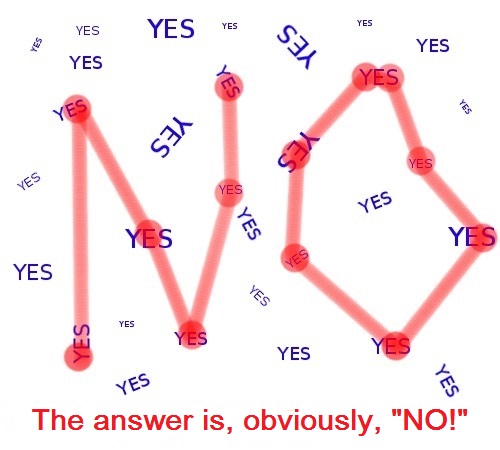
It turns out our brain doesn't want to learn! If it thinks it doesn't know something, and if it has its own opinion about the matter, then it will make every effort to prove its own opinion, not to seek the truth.
For example, a player who thinks of himself to be knowledgeable at poker counts every winning session as proof of his own worth. On the other hand, we have a player who always doubts himself. After every losing session, he thinks he keeps hitting the rock bottom, so he needs to move down the limits or select the tables more carefully. But it may so happen to be that the number of winning and losing sessions (as well as the end result) is the same for both players.
The difference is in the cognitive weight we assign to the same events. People are more inclined to give more weight to the events that support their point of view, contrary to those that make people change their minds.
In consequence from this distortion, we get two more "funfair mirrors" which makes our brain perceive reality differently than it really is. These interdependent distortions cause overconfidence and the illusion of superiority.
Overconfidence
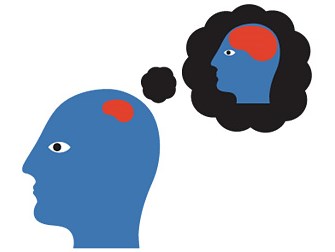 We are often overconfident when it comes to accuracy and the correctness of our judgements or assessments.
This was scientifically confirmed. A test group received a list of words which are often misspelled. The participants of the experiment were asked to write those words in a way they thought was correct. They were also asked to estimate the confidence level for their own answers. You'll be surprised but on average they were 99% sure they made no mistakes, while actually they were wrong on 40% of words.
In poker, this regularly appears as overconfidence in your own reads and assessments of opponent's ranges (which hands can or can't be there), calculating probabilities or the profitability of our actions. I'm not saying you should doubt every move you make, just remember that if you're sure about something, you're wrong in more than half the cases.
The illusion of superiority
People are inclined to overestimate their abilities in what they are good at, and underestimate their mastery in what they are bad at.
It's a very popular distortion. You may remember those questions from personality quizzes where you were asked to rate yourself on a scale between two extremes, like "best of all" or "worst of all". I can bet that almost all you put yourselves significantly higher than the middle point, thus rating "above average".
It's obvious that in real life most people can't be "above averagely" skilled in certain areas. On the other hand it's astounding how zealously we're ready to lower our self-esteem in areas where we think we're bad.
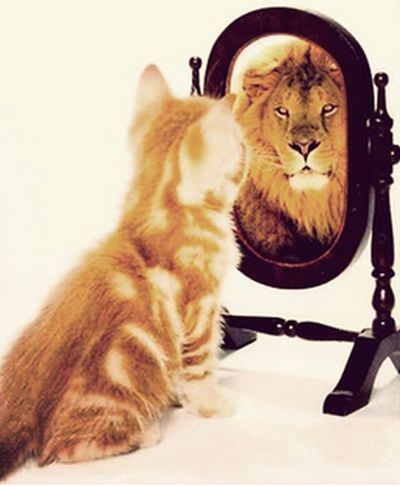
For example, many mid-stakes players tend to significantly overrate their poker skills. Actually, they have a right to think this way because they belong to a very-very small group of winning players. On their way up, they passed through lower stakes, beating many opponents on the way. However, sometimes this inflates their egos so much that these players, thinking they have an edge, gladly sit at the tables where all other players are regulars, too. A slippery slope, I tell you.
Now let's take a player whose career was not all sunshine and butterflies. It's possible he had to grind the micros for many years. Or, maybe, he lost his bankroll a few times, or maybe he had to use staking, or maybe he even quit poker at some point because he couldn't reach the desired level of profit.
It can easily make the small difference between himself and other regulars who luckily reached mid-stakes without major breakdowns. But if you ask them to rate their skill, you'll get an impression that the gap is huge.
As you can imagine, it's bad to both over and under estimate something. The ability to objectively assess your place among other players is a very important skill for a good poker player. It's hard but it's important to overcome the bias and fairly weigh out all of the facts.
To be continued….
Other articles by Grigoriy "ahlinpoker" Skrypnik
- How your brain betrays you at the poker table
- The best exercise for your poker skills
- Five reasons you can't beat low stakes
- How to double your hourly win rate
