


Why our feelings don't agree with the maths?
Grigoriy 'ahlinpoker' Skrypnik continues to unravel the mystery of our brain's perception distortions.
We continue discussing cognitive distortions and how they affect our poker play. Five of them were described in the first and second articles of the series. If you missed them, you should really read them first!
Projecting your own opinions onto other people
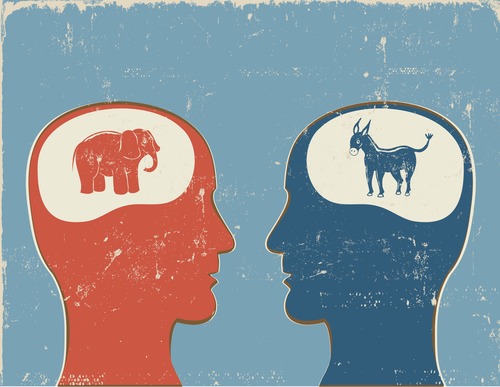
For poker players, it's a very important but very dangerous deception that our brains mistakenly suggest that other people think like us. In terms of poker this means they perceive the game in the same way as we do, so in similar situations we expect them to make the same decisions we would.
But, in reality, if we take an average poker player, this misjudgement is exposed. A conservative player tending to play tighter will sub-consciously expect other players to act more conservatively too, while a loose player tending to attack the field will expect other players to play more loosely.
Of course, it doesn't mean your opponent will expect the same decisions from you that he would make if he were in your shoes. For rocky players, you'll simply be tighter in reality, and others will perceive you as a more active player than you actually are. You should always be aware of this when trying to evaluate your image in your opponents' eyes.
Incorrect perception of very big/small numbers

It's surprising, but sometimes, sub-consciously we can't exactly evaluate very big or very small numbers, including some probabilities which, in poker, can harm the mathematical correctness of our decisions.
Poker players tend to overestimate the significance of big pots. We think that the more big pots we win, the more effectively we exploit our opponents and the better our game is overall. Of course, big pots affect our win rate, sometimes very significantly but good players know that small pots are more important when played in regular situations. Unfortunately, profit and loss margins earned in such spots isn't perceived correctly by our brain either. In other words, our intuition can't tell us where our money goes to or comes from.
In a similar way, we can't correctly assess those situations where the difference between risk and reward is minimal. A short example: on the river, your opponent bets 10% of the pot, and your hand is very weak but still has some showdown value. Would this call be profitable? Our brain has to work very hard to correctly evaluate this scenario.

Another example: you bluff on the river, betting 1/2 of the pot while your opponent calls in 60% of cases. To you it will seem that you lose money in the long run because in more than half of the cases your opponent would win the pot. Your brain will receive negative feedback more often and so will be convincing you not to make the bet. In this case our brain can't see that negative results have less value than positive ones. In reality, it's obvious that under such conditions your bluff is profitable.
How can you fight this? It's not that scary actually, and the answer is simple: training, training and even more training. The thing is, your conscience is absolutely sure the bluff is profitable because you did some of the maths. Now your objective is to convince your sub-conscience. And this is done only by constantly running different mathematical scenarios. The more you find yourself in a certain spot the sooner both your conscience and sub-conscience will start giving you the same answers and will make the same decisions.
In any case, this is what we have to deal with in everyday life as well. How often common sense and calculations convince you of one thing, while inner fears and intuition have pulled you in a different direction? Throughout your whole poker career, you'll have to consistently bring your feelings and maths to the same level. And the sooner you head in this direction, the better.
To be continued….
Other articles by Grigoriy "ahlinpoker" Skrypnik
- How overconfidence could be your downfall
- How your brain betrays you at the poker table
- The best exercise for your poker skills
- Five reasons you can't beat low stakes
- How to double your hourly win rate
