


Why the Super High Rollers are shunning the limelight
Despite dominating the biggest stakes in the world, many of the top pros are shying away from the spotlight. Barry Carter explains why.
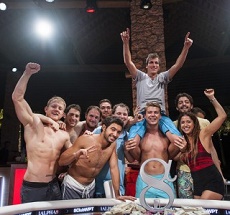 Have you ever wondered why it is rare you don't see many interviews with the guys who win the $100,000+ Super High Roller events or the nosebleed cash games?
I can assure this is not laziness on our part, this is because a lot of the time the players in question don't want to be interviewed.
I think I have been rejected by more Super High Rollers for interview requests than I have for women's phone numbers at bars, which for anyone who remembers me before I was a married man will know that is a huge statistic.
In a world where almost every player is desperate for sponsorship, fame and recognition, some of the best players in the world are actively avoiding it. I, for one, greatly respect that.
Out of respect for what they clearly want to achieve, I am not going to name a single one of these players who don't want exposure. However, all you need to do is look at the Global Poker Index, HighStakesDB, The Hendon Mob or any Super High Roller event recap to make an educated guess which guys I am talking about.
Thinking about their image
 It started a couple of years ago when I contacted some of the young stars that were beating up the high roller tournaments. Yes, they happily posed in the winner photographs at the end of the tournaments and did the post-match video interview with the event sponsor, but any requests after that would be (politely) refused.
I was told by one player that he was not interested in becoming a poker celebrity. Another told me that he wanted to be very careful about how his image was presented in the poker media. I don't think I had ever been rejected for an interview before.
Normally someone who has won a tournament was on a confidence high and looking for more exposure in order to make a case for a sponsorship deal (It is remarkable how many first-time tournament winners ask me after an interview who they need to speak to to get sponsored, even now in an economy where sponsorships are almost non-existant).
I was shocked to have been rejected, but I also felt an overwhelming sense of respect for the reasons why they didn't want to be put in the limelight. It showed a sense of thinking about their long-term profitability and, I like to think, also a little bit about wanting to make the most of their life away from poker by keeping the game strictly business.
Keeping information private
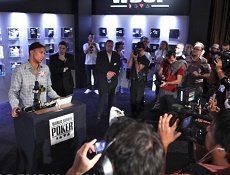 I was surprised again this year. At the start of 2014 I reported on the biggest cash game players of the last twelve months. Amazingly, one of the most successful high stakes cash players of recent times has requested that his results no longer be tracked by HighStakesDB.com. Despite boasting a graph that would make any poker player drool, he has chosen not brag about his success.
This obviously sucks for the railbirds and reporters like myself, because the nosebleed cash games are always fun to write about. But I have to respect the self-control it takes to refrain from bragging about winning such big sums. We like bragging about our successes, it helps us validate the identity we think we have. To not brag about such monumental wins, once again, shows a very solid understanding of the long-term implications of doing so.
It makes sense for Super High Rollers and nosebleed cash players to want to avoid the limelight. They operate in such small player pools that every small piece of information they put out into the public eye is up for scrutiny. The Super High Roller events often only have about 40 people in them, so facing the same opposition is guaranteed. The nosebleed online cash games are the same (more so with the anonymity of screen names). This is also why you rarely see coaches and video producers at training sites make videos at $25/$50+.
These players also probably have a disrupted sense of privacy, which makes it understandable why they would avoid the limelight. Every single hand a nosebleed player participates in gets tracked and is available to view. Most of us are against data mining sites, but we have a double standard when it comes to the games we want to rail. It amazes me, in hindsight, that more players have not requested their results not get tracked by HighStakesDB (One has to wonder why Gus Hansen has not made this request yet).
The benefits of the limelight
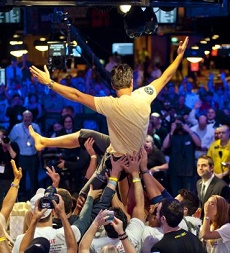 They can't expect total anonymity, they would be naive to think they could. These Super High Roller events are created in part as a marketing strategy by the event organisers, as well as a guaranteed ratings winner for TV producers.
Anyone who participates in any tournaments must accept that they are going to get some exposure if they do well and if they don't like that, they need to start playing cash games or online more. I for one am not going to stop writing about them in the future, because there is a genuine interest there in the poker community.
Nor would every player want to hide from the limelight. There are obviously huge benefits to becoming a big name in poker, not least the sponsorship. It is hard to deny that playing in a $10,000 main event for 100% of your own action, without it costing you a penny is about the most +EV proposition in the world.
The other big benefit to becoming a poker celebrity is that simply for some people it is a hell of a lot of fun. Doing interviews, photo shoots, being on TV, going to parties and being an ambassador are all benefits for some people. Players like Sam Trickett, Isaac Haxton, Vanessa Selbst, Jason Mercier and Antonio Esfandiari are all crushing the highest stakes games and embracing what it means to be an an ambassador for poker in equal measure.
As a poker writer it sucks to not be able to write about some of the Super High Rollers as easily as it is the rest of the poker world, but I really admire the reasons why they choose to reject me.
Do you think it is wise for high stakes players to shun the limelight? Do you think the best players in the world have any sort of obligation to poker fans to be more accessible? Let me know in the comments box.
by Barry Carter
