


Why poker players are not ready to be World Champions
Following Joe Hachem's comments about the legacy of the World Champion dying, Barry Carter discusses why the game doesn't prepare its champions for the limelight.
This week 2005 WSOP Main Event champion Joe Hachem caused a storm in the poker world. He claimed that Jerry Yang and Jamie Gold have "destroyed the legacy of the World Champion" and went on to say that today's generation of champions are not as fun or accessible as previous post-boom champions like himself, Chris Moneymaker or Greg Raymer.
The thing that shocked me the most about all this is how much I agreed with Joe. I've never actually been a big fan of Hachem, but I concurred with every word he said. Many of the post-boom World Champions do not particularly carry themselves in a manner befitting the highest honour in the game. Joe extends this discussion not just to the WSOP Main Event winners, but also many of the big names in poker today.
So should the WSOP Main Event champion be expected to be an ambassador for the game? Is that title so prestigious that it needs to be treated with respect and carry with it a sense of responsibility?
Why poker champions are different
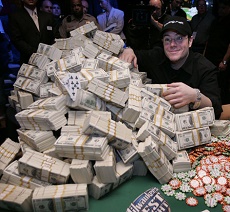 Being a World Champion in poker is different to being a World Champion in any other sport; we can't treat it the same. In no other game can a complete amateur become the World Champion overnight. There is a strong degree of predictability about who is going to become World Champion in every other sport, so as such the participants can prepare accordingly.
In most sports the players gradually work their way up through different leagues. They'll play junior circuits, regional circuits, and some form of national circuit before making their way onto the world stage.
Slowly and surely they get used to winning, get used to exposure, get used to doing interviews, public appearances and endorsing sponsors. They have coaches and agents looking after them and steering them in the right direction. All of which means that by the time they lift the trophy that makes them king, they are prepared for what comes next.
Compare that to poker where you could literally take the game up one day and be World Champion a week later. That is almost what happened to Chris Moneymaker. He never dreamed of being a champion in poker - he probably didn't even really know such a thing existed. He didn't have an agent, he wasn't used to doing interviews or signing autographs. Yet one day, from out of nowhere, he was the World Champion of a soon-to-be-massive game.
The fact that he handled it so well and genuinely became one of the great ambassadors for poker is a real testament to him. But it is not surprising that certain other players do not embrace the limelight so well.
I know a lot of people think Hachem was taking a shot at the playing abilities of Gold and Yang, and maybe he was, but neither of them really had aspirations to be a champion and maybe that is the bigger reason why they 'killed the legacy'. Not only is poker a game where the least skilled player can become World Champion, it is also a game where you can become a World Champion when you don't really want to.
The anatomy of a World Champion
 So what makes a good champion? It is hard to say, but I think it needs to include either being a great player, being a great ambassador or at least being a great personality. I guess that means it is about contributing something positive to the narrative of poker after you win it.
Chris Moneymaker, Greg Raymer, Jonathan Duhamel and Joe Hachem have all been great ambassadors. They never say no to interviews, they make lots of public appearances, they sign autographs - they do the lot. Hachem and Duhamel have also done a great deal to promote the game in Australia and Canada respectively.
It is probably no surprise also that the four players I have picked out as great ambassadors also all had major endorsement deals with PokerStars. This is an important point because not only does the backing of the largest online poker room in the world prepare you better for the spotlight, it also gives you an incentive to be ambassador. Maybe the lack of major sponsorship deals for some of the more recent champions explains in part their decision to not embrace celebrity.
It's very subjective of course, but I feel that Greg Merson and Jonathan Duhamel have both stood out as World Champions who have gone on to also be great players, who have the respect of their peers. Many of the post boom champions have notched up big results since, but those two seem to be the ones with the most fearsome reputations at the tables.
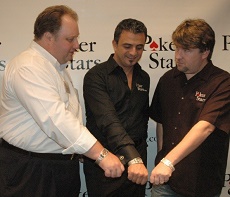 In terms of having a great personality, several champions stand out, but more so because they are polarising. Jamie Gold, love him or hate him, was a real character at the tables, something of a comedy villain in fact. Joe Hachem also was reminiscent of the Poker Brat himself when he took the game too seriously. I think Ryan Riesse has also stood out after his 'best in the world' comments as an interesting character.
I'm not saying they have good personalities, but it does make them fun to watch. You want to play against players like Hachem and Gold because you would love to bust them - just like you would Phil Hellmuth. Poker has room for villains too, just like John McEnroe, Chris Eubank or Floyd Mayweather in other sports.
By process of elimination, that means by my own standards Jerry Yang, Peter Eastgate, Pius Heinz and Joe Cada are 'bad champions' - in that they haven't given a huge deal back to the game in one form or another. Don't get me wrong they are all great guys and entitled to their success, but they have stayed under the radar for the most part.
Preparing the next generation of champions
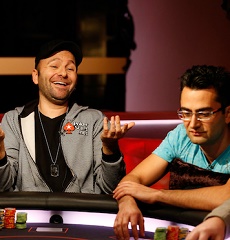 Based on my own criteria, if we were to nominate our own World Champions, we would probably be looking at Daniel Negreanu, Antonio Esfandiari and Phil Hellmuth. They all have great track records as players, they all give lots back to the fans and they all have huge personalities. Phil Ivey would be in there too by sheer virtue of his talent, he would be more of a Mike Tyson enigma type of champion.
So should it be expected for a poker player who wins the World Championship to accept the role of ambassador and personality? Of course not. When most of us first got into poker we probably didn't even realise such a role existed. Poker players do not play in front of an audience and until they reach the top they don't have fans or sponsors. We pay our own money to participate, so we can do whatever we want when success comes our way. If someone chooses not to be a World Champion, that is their prerogative.
But as Hachem implied, it is probably beneficial for everyone in poker if our champions do become ambassadors. Recreational players want to play against celebrity players, they want to watch fun personalities on screen and they want to have their picture taken with the champ. Champions help bridge the gap between new players and poker.
Rather than thrusting all this responsibility on the one guy every year who essentially gets the winning lottery ticket, perhaps the more important mission should be to ingrain this sentiment in all of our professional players before they become celebrities.
Do you think the World Champion has a responsibility to become an ambassador? Let me know in the comments box.
by Barry Carter
