


Mixing Quantum Physics and poker with asimos
We chat to our PokerStrategy.com coach about his approach to coaching and how he integrates science and poker together.
You have a PHD in Quantum Physics, are there any crossover skills you brought over to poker?
asimos: Well, I would say that as with everything in life in order to be good at something, no matter what this is, you need to be devoted and work hard. Structure and methodology are also important. How you spend your energy, where you focus, what are the key points/questions you need to answer so you are able to move forward?
I would say that research, a good knowledge of existing development, a strong desire to keep learning, but also creativity and imagination to bring something new. Similarly, poker requires a good knowledge of existing theory, but also the ability to introduce something new in the game (after a certain level) if one wishes to be a step ahead and keep an edge in a highly competitive environment.
How important do you think it is to have a baseline knowledge in another discipline (like math, economics, science etc) is it for a poker player?
asimos: It is and it is not important. I know many players who became successful without any knowledge about science or math. Also, theoretical poker knowledge is not always the first criterion which will determine good results. Where to play, how to play, how to manage your time, mental approach, table selection and other aspects are of the same importance, if not more, than strategy.
However, answering the same question from another angle, I would say if you have no other knowledge outside poker it can be a little tougher to progress. Not because you are not smart enough but because you don't have possibly a good learning system/structure and the necessary discipline. In that case you need a good coach. Of course, there are always exceptions, but exceptions are there to verify the rule.
People who have managed to master one art can repeat the same, most of the time, in another area.
Is one of the most valuable aspects of your PHD the self-study skills you picked up, so you can study poker alone?
asimos: You get many valuable aspects when you do a PhD. But personally, I developed as a player during my PhD.
Self-study skills had a crucial impact to my progress. Probably the fact that I always like strategic games (for example chess), solving logical problems, math etc helped.
"The basics are essential in the beginning"
What theories from outside of poker do you think really help poker players?
asimos: You have an interesting list here and I would say that everything is relevant.
However, poker players should focus on different things depending on their level, their needs and their goals. The needs of micro players are different form the needs of a high stakes player. The needs of a professional player are different from a hobby player etc.
You can't learn quantum mechanics if you don't know basic calculus and classical physics first. Fancy stuff is good to give you edge later in your poker career, but basic stuff are essential in the beginning. What is basic and what is fancy changes with time, but it is a learning path that every individual should follow in order to progress given their current experience and motivation.
Not too long ago you were at NL25, now you play as high as NL1000, what were the landmark moments in your progress?
asimos: The biggest Eureka point was when I was NL25-50 player and I had a session with a big winner/grinder at NL200 from 2+2. At the first session I realised that this guy didn't know basic stuff (really basic stuff, i.e. he would never call vs 3-bet oop, which was crazy for a reg at NL200 even six years ago). However he did have an extremely good win-rate (he wasn’t a fake) because he was following a good system for that time.
After that session I decided develop my own system, based on evidence and following my beliefs and findings without giving credit to anything I knew so far. Like re-starting from scratch, having of course some experience but with a completely open mind. It didn’t take me long to start creating my own strategies, implementing new ideas and systems, put all these into my game... and this is kind of what I do until today.
"A coach has to continue learning too"
What separates your own private coaching from other mentors?
asimos: I don't discuss theory presenting it as a given truth (i.e as the result of a solver or as a given standard). Of course solvers are very useful tools, but playing the solver is not always (most of the times) the way to make the most money at the tables. I give practical and concrete advice providing a measurement in terms of win-rate and suggesting a specific improvement plan for every area of the game.
So I would say that I focus on every specific aspect of the game, narrowing down all the decisions to a great extent, to treat the game as a whole afterwards and to generalise and make universal conclusions when this is possible.
Sometimes one needs to analyse from the general to the specific too. These kind of methodologies come with experience. The approach I follow differs for every limit/site and individual, adjusting to the needs and goals. The role of a good coach is also to provide psychological and mental support, not only technical guidance.
And lastly someone can be a coach in my opinion only if they continue learning themselves. If you stop learning you cannot be a coach.
How do you balance your science work and poker?
asimos: I enjoy both, so to me there is no dilemma what to choose. From this point of view I could say that “I live my dream" and my plan is always to follow my heart and spend my energy on what I really love.
When you do what you are passionate at it's not hard to balance. You work hard naturally and you feel fulfilled. And you are good because you work hard and you are happy with yourself because you are good.
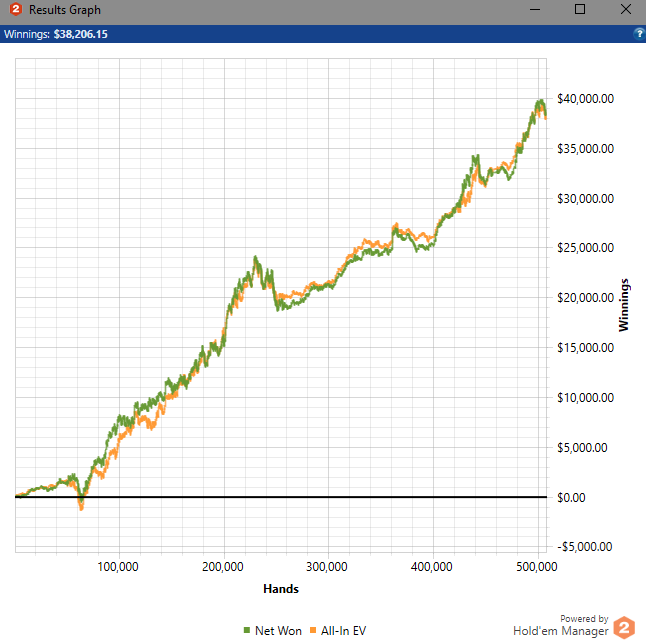
If you want to learn more about our coach check out his videos and his personal blog, as well as his private coaching offer.
