


Why ICM likes high suited cards
Recreational players play too many small pairs and not enough Kx suited hands when ICM is significant. Dara O'Kearney explains why.
Most players realise that you can expand the range of hands you play when you are later in position. It stands to reason that with less players left to act behind you, your chances of running into a big hand get smaller, so you can play more hands profitably.
The mistake a lot of players make when they expand their range in ICM heavy situations is they are too linear. They start to add more offsuit broadway, small pairs and suited connectors.
What they should actually be doing is adding more Ax and Kx suited type hands instead.
Let’s look at an example. This is a solver approved 50BB opening range from UTG in an ICM heavy situation:
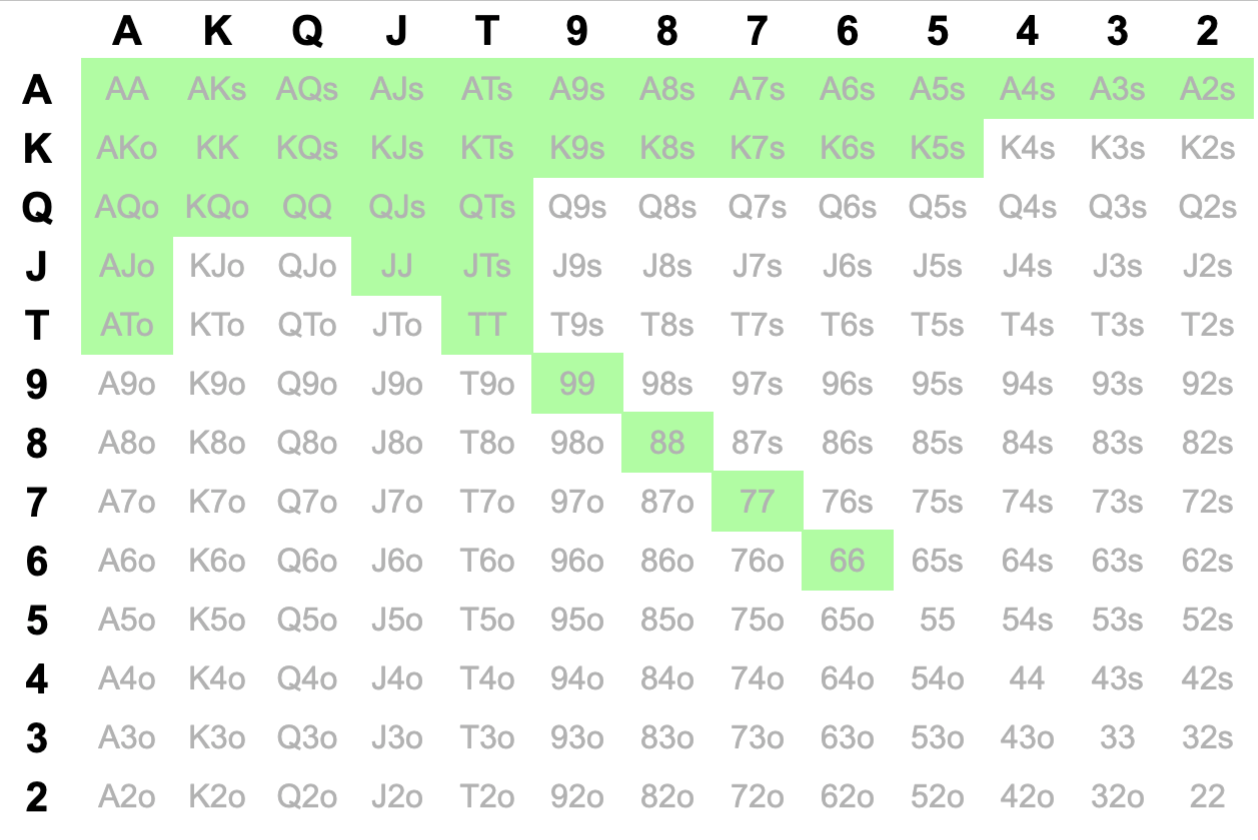
As you can see the suited Aces give us board coverage and we don’t bother with pairs below 66. The worst suited connector we have is JTs, but we also have K9s which some players might think is a little fishy.
How does that range expand when we are the Cutoff? It becomes:
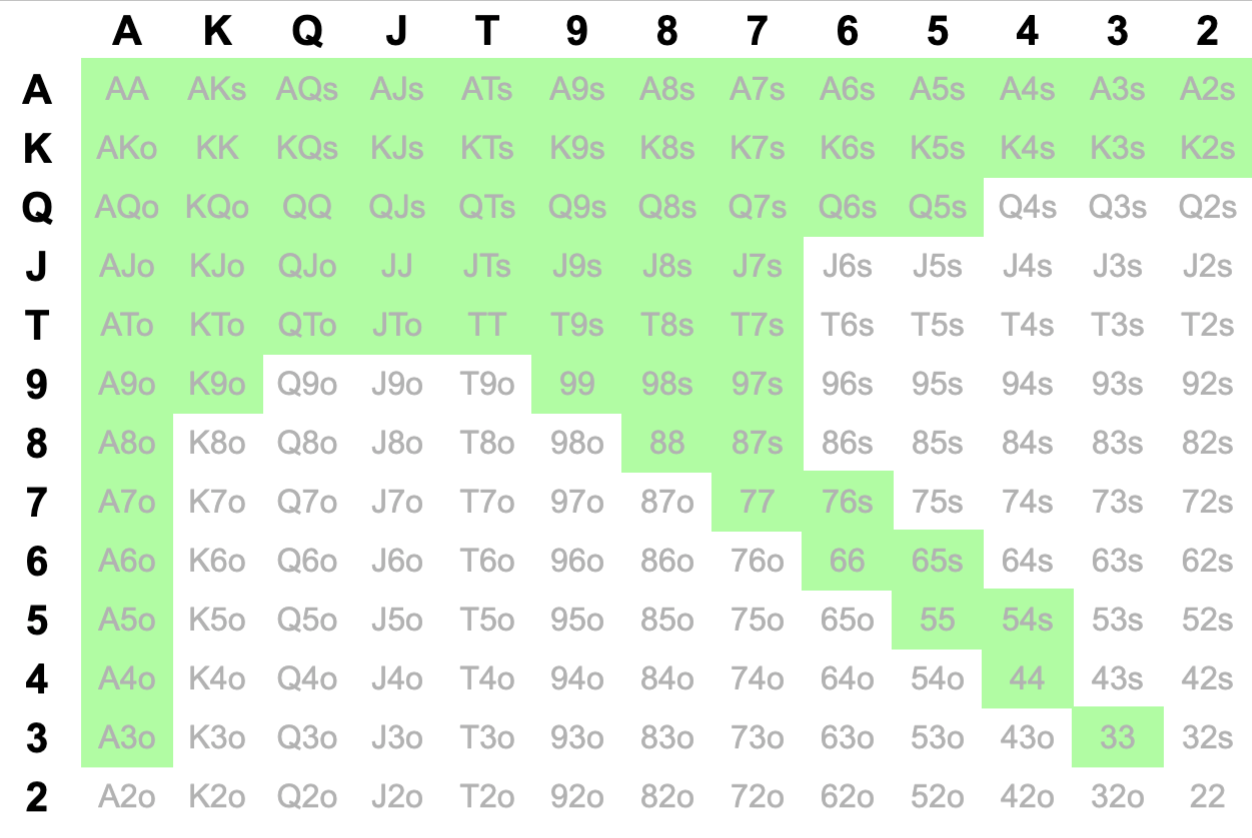
I think a lot of players would have included hands like A2o, K8o, Q9o, 22 and 43s long before they would have added a hand like Q5s to that range. In a non-ICM situation they would probably have been correct too.
So why does a seemingly junk hand like Q5s get the nod over a hand like A2o, 22 or 43s?
More turns and river bets

It’s not that suited high card hands are better hands in ICM heavy situations, it is that they flop enough equity to continue more often on a lot of flops. They will make a flush 1.5% of the time, a flush draw another 10% of the time and a backdoor flush draw most of the time. They make good top pairs, usually the best flush when we get there and they also block the big hands you worry about getting 3-bet from.
These hands give you more opportunities to semi bluff on the flop and turn. That is simply not the case with small pairs and small suited connectors. Yes, a small suited connector can hit a straight or a flush, but you are in trouble when you just make a pair and you can never be sure your flush is the best one. Small pairs have to give up on most flops when facing any sort of action.
Small speculative hands put you in too many situations where you have to fold post flop, which is a terrible prospect when ICM is significant. The smaller your stack the more each chip is worth, so when stacks are shallow and ICM is heavy, you cannot justify having to fold so much post flop. You are literally spewing large amounts of equity whenever you do.
Suited hands with a least one high card provide you with board coverage, the chance to make a massive flush, the chance to make a strong pair and perhaps most important a natural bluff candidate that you can play on multiple streets.
If you want more insight like this, Dara has a regular newsletter where he gives free tips like this all the time.
More from Dara O'Kearney
- How to adjust when nobody folds
- How to construct a bluff range
- How to play the 2nd from last table
- When to do swaps in tournaments
- What poker players get wrong about laddering
