


Can poker players make good politicians?
Following Tony G winning the European Election, Barry Carter asks if the skills learned in poker can translate over to the political arena.
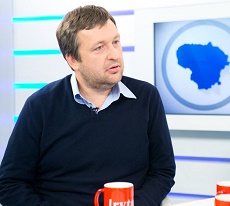 Last week we had probably one of the most surprising stories of the year, that Tony G has been elected into the European Parliament. Tony is one of two Lithuanian candidates for the Liberal Party, who won seats.
Tony is not the first politician to have a poker playing background. Barack Obama is well known for playing the game, but perhaps most famously Richard Nixon was known to be a brilliant player.
Not only did Nixon play against such poker legends as Amarillo Slim, he is also said to have funded his first campaign with poker winnings from his time in the Navy during World War 2. Nixon won his 1946 seat in the U.S. House of Representatives from $10,000 he won playing cards.
Tony has previously made the comparison between poker and politics, telling PokerNews last year:
"You know, politics is a competition; you can see it as a tournament or as a sit-n-go, if you want. We are all playing. Every country is playing and whoever plays the smartest, is going to be successful."
So does a background in poker prepare you for a career in politics?
The real life House of Cards
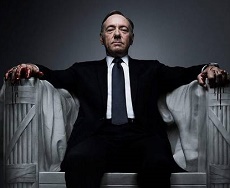 It is a popular cliché to imply that politics requires similar skills of cunning, deceit and manipulation that are also required in poker. While I am sure that is true to a certain extent, the reality is that a politician must really understand current affairs, legislation and their constituents.
It feels nice to imagine that someone who excels at high stakes poker would be able to bulldoze their way through political office like Frank Underwood in House of Cards. However, I doubt such skills would help much when trying to work out an education budget plan or delivering a speech about healthcare.
Which is why many would argue that the typical poker player would not make a good politician. The stereotype is that we live very much inside a bubble, and that most professional poker players do not understand the wider world, the price of milk or the struggles of the average working man on the street.
Poker teaches you a lot of very valuable skills in life that would transfer into politics, including good decision making or handling pressure. However, I am inclined to think that the poker player in question needs to have a genuine interest in political issues first and foremost. I don't think poker on its own is any basis for a political career.
Politics first, poker second
 That certainly is not the case of Tony G, however. Yes, we all may know him as the loudmouth poker player who humiliated Ralph Perry and got angry at Andrew Robl for taking too much time. But Tony is more than just a poker player.
To begin with, Tony is a very successful businessman, with a great deal of interests outside of poker. Not only does he understand how business works, he is also something of a role model in that regard.
Thanks to poker, Tony also knows how to play the media. We see him as quite a comical and abrasive character in poker, but that is only because that is how he wants to be seen. Few poker players are as good as getting publicity than Mr G.
Maybe most importantly, Tony is a very proud Lithuanian and he really does immerse himself in Lithuanian culture. I actually am a former employee of his (having previously worked for PokerNews), and I was lucky enough to visit Lithuania at that time and I saw first hand how big a celebrity he is over there. A great number of celebrities have gone on to make it in politics, and Tony fits that bill very easily.
Time will tell whether Tony proves to be an asset to his country, and Europe, in the political arena, but I think he has all the right tools to be a good politician. He has business acumen, a wide reach and he wears his heart on his sleeve. If he picked up a few skills in negotiation at the poker table that helps him on his way, then more power to him.
What does poker teach you that can be applied in the political arena? Are most poker players too sheltered from political issues to make good candidates? Will Tony getting elected improve things for the poker industry? Let me know in the comments box.
 Barry Carter is the editor of PokerStrategy.com and the co-author of The Mental Game of Poker 1 & 2. He has been working in the poker industry for nine years and in 2013 won the APAT Award for Best Poker Media Provider. You can learn more about his work here. Barry Carter is the editor of PokerStrategy.com and the co-author of The Mental Game of Poker 1 & 2. He has been working in the poker industry for nine years and in 2013 won the APAT Award for Best Poker Media Provider. You can learn more about his work here.
Follow Barry Carter on Twitter l Follow Barry Carter on Google+ |
