


The best way to learn poker: Software
We conclude our series on the popular ways to study the game with the rise of 'solver' software which is changing the way the game is played.
I conclude my four part discussion on the best methods to learn poker with the newest and currently quite controversial ways to learn. We have already discussed books, videos and hand reviews, now we turn towards poker software and solver technology.
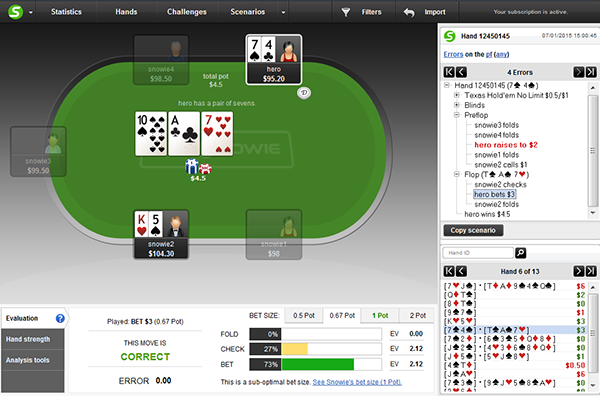
This is everything from GTO post flop solvers like PIOSolver and PokerSnowie, as well as ICM software like HoldemResources Calculator and ICMIZER. Varients of solvers have been around for a while now but in recent years some corners of poker have claimed they are killing the game, making it unbeatable or at least boring to watch.
I personally don’t have an issue with any type of solver as long as it cannot be used in real time. As far as I am concerned, it is one thing to give the ‘correct’ answer to a spot, it is entirely another thing for a human to correctly interpret the data. A bad player will misapply the advice a solver gives them like in any other form of study.
The 'correct' answer to poker questions
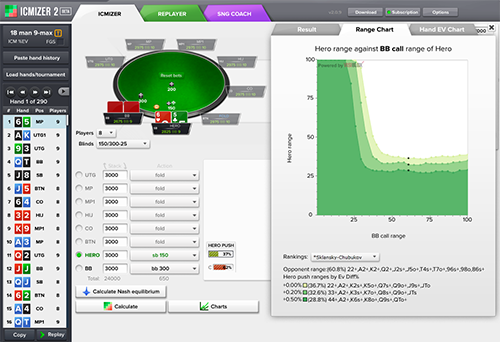
Solvers will certainly be the best way to learn for many people because, as the name suggests, they tend to give a solved, ‘correct’ answer to a spot. In non-GTO examples this is only as good as your read, of course. I can put a bubble hand into ICMIZER but if I get my opponent’s shoving range wrong then I am going to hurt my own progress.
But if you are doing it properly there is incredible value to knowing the right answer to a spot. There is also the added mental game advantage of knowing you did something right but were unlucky, or indeed still have some room for improvement.
Solvers suit really studious people, the types who enjoy study as much as play, because they allow you to go really really deep on a topic. I know of some Super High Roller players who spend 16 hours a day working with GTO solvers when they are not playing. Another advantage in this respect is that they are an activity you can do on your own, without a coach. They are also a less passive way to learn poker, they are the nearest thing to a putting range in golf, in that you can ‘practice’ a hand without actually risking money.
A big barrier to entry
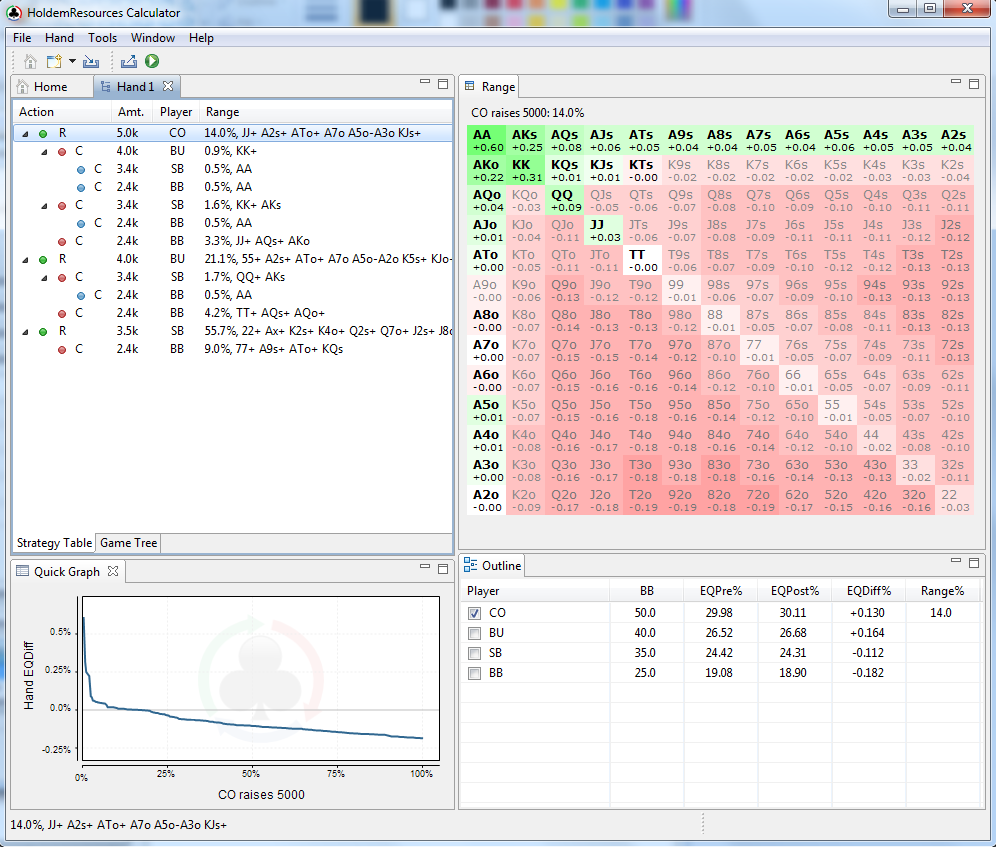
I think solvers are by far the best way to learn if you are a studious player who enjoys that sort of thing, but they are probably too much if that is not the case. Some of them are actually very difficult to use (and in some cases, set up on a computer) and will be overwhelming for a lot of players.
There is also a cost barrier to entry for new players, as most of the good solvers are expensive and/or cost a monthly subscription. Given that books can be cheap second hand on Amazon, Twitch streams are free and so is posting in hand forums, they are probably the worst way for new players to start learning, given they cost a lot and will be complicated to use.
Having said that if you want to take poker seriously, they are not going anywhere and are greatly influencing how the game is being played. So while they may not be for everyone, they are an inevitability you cannot ignore.
