


Why smoking is harming your poker winnings
Barry Carter is joined by Jared Tendler to discuss some of the performance issues smokers face at the poker table.
 We all know smoking will kill you, but what are the specific negatives in terms of your poker performance?
You don’t need me to tell you that smoking is not a good idea. You hear it every day, from friends, TV, the government etc. The health risks associated with it are too many to list, and it would be a fool's errand to try and make a difference repeating the messages you hear every day.
Instead I wanted to look at smoking from a purely poker standpoint. Forget about the general health risks for a moment, what are the consequences in terms of your earn rate?
This may sound flippant to suggest that improving your BB/100 is more important than a long and healthy life, but most smokers are desensitised to the current health messages, so if framing it in another context even helps just one person, it’s worth it.
Smoking and preventing tilt
 There are some (perceived) benefits to smoking when you play poker. I actually think the nature of the game can actually reinforce the habit of smoking for some players, because smoking can effectively fit around the game. However, like with most bad habits, the short term benefits will never outweigh the long term consequences.
Smoking can of course be an instant stress reliever, and nobody can deny poker can be a stressful game. I know a lot of players who will take a break from the tables if they lose a big pot. Not only can the cigarette itself fend off tilt, the ritual of getting away from the table to smoke no doubt helps to put distance between you and the bad beat.
However, this only works in the short term. In the long term the dependence created by smoking is actually more likely to make tilt happen more often and much sooner. Having worked with mental game coach jaredtendler for years, I have learned that the more stressed you are in general, the lower your tilt threshold is, and the sooner you will go on tilt. When you are craving a cigarette, you are going to be much more irritable, which in turn is going to make you much more prone to tilt in the first instance.
Jared also had some other interesting insight into this:
"Asides from physical addiction, I'm always curious why people smoke and I believe that a big reason is to suppress emotions (This is just a theory so far, I haven't found evidence to back this up yet). So if a player were to stop smoking, and not address the stress or emotions that we're hidden by smoking, their game could take a big step backwards if those emotions significantly affect their game.
I've coached several poker players to quit smoking, and in doing so we paid very close attention to the hidden emotions, resolved them as they came up, and that made them stronger poker players. Plus, of course, they no longer smoked.”
Smoking and the Zone
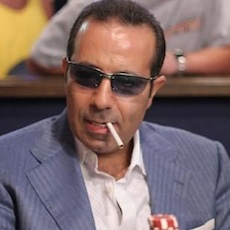 Humans do not have the capacity to concentrate hard for extended periods of time, much of the current research suggests that we can usually focus for 1-2 hours before mental performance dips. In that respect, the inevitable forced regular breaks that smoking creates could be argued to be a benefit, in that it in encourages these small cognitive breaks (Assuming you go outdoors to smoke).
The problem is that you likely never will be performing at your best mentally if you do smoke in the first place compared to a non smoker. That dependence does become a distraction in itself. You start to think about when to go for the next cigarette instead of the task at hand.
With smoking always in the back of your mind, it will be almost impossible to get into the zone on a regular basis. You won’t be able to get into a state called Flow, popularised by psychologist Mihály Csíkszentmihályi, where you are completely immersed in the game and nothing else.
Quite simply you are not going to be able to get into your A-Game as much if you have the nagging urge to smoke taking up valuable mental resources.
Finally, there is simply a huge amount of research that support the fact that physical wellbeing plays a significant part in mental performance. Your fitness levels play a huge part in determining your cognitive ability, and because smoking impedes your fitness, it stands to reason it will have a negative effect on your poker ability.
There is also a lot of specific research to back this up. Not only has smoking been shown to encourage cognitive decline in later life, but it also has been proven to impair attention, memory, response time and spatial working memory in young men.
Stop smoking today with Jared Tendler
| jaredtendler |
 Jared Tendler, MS, is poker's leading mental game expert. Jared Tendler, MS, is poker's leading mental game expert.
He has coached over 200 of the world's top players and is the author of The Mental Game of Poker 1 & 2. |
I'll give the last word to Jared as he has helped several poker players quit smoking for good:
"I have helped three players quit, but it is important to note they were all committed to quitting from the start, and we we're working intensively on the emotional issues connected to their smoking. Both of which played a huge part. If you are going to stop smoking, please consult the best material and support resources available, rather than just following my advice, which should only be used as a supplement to the existing advice:
1. Rather than going cold turkey, steadily decrease the number of cigarettes that you're smoking per week. Per day I think is too tough. Part of the reason for the steady decline is to identify the mental and emotional issues that arise when you're smoking less, so you can then fix them, while using cigarettes to help you control your emotions until you get mentally stronger.
2. Identify the situations/triggers for when you want to smoke and why they trigger the urge. Also figure out when it's the hardest to avoid smoking.
3. Try to work out the emotion you are trying to hide by smoking, then prepare a 'Logic Statement' to correct this. For example, if you are trying to hide stress when you smoke, your Logic Statement could be 'Smoking this cigarette now will only cause me more stress in the long term'. The next time you get the urge to smoke, have this Logic Statement written down someone to remind you of the correct way to think about smoking.
4. Think about when you first started smoking and what you liked about it at the time. Then identify why that is flawed or outdated now.
5. Don't have a "final" cigarette or a final "big night of smoking." Doing so increases the pleasure you have for smoking and it'll make it harder to finally quit. Using this method you won't know when your last cigarette was for months or even years. Very often people say "this is my last cigarette" when they can't prove it, so only say it when you know with ABSOLUTE certainty that it is. Otherwise, you're just lying to yourself and the negative feelings for failing increase the likelihood you'll smoke again."
Have you quit smoking? How did you do it? Did it have a profound impact on your poker? Are you thinking of quitting smoking? Let us know in the comments box.
 Barry Carter is the editor of PokerStrategy.com and the co-author of The Mental Game of Poker 1 & 2. He has been working in the poker industry for nine years and in 2013 won the APAT Award for Best Poker Media Provider. You can learn more about his work here. Barry Carter is the editor of PokerStrategy.com and the co-author of The Mental Game of Poker 1 & 2. He has been working in the poker industry for nine years and in 2013 won the APAT Award for Best Poker Media Provider. You can learn more about his work here.
Follow Barry Carter on Twitter l Follow Barry Carter on Google+ |
