


Self Study: Why do we check back when we have Range Advantage?
The flop favours us but the solver says it should go check check, why don't we bet this favourable board?
We return to our series where Barry Carter tries to plug a leak of his with the help of a professional poker player. Previously he solved how to play against a disconnected player, why we overshove AK sometimes and why our blocker lets us reraise against strong ranges.
This was a 3-bet pot, 30 big blinds effective and we are the Button having been 3-bet by the Small Blind. I put this hand in a solver and, once again, was confused by the line it took.
We defend the 3-bet with J Q and the flop comes 7 6 5. The Small Blind checks.
In-game I bet this flop, I felt this was a great spot for a bluff. We have two over cards and a backdoor flush, but more importantly I felt like we had significant range advantage on this flop, especially after the check. We have enough strong hands that I felt my hand made a good bluff.
This is the GTO preflop 3-betting range for the Small Blind:

And this is the GTO preflop defending range for the Button:
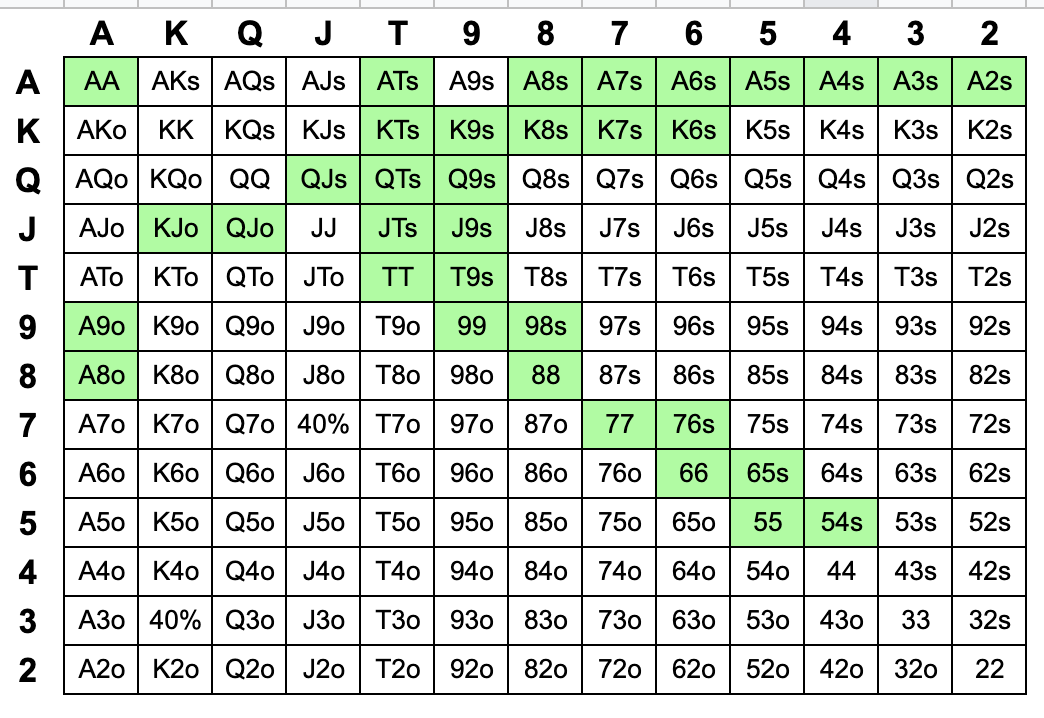
Not only did the solver not bet my hand, it checked back pretty much everything. It checked back most of the range including AA, TT, 89, 77, 66 and 55.
I was absolutely shocked so many hands check back when, in my opinion, we have range advantage here. So I consulted my coach Dara O'Kearney for a line check:
Line check time
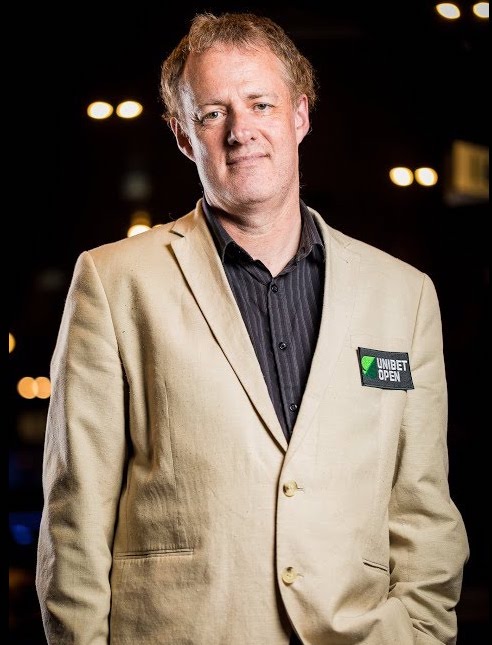
Barry Carter: I understand why my own hand might be a check back but why do we check so many strong hands? Shouldn't we be piling in with lots of hands here?
Dara O'Kearney: We check those hands because we have very few hands that can stand a check/raise. Most of the hands we will force folds from have very little equity, mostly just weak Ax or worse.
We would have to fold most of our 9x type hands to a check/raise which would really suck, so we protect the range by checking sets, 98 and AA.
Barry Carter: But the way I understood Range Advantage it meant that we can bet a lot here, because we have a lot of value which also means we can bluff more with hands like my own.
Dara O'Kearney: Our Range Advantage would be more significant with 100 big blinds where the Small Blind cannot just check/shove things like QQ or KK. With 30 big blinds deep they can just go with any over pair here.
Barry Carter: So different types of Range Advantage match different stack sizes? Range Advantage with mostly one pair hands is good when we have shallow stacks, Range Advantage with sets or better work better for deeper stacks, and not necessarily the other way around?
Dara O'Kearney: Yes, when we are shallow with the kind of Range Advantage you have we don't have the implied odds to continue chasing draws. Very deep you can float with gutshots or backdoor draws. You can even call with one pair hoping the guy will shutdown knowing you can hit your two outer to win a big pot. You can't do any of this when there is not much behind you.
Barry Carter: So if I flip it around, in a spot like this if I was the Small Blind, a good strategy with a big hand might be to check/raise when the flop favours the Button and they should be betting a wide range of hands?
Dara O'Kearney: Correct. When you are shallow with a good hand on a board that is better for your opponent, you should go for a check/raise.
Play the valued added Chip Race tournament
On the eve of the upcoming Unibet Online Series, Dara's podcast The Chip Race is hosting its second ever Chip Race PKO tournament on Unibet.
It has a €50 buy-in and a €13,000 guarantee at 19:00 BST on Saturday September 11. There are €5 and €10 satellites running around the clock at Unibet.
On top of the guarantee there are added value prizes. The top thirty finalists will each win a UOS ticket worth €5-€25 and on top of that there are special guest bounties.
Bust Dara (Dokey), David Lappin (Lappin), Ian Simpson (Ianyyy) or special guest journalist Alex O'Brien (AlexOBrien) to win a seat for an exclusive SNG to play for a €1,100 Unibet Open Main Event ticket.
Thoughts on the hand? Let us know in the comments:
