


Self Study: Did I play this four way pot like a nit?
Barry Carter was worried he played a family pot poorly so he loaded up PokerSnowie to see what it thought of the hand.
In the self study series Barry Carter shows you how he tried to solve a poker problem then consults a coach or solver to get feedback on his method.
I recently reviewed PokerSnowie and in particular praised the multiway pot analysis, so today I wanted to go through a hand example to demonstrate how useful it is.
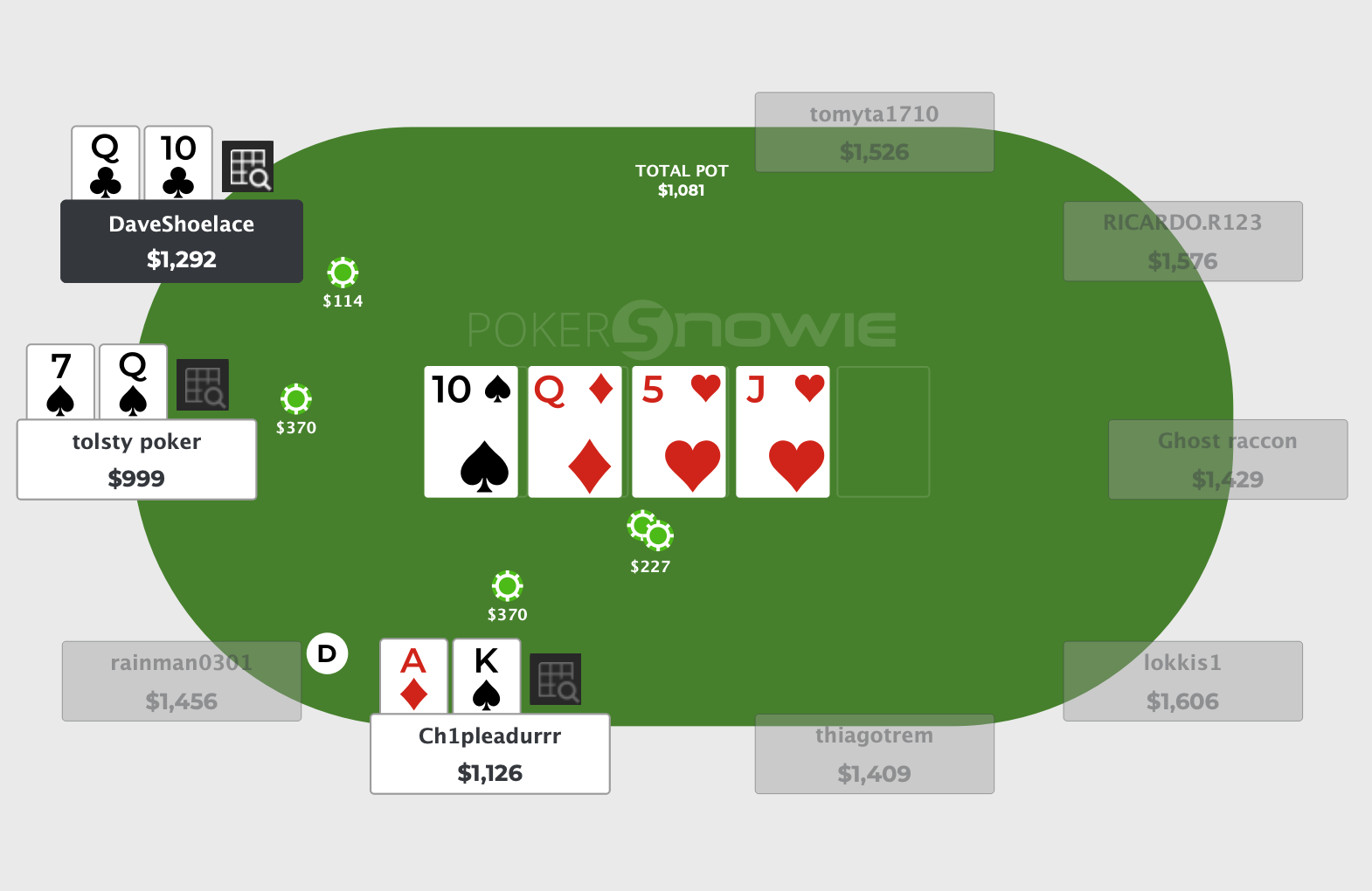
This was the start of a PokerStars 18-man SNG and the Cutoff opened to 2.5x, the Button and Small Blind both called and I defended in the Big Blind with QT- a hand I felt could only be played that way.
The flop was QT5which was amazing for me, I wondered if it was right to lead out when checked to me, but felt it was such an action board one of my opponents would do it for me and my lead would look so strong it obviously might scare off an AT type hand that would call a c-bet from the initial raiser. To my surprise it was checked around.
The turn is a Jand the Small Blind leads out for half pot, this is a bad card for me as K9 and AT get there, as does QJ which the Small Blind may have. I felt raising would only fold out worse and leave in better, so I called. The Cutoff raises to pot, the Small Blind calls and I make a very nitty fold, thinking the Cutoff's most likely hand was AK considering he checked back the flop. The money went in by the river and he did indeed have AKand the Small Blind surprisingly stacked off with Q7.
Is this always a defend in the Big Blind?
I picked this hand for review because I felt that I might have made an error on the flop and should have led out. I also wondered if my fold on the turn was a bit too nitty.
The first big surprise right out of the gate was that Snowie prefers to squeeze preflop with our hand. Calling is profitable, it makes us 0.87 of a big blind, but squeezing makes us 2.4 big blinds on average. The squeezing range is below in green and it is essentially a linear range of all our best hands. It seems that because this multiway pot is four players in late position, we probably get a lot more folds with a wide squeezing range.
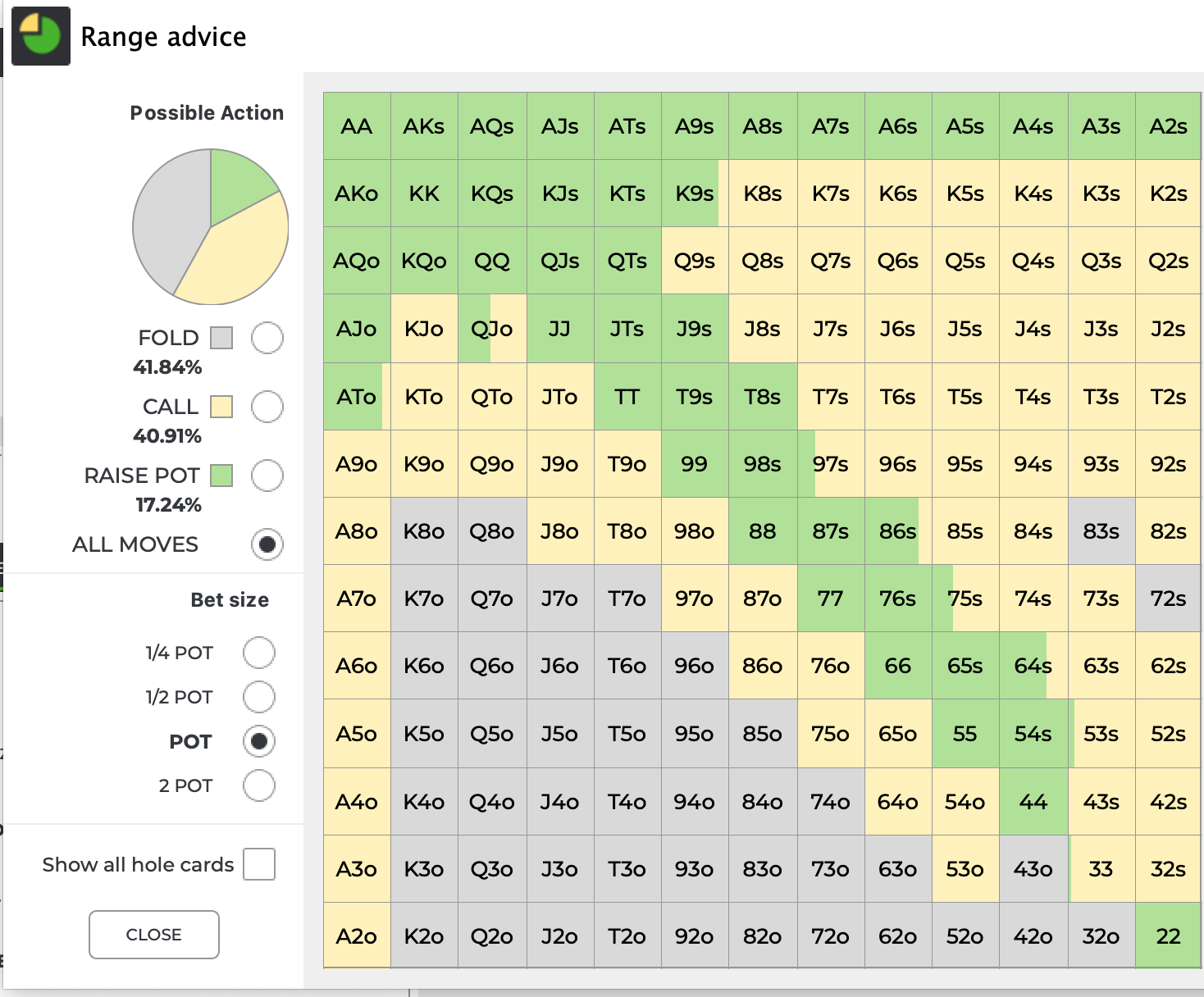
I was curious about what our initial opponent folds when we squeeze and Snowie allows you to take alternative lines within a hand history, so when I turned back time and squeezed here, this is what the Cutoff does:
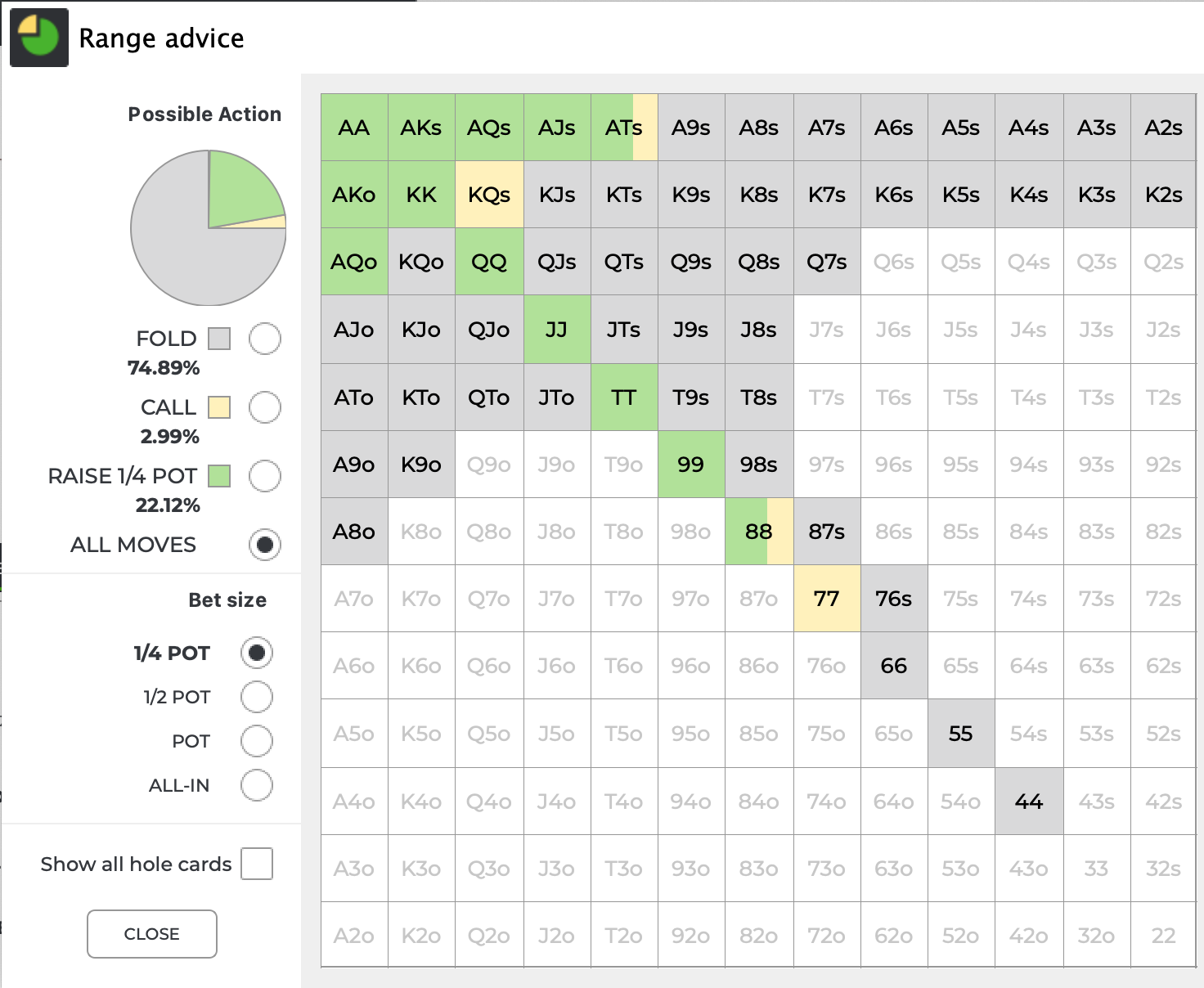
We get them to fold a lot of hands ahead of us, including small pairs plus lots of Ax and Kx. We also block AQ, ATs, KQs, QQ and TT which are significant portion of their continue range. I was pretty surprised at the squeeze, I felt that defending with a hand that flops well was so instantly profitable that it was the only line, but this is a good case for squeezing that has made me rethink these spots.
Should we lead the flop?
As played, my suspicions were confirmed that Snowie likes to bet the flop here. Leading out makes us 13.81 big blinds on average while checking makes us 10.97.
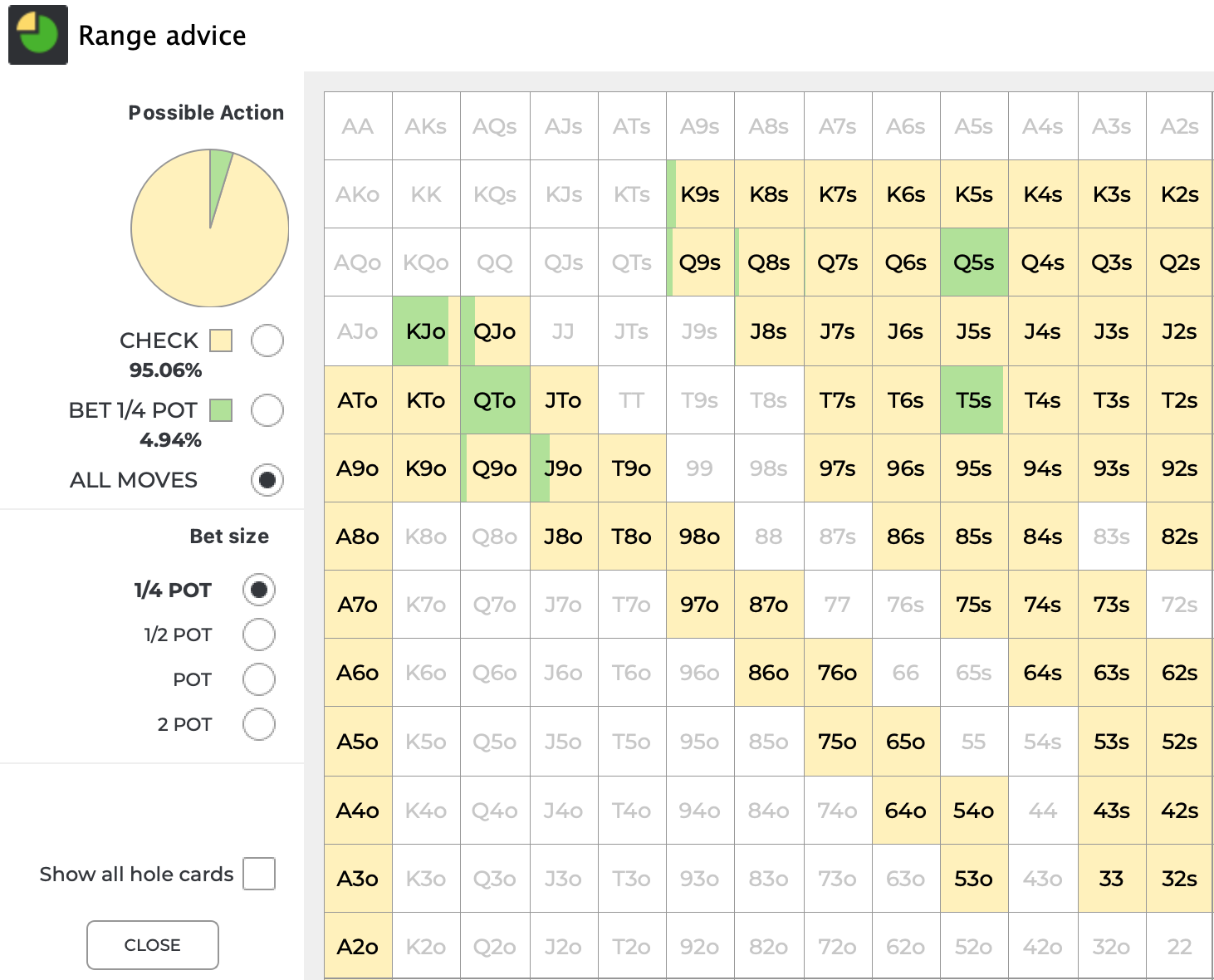
We have a very small lead range, it is essentially all our two pairs plus the broadway hands that can make a straight as the bluffs.
Back to how we played the hand and when the Small Blind leads the turn, our main action is to just flat as we did, but there is some raising. Both actions make us 5.38 big blinds on average. When the Cutoff raises, our fold is correct, we would lose 7.59 big blinds on average when we call. This is the range Snowie says the Cutoff should have when he raises:
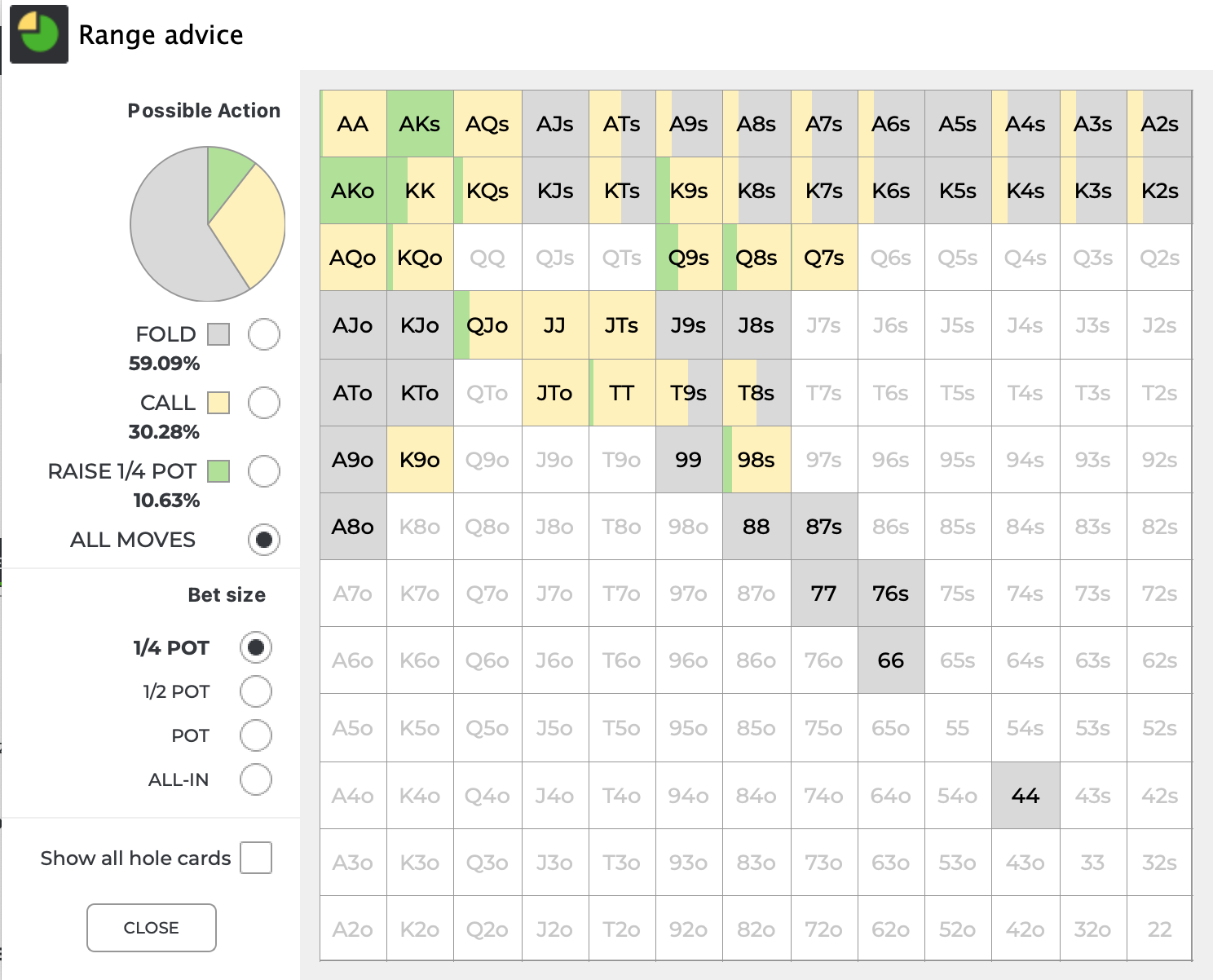
They have us crushed and their bluffs are all things that could outdraw us by the river, we really are just hoping to hit a second ten against this range otherwise we will have an awful river decision.
I recently did a video on multiway pots with the guys from the Chip Race and the big takeaway is how much more I should be folding in family pots. This hand was a prime example, I had a good two pair but I had to give it up by the turn. I also should have protected it more by betting on the flop. A secondary mindset leak I have in these spots is wanting to let people catch up and not 'scare them off' when in reality I should be recognising that hands like two pair is by no means a monster when four players are in the hand, so I should be betting while I am likely good.
Previous self study articles
- Playing against disconnected players
- Overbetting with Ace King
- Why do we check back with Range Advantage?
- Why do I turn top pair into a bluff?
- How I use ICMIZER
- How wide can we go with Antes?
- Why can we bluff missed straight draws more than missed flush draws?
- How to play a strong underpair on a wet board
How do you study away from the tables? Let us know in the comments:
