


GTO Poker Theories: Opportunity Cost
An important concept for making any choice in particular game selection in poker, what are you missing out on when you make a decision?
One of the real gifts poker has given me is that it has been a great jumping off point to learn things from other disciplines like economics, AI, psychology and Game Theory. So here is a series of articles where I bring some of the most interesting things I have learned from other subjects outside of poker which are applicable in this game we know and love.
Opportunity Cost is a concept that poker has probably made you acutely aware of even if you have never had it explained to you. Opportunity cost refers to the benefit you miss out on when one choice is made over another. For example, if you go to the movies tonight, you are missing out on the opportunity to play poker, or study, or learn to speak French.
For trivial things it is not very important but opportunity cost is vital to understand when you are making major life and/or career decisions. For example, if you choose a relatively high paying apprenticeship job when you leave school you may miss out on the opportunity to get an even higher paid graduate job following three years at University. Or very possibly the inverse, the cost of doing a relatively impractical arts degree at college could cost you three years in the workforce building up experience and saving for a house deposit.
No doubt Bill Gates could do a good job mowing his own lawn, but given he is billionaire then the few hours he spends doing it are actually costly to him. It is much more advisable that he pay somebody else to do it so that he can do more valuable things with his time. There would be a tremendous opportunity cost to him mowing his own lawn. By comparison if you are relatively low paid, it would make more sense for you to mow your own lawn and keep more of your own money (this is called 'comparative advantage' in economics).
Hourly rates

In poker this may sound familiar, because we all have an acute sense of our hourly rate. Winning poker players know how much they make, on average, at the tables every hour and as such can justify any decision based on their hourly. If a gardener costs $10 an hour and their hourly is $20 an hour, they are much better off paying a gardener to mow their lawn and playing an extra hour of poker to pay for it.
Therefore opportunity cost plays a big role in game selection. If you, on average, win $30 an hour playing live No Limit cash but only make $20 an hour playing live Dealer's Choice, then playing Dealer's Choice technically is costing you $10 an hour. Live poker itself can be a huge opportunity cost for online players. The time spent travelling is time you are not grinding online, and you can only play one table at a time live rather than 12 online. This is why a lot of great poker players don't bother with live poker.
However, before you go too far in that direction, there is also an argument that playing in the easier games could also be an opportunity cost. Playing in soft games may get you the biggest return on your hour right now, but if you never challenge yourself in the games you are less profitable in, then you may never get better at them so you can earn an even bigger hourly rate. Study itself is hard to quantify the value of, in the short term any hour studying is an hour not making money, but the more you study the more your hourly ultimately will be.
Life EV
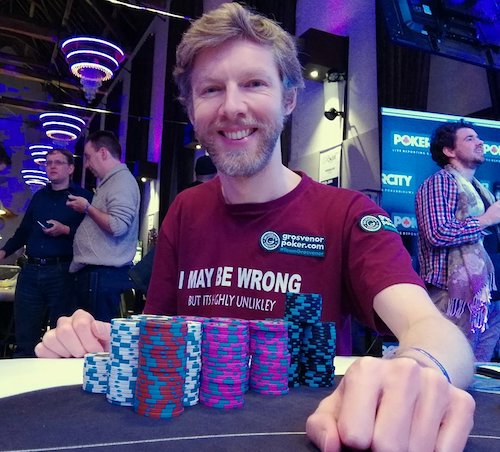
Opportunity cost is vital to understand in poker but like many concepts it can be overused. You can get obsessive if you frame everything in life in terms of your hourly rate. I recently spoke to poker pro Andy Hills about this very subject. He was an online player who probably could be earning more at the virtual felt, but he is using the opportunity to travel that live poker affords him to get what he calls 'life EV'.
I've witnessed it many times over but the players who get something extra out of poker other than the money seem to be the ones who don't burn out. It's a big strategic opportunity cost for people like Lex Veldhuis and Parker Talbot to stream their games, but they get something else out of it other than the money. In that respect, thinking purely in terms of money is an opportunity cost in itself.
What theories from outside of poker have helped your game? Let us know in the comments.
Related articles
