


Self Study: Should we just shove our entire range with 15BBs?
Barry Carter knows a big leak of his is shoving his whole range too much at shallow depths, so he hits the solvers to refine his play.
In the self study series Barry Carter shows you how he tried to solve a poker problem then consults a coach or solver to get feedback on his method.
An area of my game where if I don't have leaks I certainly could be better is my strategy when I have around 12-16 big blinds. I tend to just open shove my entire range. I actually think this is an effective strategy and I think I get the shove range right, but I know I could be getting more out of my hands if I incorporated some opens.
I thought I good place to start was to just look at some GTO opening ranges from a solver and trying to work out why it does what it does. This is the 14 big blinds effective range for UTG+1:
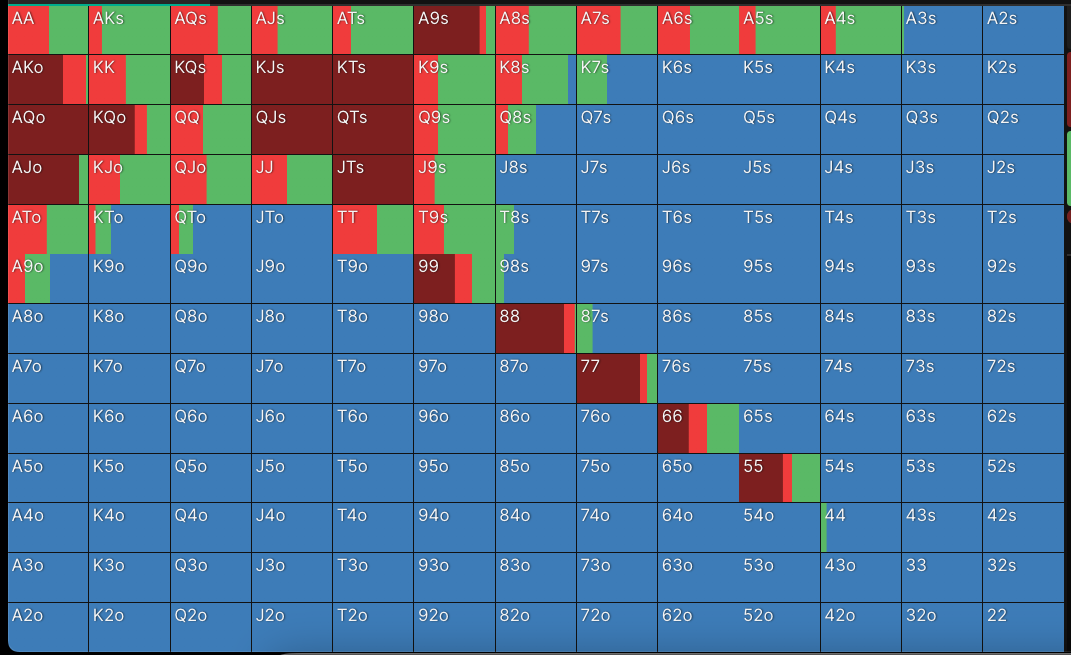
There is actually a lot to unpack here already. The limps are very interesting. Limping happens at shallow stack depths to allow us to play more hands, Dara O'Kearney gave some advice on limping here, but ultimately suggested you turn them into minraises. The hands that mostly limp are hands we like to see a flop with but are happy to fold to a raise. Hands like K9s and Q9s are mostly limps for example. We can flop really well but we do not mind folding them, we'd hate to have to fold a hand like QJs by comparison.
Maybe the best reason to limp is that it means we can also limp AA-TT - hands we are very happy to induce a shove from.
The min raises follow a similar line. They are our best hands like AA-TT and the suited Aces, and also hands that flop well but we can fold them to a shove like T9s. It seems that the opens are the same class of hands as the limps, but stronger because are committing more to the pot.
The shoves are what surprised me. I always felt that shoves were mostly hands with good raw equity but realised equity poorly post flop. That is the case for the small pairs here, 99-55. Strong hands but you hate most flops, so get them in preflop.
The big surprise is that the best suited broadway shoves, and the offsuit broadway opens. KJs-JTs all shove, KJo-JTo all open. I assumed that a hand like KTs prefers to open because it flops well, but KTo shoves because it is strong but flops less well.
I think the answer to this conundrum is the stack depths. I would argue that KJs-JTs all shove because they perform better when called, even if called by a hand that dominates them like AK-KQ. KJo and QJo, however, you don't mind folding and if you hit a pair you are never folding it at shallow stack depths.
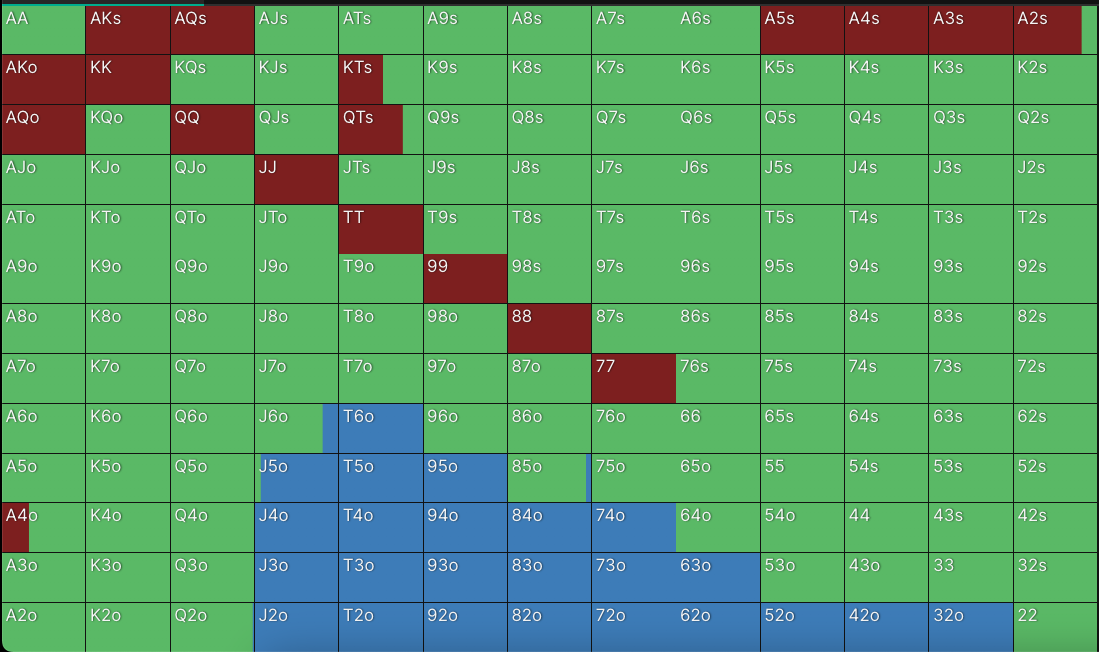
To answer this question, this is how the Big Blind responds to an open:
And this is how they respond to a shove:
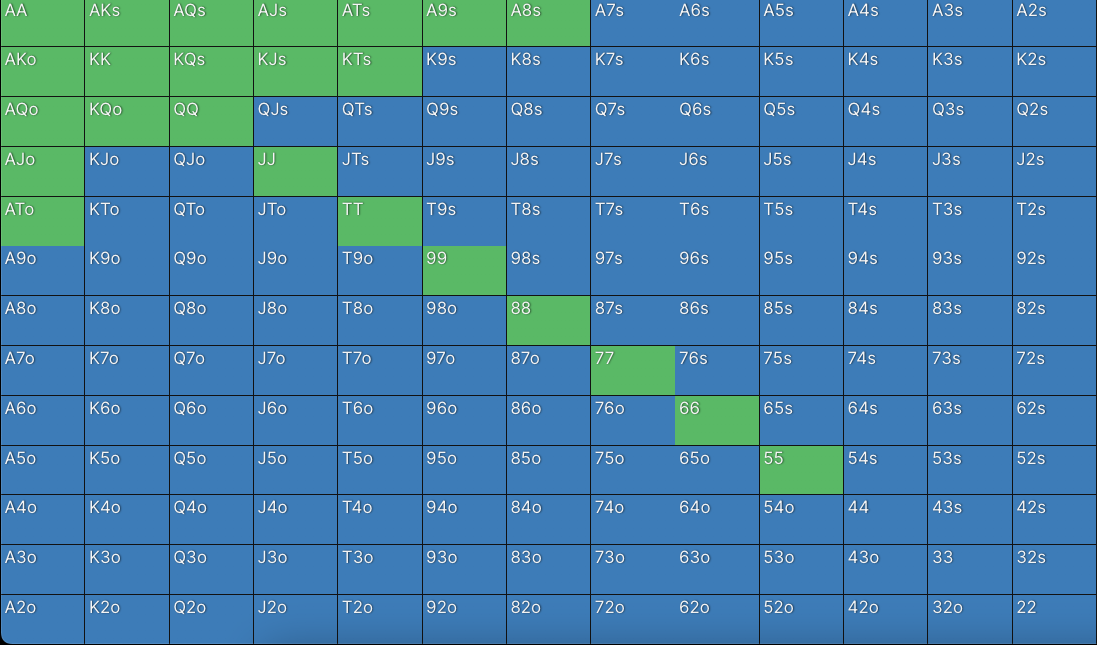
The shove response first. It is a very tight calling range and the hands like QJo would perform very poorly against it. The suited broadway hands, however, perform well against small pairs, OK against the Ax and have least have straight/flush outs against the dominating broadway hands/overpairs.
When the Big Blind defends, they defend with a very wide range. Our hands like QJo and JTo would perform very well if they hit one pair against this range. The shoves, however, crush the hands like QJo. Against the shove, this is how we should respond:
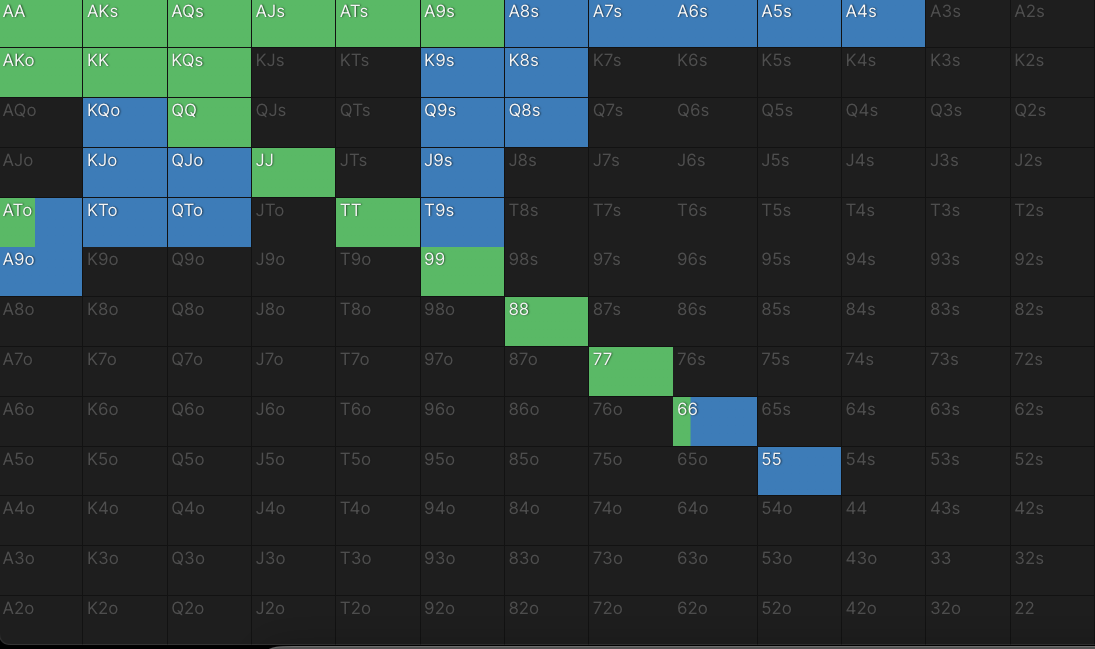
As suspected, we need a very strong hand to call. The hands I thought were shoves like KQo and QTo were indeed bet/folds.
This has been a valuable lesson. Our opens/limps should be our best hands and hands we are happy to see a flop with but do not mind folding. Our opening range is therefore a polarised range (ie. best value and bluffs). Our hands that shove should be our decent hands with robust equity and our weakest pairs that figure to be good most of the time but realise equity poorly post flop. Our shoving range, in shallow stack spots, is a condensed range (medium strength hands).
Previous self study articles
- Playing against disconnected players
- Overbetting with Ace King
- Why do we check back with Range Advantage?
- Why do I turn top pair into a bluff?
- How I use ICMIZER
- How wide can we go with Antes?
- Why can we bluff missed straight draws more than missed flush draws?
- How to play a strong underpair on a wet board
How do you study away from the tables? Let us know in the comments:
