


In praise of suited Aces
Dara O'Kearney is back to dispel the myth that offsuit hands are almost as strong as suited ones when you construct your range.
I was working with a student this week and comparing two hand ranges when he asked a pretty valuable question about the ranges we study in poker software.
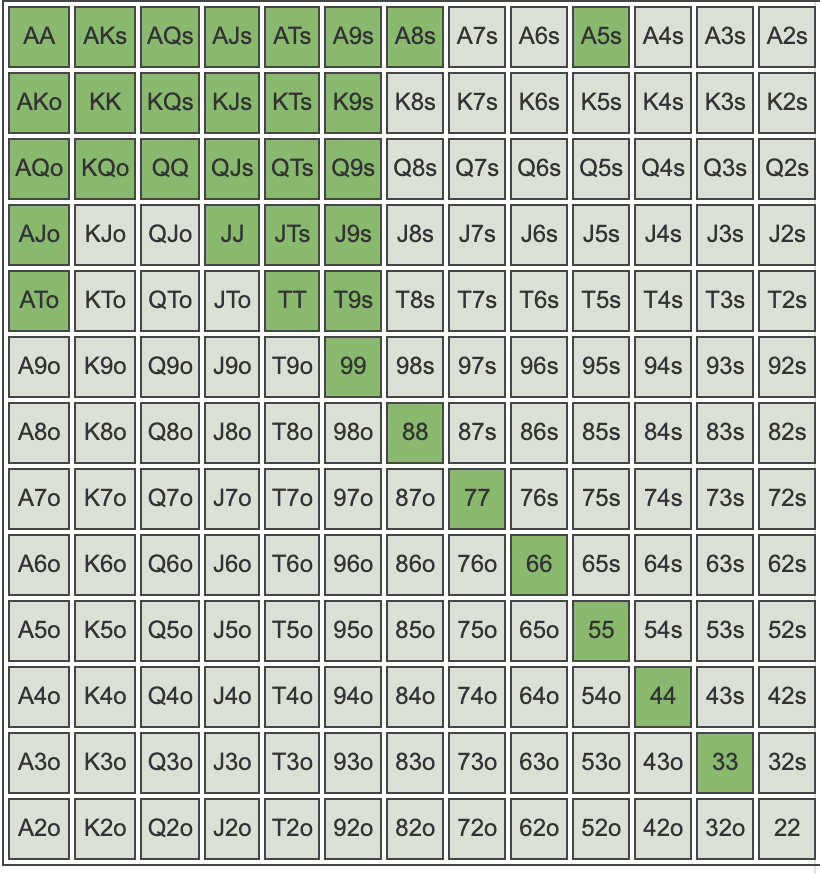
We compared two ranges (below), the first one a 14.7% range which was made up of most pairs, the better Aces and decent suited Broadway hands.
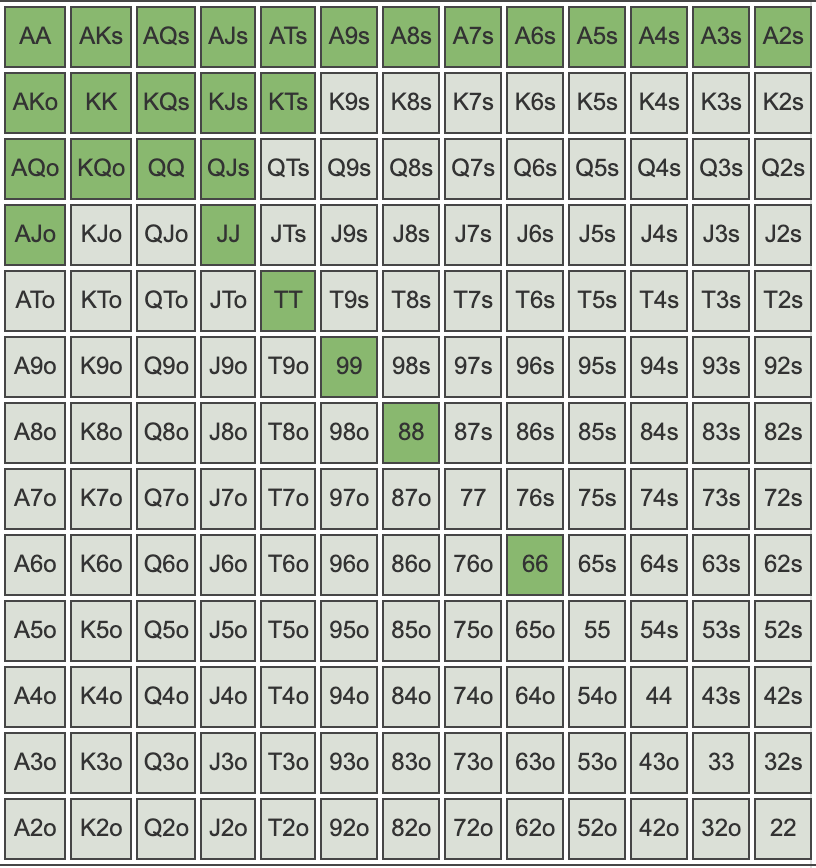
The other range is this next one, which is 11.9% of hands with less pairs, less Broadway but all the suited Aces. This was an interesting case where the range was much tighter but we actually were able to add new hands to it.
My student asked if the 14.7% and 11.9% percentages were percentages of the possible starting hands on the 13x13 grid we know from most poker software, or where they percentages of the total combinations of hands?
The answer is that when we say an 11.9% range, we mean 11.9% of the 1,326 possible starting hands, not 11.9% of the 13x13 grid.
When you look at that grid it can be misleading, because the hands in the offsuit half actually make up almost 3/4 of all the possible starting hands, while the suited hands make up less than 1/4.
Constructing ranges

That might seem obvious to many but it is valuable to know, because it really helps us construct our ranges.
There are 12 possible combinations of offsuit hands, six combinations of pocket pairs and just four combinations of suited hands.
That means for every offsuit hand you remove from your range, you could in theory add three suited hands without changing the frequency of hands played. This is why you will often see most suited Aces in a balanced range, because they do a lot of things.
First and foremost it's a way to achieve board coverage, when we add all the suited Aces to our range it's possible for use to hit any flop. We can hit an AAK flop, an 442 flop or KQ6 with two spades, meaning we become much harder to exploit.
More EV (not equity)
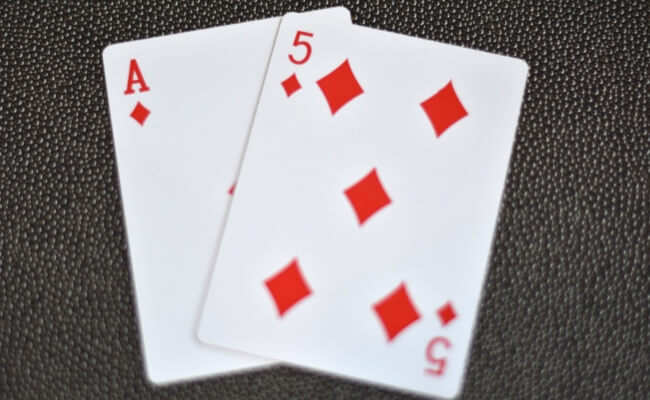
Amateur players often mistakenly point out that suited cards are only 1% stronger than the equivalent offsuit holding, but that is equity, not EV. When you play a suited Ace type of hand there are so many more flops and turns where you have equity and can profitably semi bluff.
Suited Aces also block a lot of stronger Ax type hands. Very useful for taking down preflop pots in ICM heavy spots like near a bubble. This and the EV of them make suited Aces better natural bluff candidates.
Finally, and as my student was starting to realise when he asked, we can actually do all these things while keeping our VPIP down. The range can expand even when the frequency of hands played goes down. So you can benefit from a tight image while also boasting an unexploitable range.
I think a lot of recreational players think that knowing how many combinations of possible cards make up a range is little more than useless trivia, but this is a really solid example of why combinatorics is an important part of modern poker theory.
You can get advice like this every month in Dara's free strategy newsletter (with a current focus on PKOs and 3-bet pots) which you can join right here.
More from Dara O'Kearney
- Just how valuable are blockers when calling a bet?
- Board Coverage
- When to fold Aces preflop in a satellite
- ICM masterclass with Dara O'Kearney and Collin Moshman
- Equity vs 'Best Hand Right Now'
- The most important concept in PKOs
- Does my hand benefit from folds?
- How to play a capped range
- Do you know your multiway equity?
- Some bluss are better than others
