


Omaha originated as a Hold’em variant and gained popularity in cardrooms during the late 20th century. Today, Pot-Limit Omaha (PLO) is one of the most widely played poker games online and is second only to Hold’em in global popularity.
Quick facts by PokerStrategy
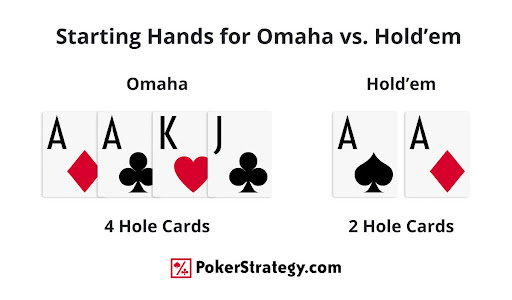
- Omaha is a community card poker variation like Texas Hold’em, except you are dealt four hole cards rather than two.
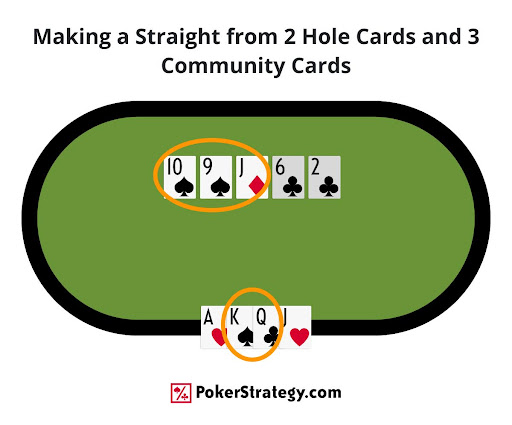
- You must use two of your cards and three of the community cards to make your hand.
- The two most common variants are Omaha High games and Omaha Hi-Lo games, which are also known as split-pot games.
- The most common betting structure in Omaha games is Pot-Limit.
What Is Omaha Poker?
Omaha is a poker variant in which each player receives four hole cards instead of two and must use exactly two of them, combined with exactly three community cards, to make their best five-card hand.
This creates many more possible card combinations than Texas Hold'em.
Omaha is known for larger pots and more action-packed gameplay, making it perfect for those looking for an advanced poker experience.
How to Play Omaha Poker
Omaha may resemble other poker variants, but the way you play is completely different.
Having more hole cards gives you more options to make a hand, but the same goes for your opponents. rules for Omaha dictate that, in order to win, you must have the best five-card hand possible using exactly two of your hole cards and exactly three community cards.
The most critical mistake beginners make is forgetting the "exactly two" rule. You cannot use all four hole cards, three hole cards and two from the board, or just one hole card.
This strict requirement fundamentally changes hand values compared to Hold'em.
Starting hand selection is more complex because coordinated hands play much stronger than random high cards. Look for hands where all four cards work together—double-suited hands, connected cards that can make straights, and pairs that can improve to sets. A hand like A♠K♠Q♥J♥ has multiple ways to win, while A♠K♣8♦3♥ has very limited potential despite having high cards.
Drawing hands are significantly stronger in Omaha.
With more hole cards, you'll frequently have combination draws where you're drawing to multiple winning hands simultaneously. These "wrap" straight draws are particularly powerful and often make you the favorite even when facing a made hand. The nuts change frequently as the board develops, so pot control becomes essential. A hand that's best on the flop can easily become second-best by the river.
Be cautious with marginal made hands and be willing to fold strong-looking hands when facing heavy action on later streets.
Omaha Poker Rules
The most important rule of Omaha is the ‘two and three’ rule. This is where most new players go wrong.

In order for you to make a hand, you need to choose two cards from your hand and three cards from the board.
For example, if there are four hearts on the table and you have the A♥ in your hand, you do not have a flush yet unless you are holding one more heart. This is one of the Omaha poker rules that you have to memorize before you sit down to play for real money.
As in Texas Hold’em, there are five possibilities in each betting round for the players in the hand:
- Check: This occurs if you pass the action without betting, and no one has bet during the current round.
- Bet: This involves contributing chips to the pot without an initial wager having been placed for that round. This will be the cost the other players are compelled to pay, and can be applied either to your value or to your bluff.
- Call: Matching the current bet or raise.
- Raise: This action increases the stakes (you can also re-raise a raise). It can be used to put opponents under pressure and to extract additional value.
- Fold: This means giving up your cards and losing your right to the pot. You are out of the hand as soon as you decide to fold and cannot play again until the deal for a new hand.
Position determines when you act in each betting round, making late position actions more valuable than early position ones.
A Step-by-Step Guide to Playing Omaha
Understanding the sequence of play helps you anticipate decision points and plan your strategy throughout the hand.
- First, each player receives four cards. This is the pre-flop stage.
- You look at your cards and decide if they’re good enough to bet on. If you like them, you stay in. If not, you fold.
- Next comes the flop, where the dealer puts three community cards face up in the middle of the table. Now you can see if your four cards match those three.
- Another round of betting takes place.
- Then the dealer puts out a fourth card, the turn. More betting follows.
- Finally, the fifth card, the river, is dealt.
- After one last round of betting, whoever has the best hand using two cards from their hand and three from the board wins the pot.
Each new community card can dramatically shift hand values, so continually reassess your position after the flop, turn, and river.
Crunching the numbers:
- With a full table of 10 players (a ring game), there are 40 hole cards dealt.
- Add 5 more community cards, leaving 7 cards unused in the deck.
- Since each player gets 4 hole cards, the number of possible combinations is much larger compared to Texas Hold’em.
- In the case of Hold’em, the highest number of outs possible is 21 (an open-ended straight and a flush at the same time).
- Omaha: You’ll have a minimum of 20 outs in one hand alone.
Hand Rankings in Omaha
The hand rankings in Omaha are the same as in Texas Hold’em. However, a pair can win in Hold’em; a pair rarely wins in Omaha.

Example of Omaha Hands (Step-by-Step Walkthrough)
Hand 1:
- Hole: 9♣ 3♦ Q♣ J♣
- Flop: 10♦ A♦ K♦
- You already have the nut straight (A-K-Q-J-10). Strong draw potential for a flush on the turn or river adds even more equity.
Hand 2 (Hi-Lo):
- Hole: A♠ 2♠ 7♦ K♥
- Board: 3♠ 4♣ 9♣ 10♥ Q♦
- Best high: Ace-high.
- Best low: A-2-3-4-7 = nut low. You split the pot if another player has a stronger high hand.
Types of Omaha Poker
There are a few different ways to play this game. The most popular is Pot-Limit Omaha, or PLO. With this variation, you cannot simply bet all of your chips whenever you want. You can only bet as much as the current pot has.
This ensures the game does not finish too soon while still allowing the pots to grow enormously.
| Variant | Betting Structure | Pot Distribution | Key Features | Strategy Focus |
|---|---|---|---|---|
| Pot-Limit Omaha (PLO) | Players can only bet or raise up to the current size of the pot. | The entire pot goes to the best high hand. | Larger pots than Limit Omaha, but less volatile than No-Limit. Uses 2 hole cards + 3 board cards. | Careful pot control, equity management, and calculated aggression. |
| Omaha Hi-Lo (Omaha 8 or Better) | Often played as Limit or Pot-Limit. | Pot split between best high hand and best qualifying low (8 or lower). If no low, high hand scoops. | Requires 5 cards, ranked 8 or lower for low. Straights/flushes don’t count against low. Strongest low is A-2-3-4-5 (wheel). | Balancing high vs. low hand potential, scooping pots, and selective hand ranges. |
| Omaha High | Can be played as Limit, Pot-Limit, or No-Limit. | The entire pot goes to the best five-card high hand. | The simplest Omaha variant: only high hands count. Uses 2 hole + 3 board structure. | Straightforward high-hand strength evaluation, value betting. |
How Does Pot-Limit Omaha Work?
Pot-Limit means the maximum bet is equal to the total pot. This includes the bets already on the table. It’s a bit of math, but usually, the dealer helps you out.
- Example 1: There’s $10 in the pot. It’s your turn. You can bet anything from the minimum up to $10. If you bet $10, the pot is now $20.
- Example 2: There’s $20 in the pot. Your opponent bets $20. Now the pot is $40. If you want to “raise the pot,” you first call their $20 (making the pot $60) and then add the total amount of the pot ($60). So your total bet would be $80.
Online poker software automatically calculates pot-limit bet sizes, but live players must practice the math to avoid mistakes.
Omaha Poker Strategy for Beginners
To be good at Omaha, you have to realize that it’s not about gambling on every hand.
Because everyone has four cards, there is always a high likelihood that someone has a strong hand. For this reason, you want cards that “work together.”
Importance of Starting Hand Selection
Four hole cards make it very tempting to play more hands. This, however, can be avoided if the following are remembered:
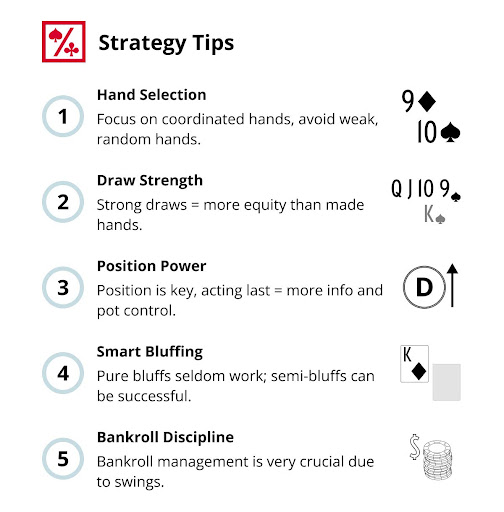
- The best Omaha starting hands are coordinated four-card combinations like A-A-K-K double-suited, where all cards work together. A hand like A-A-K-K is amazing because it gives you two sets of pairs and ways to make flushes.
- A hand like A-8-2-J with all different suits is terrible. The cards don’t work together.
- You want cards that are close in rank, like 7-8-9-10, because they can make straights easily.
Pro tip from the Editor:
Mediocre hands lose big pots in Omaha. When you play cards that "kind of" work together, you'll make second-best flushes, straights, and full houses that cost you your entire stack.
Drawing Hands & Equity
Equity is just a fancy word for your “share” of the pot based on how likely you are to win. In Omaha, a lot of the time, you will be “drawing.” This means you don’t have a made hand yet, but you’re waiting for a card to complete a straight or a flush.
Because you have four cards, you can have “monster draws, like nut flush draws, since you have more outs.
Position & Aggression
Position is where you are seated at the table in relation to the dealer.
If you get to act last, you have position in the hand. This is a huge plus, as you get to see what the other players do before you act. Aggression is to bet or raise rather than call.
In Omaha, playing aggressively with a strong draw or hand makes it difficult for other players to call, resulting in bigger pots.
Bluffing in Omaha
Bluffing is harder in Omaha poker than in other games. Since each player has four cards, it’s much more likely that someone actually has a good hand. You can’t just pretend to have an Ace and expect everyone to fold.
Although bluffs aren’t always a good option, semi-bluffs work well.
You should only bluff when you have “blockers.” For example, if you have two Kings in your hand, you know it’s harder for your opponent to have a straight that requires a King.
Bankroll & Variance in Omaha
Variance is the up-and-down movement of your money, and Omaha poker has a lot of it.
- You can play perfectly and still lose five hands in a row because of luck. This is why you need smart bankroll management: setting aside money just for poker.
- You should never play with money you need for rent or food. Because the game has so much variance, you need enough money to survive the bad times so you can be there for the good times.
Most professionals recommend keeping at least 150-200 buy-ins for the stakes you're playing to weather the swings.
Common Mistakes in Omaha Poker
Beginners in Omaha often make the same mistakes. Be sure to remember the following problems so that you won’t make them at the tables:
- Overvaluing pairs: One pair hands are rarely enough to win a pot in Omaha.
- Forgetting the 2-hole-cards rule: Make sure your hand qualifies.
- Playing too many hands: Having 4 hole cards rather than 2 does not necessarily increase the number of playable hands.
- Picking up non-nut draws: Second-best flushes and straights can cost you.
- Overbetting weak hands: Pot control is essential in PLO.
The 2-hole-card rule violation is the costliest mistake because players think they have winning hands when they don't qualify.
Live vs Online Omaha Poker
Live casino play is slower; you can observe players and see whether they look nervous.
Online poker is much faster. You have the chance to play a lot of hands for an hour online compared to an entire night in a casino. Online poker sites are helpful for playing Omaha since the software assists with the 2-3 rule.
But physical games can be more interactive and enjoyable if you enjoy socializing with others.
The principal differences are:
- Pace: Online Omaha offers more opportunities per hour.
- Tools: Online players often use HUDs and tracking software.
- Tells: Playing live requires reading body language, while online games get their tells from timing and betting size.
- Stakes: Online games tend to start at micro stakes in PLO, whereas in live games, stakes are typically higher.
Most players develop their skills online first due to the volume of hands and lower stakes, then transition to live games.
Omaha Poker vs Texas Hold'em
Omaha poker is about “the nuts,” which means having the absolute best possible hand.
Texas Hold’em is about “high card” strength and psychological bluffs. In Hold’em, you get two cards. In Omaha, you get four. This makes the game more complex and mathematically intense.
This simple comparison chart exploring the differences between Omaha and Texas Hold'em might help keep you centered in the game:
| Aspect | Omaha | Texas Hold'em |
|---|---|---|
| Complexity | More hand combinations with four hole cards. | Fewer combinations with two hole cards. |
| Action | Pot-Limit format creates bigger pots. | Action is steadier; pots are usually smaller. |
| Skill Edge | Skilled players exploit weaker ones through equity calculations and board reading. | Edge often comes from betting patterns, position play, and psychological pressure. |
| Bluff Frequency | Bluffing is less common; semi-bluffs with strong draws are more effective. | Bluffing is more frequent and often successful when timed right. |
Pro tip from the Editor:
If you're just getting into poker, consider learning Omaha instead of Texas Hold'em. Since it's less popular, the player pool is much softer; you'll face fewer experienced grinders and more recreational players who don't understand proper hand selection or the two-card rule.
Glossary of Omaha Poker Terms
Here are some of the more common Omaha terms you should keep on hand at all times:
- Blockers: These are key cards you possess, and your opponents require to form their hand.
- Counterfeited low: When the community cards deteriorate your low hand.
- Freeroll: In cases where both players currently have the best possible hand, but one has additional outs to win the entire pot.
- Hi-Lo Split: The pot is split between the best high hand and the best low hand.
- Killer card: The card that, when you see it, means your opponent is drawing dead.
- Nut hand: The best possible hand in a given situation.
- OOP (Out of Position): You play before your opponents after the flop, which puts you at a disadvantage since you don’t know what they’ll do.
- Scooping: This is the act of winning the high and the low side of the pot with the same hand in the game of Omaha Hi-Lo.
- Wrap: A straight draw with more than eight outs.
Wraps and blockers are particularly important concepts that separate winning Omaha players from losing ones.
10 Tips for Mastering Omaha
Here are 10 tips for becoming an expert at Omaha:
- Be selective in choosing your initial cards.
- Focus on playing strong nut draws.
- Remember, you need to use 2 hole cards.
- Raise tighter from early position.
- Do not overplay a pair.
- Take advantage of your position.
- Don’t chase second-best draws.
- Bet sizing in PLO games should be done carefully.
- Keep track of the variance and control your bankroll.
- Continue learning with an Omaha strategy guide or odds calculator.
Players who consistently apply these fundamentals dramatically reduce their error rate and increase their win rate over time.
Conclusion
Omaha poker offers a more complex and action-packed alternative to Texas Hold’em.
Mastering the two-and-three card rule, selecting strong starting hands, and understanding drawing equity are essential for success at the tables. Whether you’re playing Pot-Limit Omaha or Omaha Hi-Lo, focus on patience, position play, and proper bankroll management. Start with low-stakes games, stick to premium hands, and gradually build your skills.
With practice and study, you’ll understand why Omaha has become one of the most popular poker variants worldwide.
Quiz
Determine which hand you are holding in each situation:
Example 1
- Your Hand: A♠ 7♠ 8♠ K♠
- Board: 9♠ J♠ 6♠ 5♠ A♠
Example 2
- Your Hand: A♠ 3♠ 9♠ Q♠
- Board: Q♠ T♠ 7♠ 3♠ J♠
Example 3
- Your Hand: Q♠ J♠ 4♠ 8♠
- Board: J♠ J♠ 7♠ 7♠ 2♠
Example 4
- Your Hand: 9♠ 9♠ 8♠ 7♠
- Board: 6♠ 9♠ Q♠ A♠ T♠
Example 5
- Your Hand: Q♠ 8♠ 7♠ A♠
- Board: T♠ A♠ 2♠ 9♠ J♠
Example 6
- Your Hand: A♠ 9♠ T♠ 6♠
- Board: 7♠ 9♠ 2♠ T♠ 8♠
Example 7
- Your Hand: T♠ T♠ 8♠ 8♠
- Board: 7♠ 8♠ T♠ Q♠ 3♠
Example 8
- Your Hand: Q♠ 5♠ K♠ 9♠
- Board: Q♠ T♠ A♠ 7♠ 9♠
Frequently Asked Questions
How many cards are dealt in Omaha poker?
In Omaha, every player is dealt four cards.
What is the best starting hand in Omaha poker?
The strongest starting hand is double-suited A-A-K-K.
What are the rules of Omaha poker?
You’re dealt four cards, there are five community cards, and you are forced to use two cards from your hand and three cards from the board.
What is the difference between Omaha Hi and Omaha Hi-Lo?
The highest hand wins the entire pot in Omaha Hi. In Hi-Lo, the pot is divided evenly between the highest hand and the lowest hand of 8 or lower.
What are the differences between Omaha and Texas Hold’em?
The only differences are that you receive four hole cards instead of two, and you are forced to use only two of those four hole cards in the game of Omaha.
Is it possible to play Omaha poker for free online?
Yes, there are several sites that allow you to play Omaha poker for play money.
What mistakes do new players make in Omaha?
The most common mistakes are playing too many hands and believing you can only use one card from your hand to complete a flush or straight.
How to Play Omaha Hi Lo Poker?
Learning how to play Omaha Hi Lo poker requires understanding the split-pot structure, where the best high hand and best qualifying low hand divide the pot.