


Thirty Beginners Tips (1)
Introduction
In this article
- Why you should stick to the SHC and be patient
- The external factors you need to keep an eye on
- Have fun playing poker and don't be afraid to make mistakes

What information do beginners need? Or those that may have a bit of experience but can't really get started?
Thirty tips, thirty rules of thumb. If you follow them, you can't go far wrong.
These tips are in no particular order.
1. Tight is right
Tight is right. The fewer difficult hands you play, the easier your postflop decisions will be. You can loosen up as your career progresses but you don't have to play like this right from the start.
Follow the Starting Hands Chart and only deviate from it as an exception.
Even when you do start to advance, add more hands to it slowly and gather experience.
2. Don't overestimate yourself
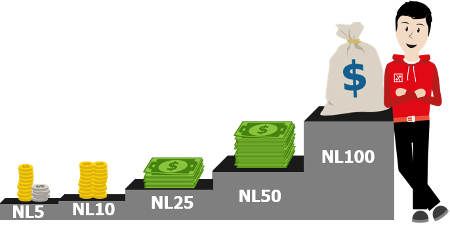 The poker world is big and even if it sounds harsh, you don't know yet if you're just what it's been waiting for.
There are other players at the tables with similar goals and they know the common poker rules as well. Even seemingly weak players have their own strategy, they can hit flops or a draw on the river too.
Don't think that just because you're motivated and got off to a good start that the pots will just come to you. Respect every opponent and accept defeats as you will have to take a few.
Even if you should be the best player at the table, you don't automatically have the right to to leave it with the biggest winnings.
3. Theory
Theory is less fun, as in most areas of life.
But as in school, university or daily work life, here nothing is a given. What worked yesterday may not be ideal anymore tomorrow. You change the limits, the platforms, the game variant: it's about being up to date.
There are a host of options at PokerStrategy.com, so in the end it's down to you to work on yourself every day.
4. Think
Even if you should use the Starting Hands Chart to begin with, it shouldn't stop you thinking for yourself.
You should consider every spot anew, especially postflop. There are no standards, each spot is different, the combinations of starting hands, boards and opponents are just too big.
Don't fall into the the same lines again and again, rather try to justify for yourself why you should continue with a line and check if you're unsure.
There are strategy forums and hand evaluation forums for this.
5. Be aggressive
Try to embrace the concept of a TAG (tight aggressive player). Tip 1 covered that you can't go wrong with a tight game. However, don't miss opportunities to play aggressively and put your opponent under pressure, preferably once too often rather than too little.
Keep your foot on the gas.
6. Don't tilt
Tilt is one of the biggest problems for most poker players. They allow themselves to be influenced too much by the results, bemoan their state, their game and of course, the almighty poker god.
Next comes the loss of your A-game and you lose control. Don't lose track of your game.
You can find a couple of tips here:
 Strategy: Psychology & Didactics
7. Patience
"Patience is a virtue!"
Rome wasn't built in a day. Set yourself realistic goals, jumping up a limit every month and going heads-up with Phil Ivey by the end of the year are not realistic goals.
The higher you aim, the deeper you'll fall. So play patiently and take developments as they come, because provided you're already playing well, there's nothing you can do to change the situation anyway.
8. Downswing?
If your curve is going down steeply, it may be due to a downswing. But that's just one possibility.
Many players who live out the lifetime downswing are simply not playing well.
Look for leaks, work on your game and examine your game. You can't always blame bad luck, although it can, of course, play a role.
9. Variance
Here's a tough topic: variance.
- You lose ten flips in a row? It happens!
- 50 stacks down? It happens!
- Does it work the other way too? It happens!
Variance has many faces, you'll just have to get familiar with them. Make your enemy your friend, because there's no escaping variance.
10. The sample size
Winning two flips in a 500 hand session doesn't make you a good poker player. What matters is what you achieve in the long-term.
"It's one big session"… stick to this motto. What works well today might not tomorrow. You need to try and see the bigger picture and proving to yourself that your game is good takes more than a few thousand hands.
11. Table selection
Be careful who you play against. If you play against opponents who are as good as you, you can't break even as you'll have to pay rake. You'll end up in the red in the long-run.
Your aim needs to be to at least beat the rake. For that, you need good tables and suitable players, who don't examine things as carefully as you do.
Don't just pay attention to the table, consider the positions too. Try to have position on weak players and don't be afraid to leave the table if it isn't working for you.
12. Nobody is perfect
Even a disciplined player can't play well all the time. Dropping off your A-game is something hardly any player will seriously claim has never happened to them.
As every good poker player will tell you, there's no such thing as a "perfect game". Something can always be done better. So don't aim for perfection, this can also be a deep trap.
Accept your weaknesses, no matter what they are. If you have leaks, work on them. If you tilt, research the topic and try to stop it.
The most important step in all this is admitting your mistakes. If you can do this, you're on the right path.
13. Have fun
It sounds strange but having fun makes life a lot easier. If you're in a dark mood and can't be bothered with poker, just stop and do something else. It's very unlikely that your mood will improve at the tables.
You won't be able to play poker long term if you don't enjoy it. If someone sucks you out on the river, just laugh about it, because you can't change it.
As long as you have fun playing poker and enjoy going to the tables, even bad beats can't phase you. At the same time, this attitude will stop you from tilting.
Look at it as a hobby, which might still allow you to win a few dollars. When you really start picking up steam, you'll just start having fun.
That's a nice prospect.
14. Don't worry about mistakes
You'll make mistakes. Probably a lot. This can't be changed.
It can't be your aim to avoid mistakes from the outset, rather to learn from them. Don't be afraid to post even your worst played hands in the forum. Ultimately, you'll learn from them, which is precisely your goal.
Be resolute. Decide in any given situation on a possible way out and follow it. You can always check later if it was the right way.
15. Concentration
Always concentrate. You can't play poker while you're doing something else. If you're watching television, writing e-mails, surfing the internet, you're distracting yourself from the actual goal: playing your A-game at the tables.
Think about the previous points. Nobody will give you the money, you have to earn your edge. Don't think that 90% is good enough. Always give 100% and don't let anything distract you.
Conclusion
That's tips 1 to 15, the next 15 will follow shortly.
But don't just read them through, compare them with your own opinions. You're bound to find something you can work on.
| LINKS | |||
|
|||

