


The difference between heads-up and Blind vs Blind
Is playing a pot Small Blind vs Big Blind the same as getting heads-up at the end of an MTT? Not at all, the strategy varies significantly.

In the self study series Barry Carter shows you how he tried to solve a poker problem then consults a coach or solver to get feedback on his method.
After getting schooled on my heads-up play, I have been taking more interest in the study of it. I figured that not only would it help me when I reach the highest equity spots of poker, but it would also help me in Blind vs Blind spots.
Or would it? Today I wanted to look at the differences between heads-up (at the end of an MTT) vs when it is folded around to the blinds.
From what I can tell, these are the fundamental differences, and they are significant:
- The Small Blind is out of position postflop BvB, but in position postflop heads-up
- The starting pots are usually bigger BvB because of the antes (though this may vary, especially live with a Big Blind Ante)
Opening ranges
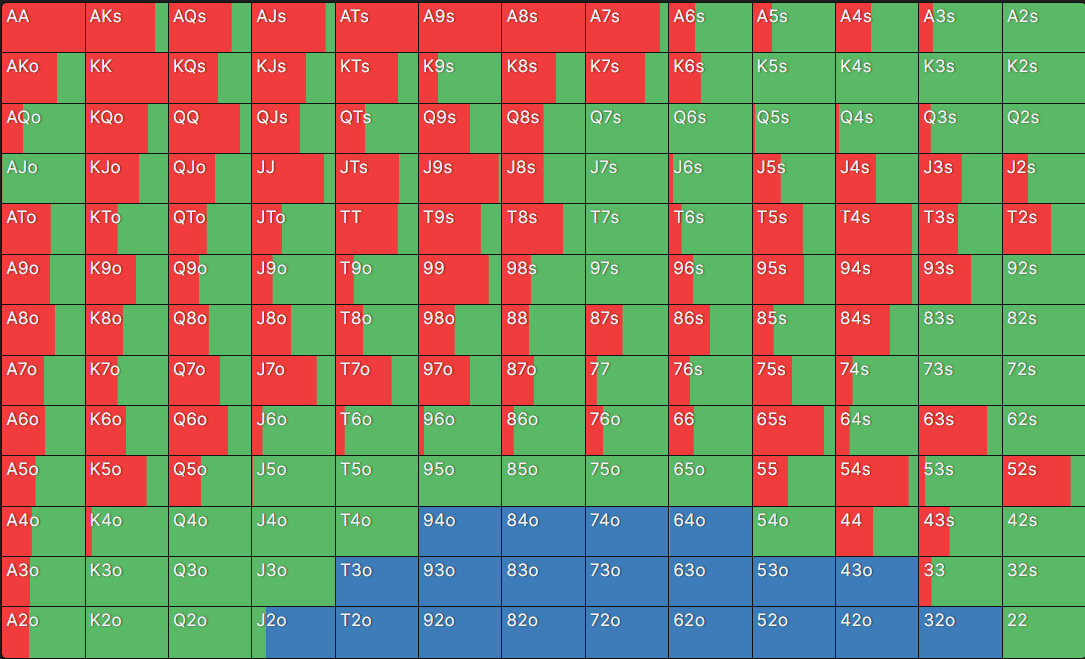
Once again I am using GTO Wizard to try and identify the strategic differences between the two spots. To begin with, this is a 40BB range when it is folded to the Small Blind:
And this is the 40BB SB range in a heads-up match:
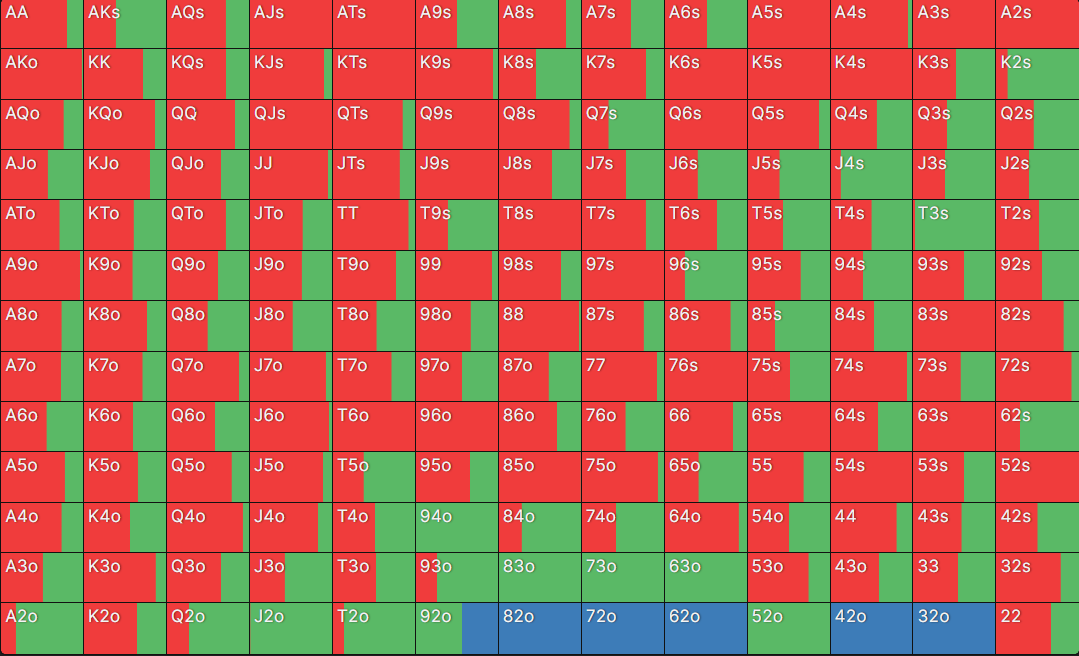
There is already a lot to unpack here. BvB we raise 30% of the time and call 53% of the time, whereas heads-up we raise 60% of the time and call 35% of the time.
This appears to be for several reasons. I suspect most of all because we are in position after the flop heads-up, so we can raise more hands more profitably.
When we do bet, however, we bet 3.5BBs BvB and 2BBs heads-up. This will be to mitigate being out of position, as well as because the pots are bigger, so we need to bet bigger to steal more.
The shape of the BvB range is much more linear, whereas heads-up almost everything is a mix. Again, this is probably because we are in position heads-up, making the weaker hands easier to play. Being out of position forces us to have a better hand generally, BvB.
Defending ranges
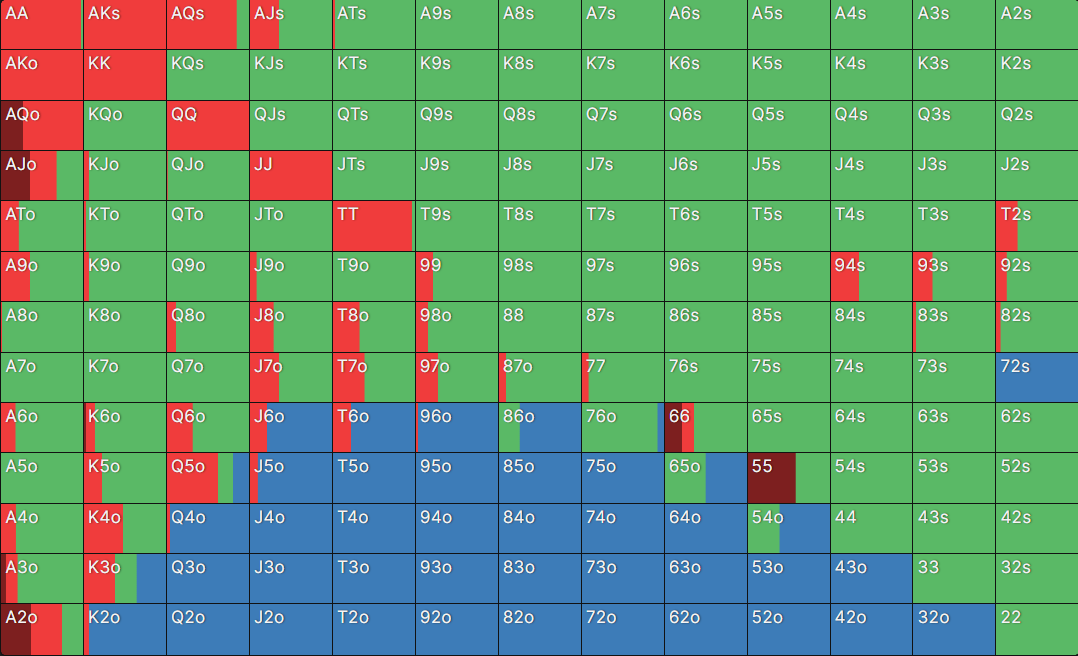
Next up, assuming the SB opens, let's look at what the BB does. First BvB:
And then heads-up:
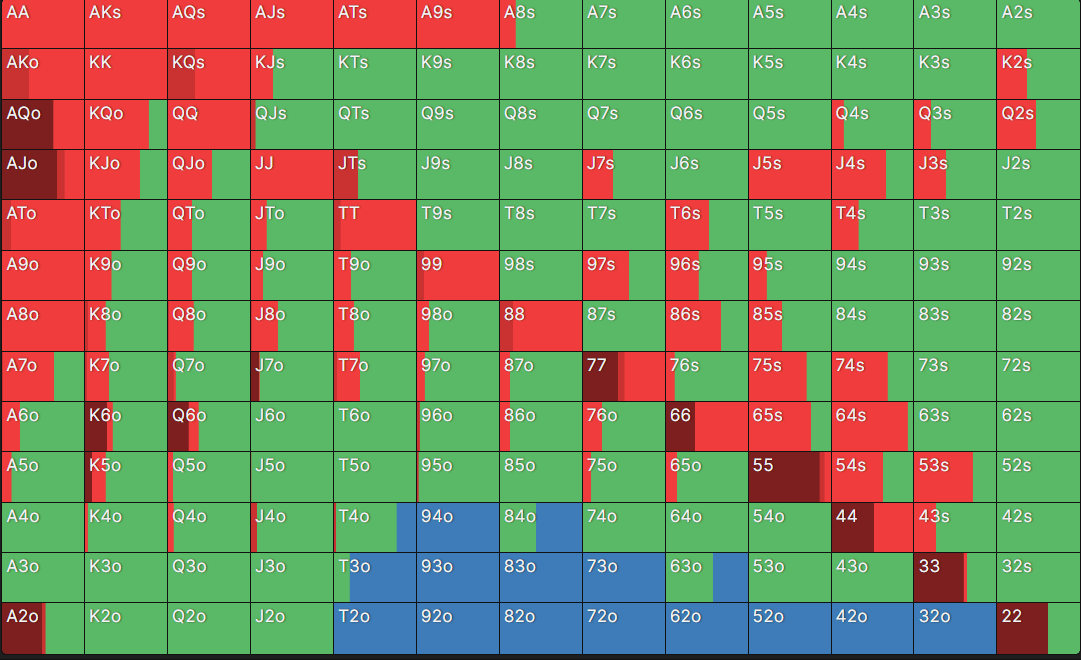
The BB shoves 1.3% of the time BvB and 4.3% of the time heads-up. I would have assumed this would have been the opposite, given the pot is bigger and worth stealing BvB on account of the antes and larger raise size. This must, therefore, be because the SB opens a much wider range, so a shove can get through more often.
The BB raises 11% of the time BvB and 21% of the time heads-up. Most of the time the BB raises 6BBs, rather than 9BBs BvB. So while being more aggressive in shove frequency, when they simply raise they do so for a much smaller size. Once again, this has to be because of the much wider opening range from the SB. Normally I would expect the BB to raise larger heads-up because they will be out of position postflop. The BB raises larger BvB, no doubt, also because of the antes and larger raise size.
Shallow play
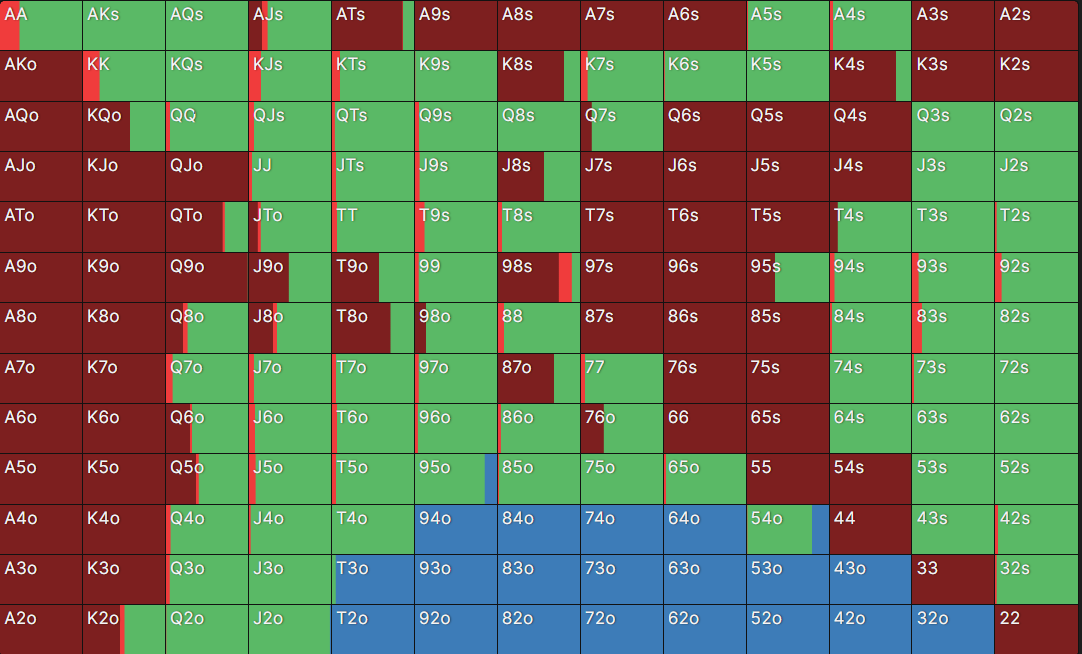
One last thing I was curious about and that is when the effective stacks were shallow. This is BvB with 12BBs effective:
And this is the same spot, heads-up:
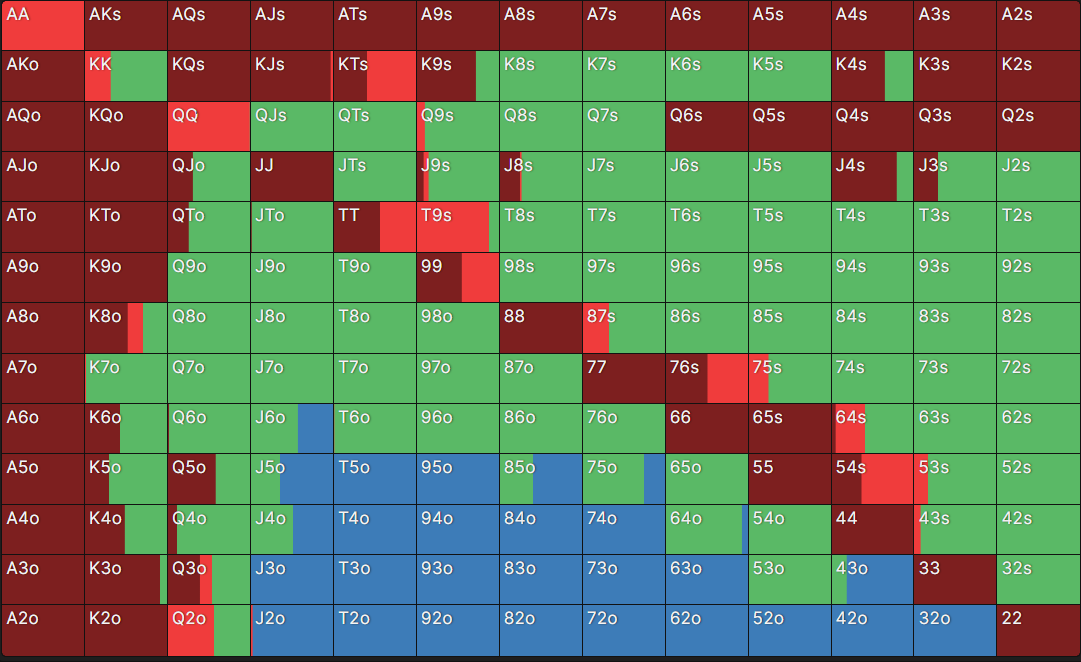
First of all, what I expected to see here was more shoves BvB, because of the antes, and that is what has happened. We shove 38% of the time BvB compared to 31% of the time heads-up.
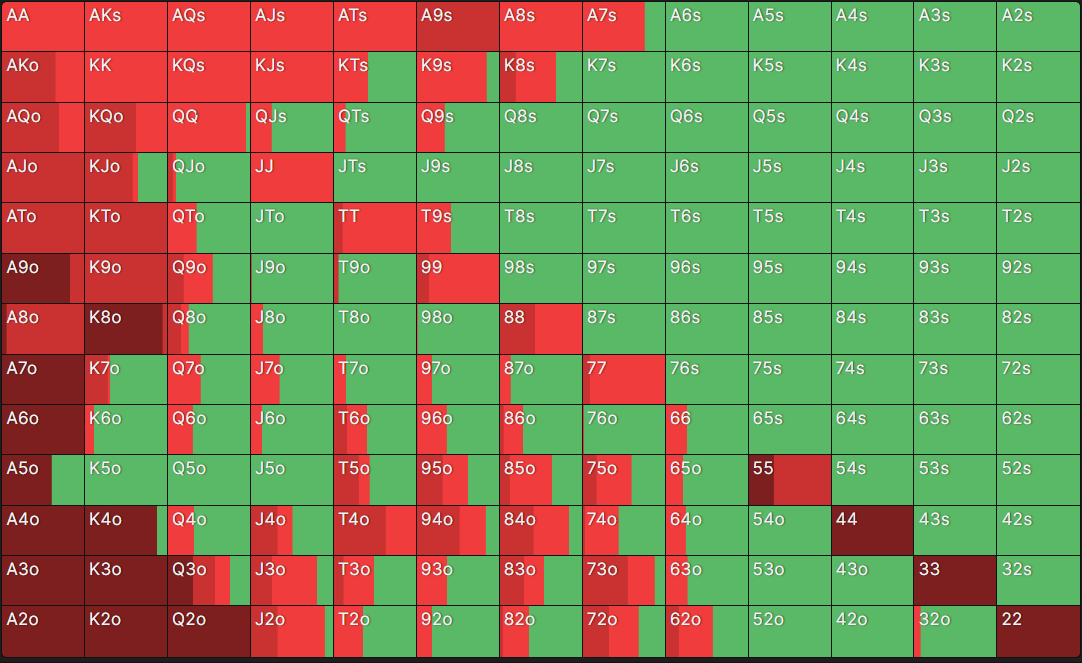
The curious part is the opens. We open 2% of the time BvB, with a 2BB bet size. We open 3.5% of the time heads-up with a 4BB bet size. We also limp almost all our good hands BvB but open them more heads-up. The bet sizing I have no clue about, but my suspicion is we limp the strongest hands because the BB is incentivised to shove more to a call because of the antes. So let's end things by testing that. This is what happens when SB calls, BvB:
And this is the same spot, heads-up:
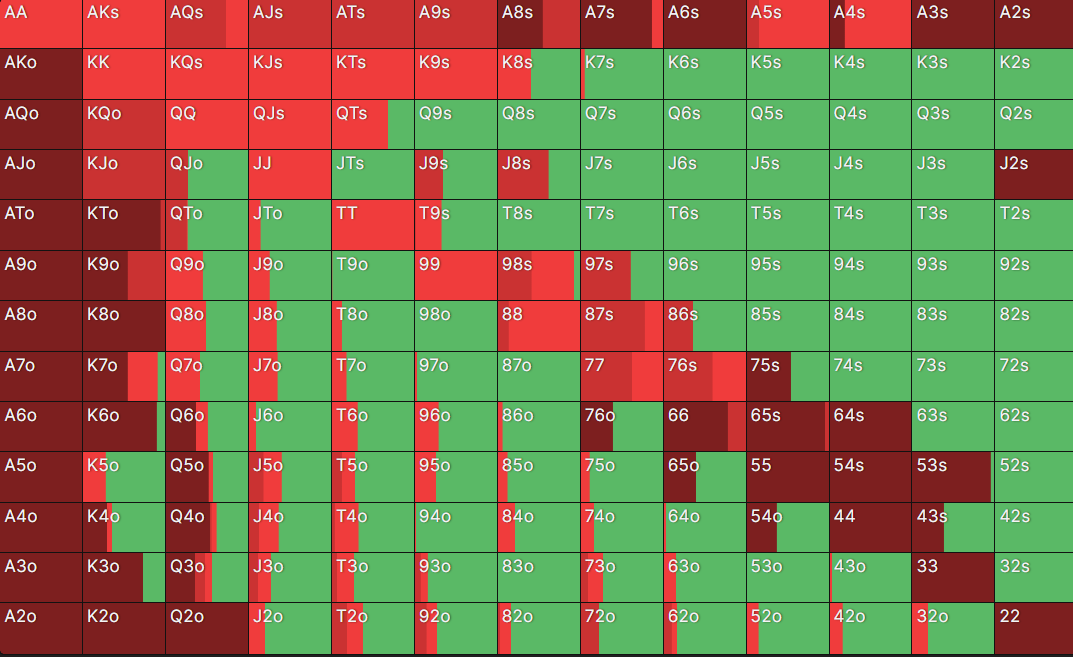
Not quite. The BB shoves 12% of the time BvB and 25% of the time heads-up. However, the BB raises in general 44% of the time BvB and 46% of the time heads-up. So my theory is probably correct, but it's complicated like a lot of heads-up spots are.
I hope you found this useful. My initial thoughts are that the fact the SB is in position postflop has much more bearing on the strategy than the additional antes BvB. But it is very clear to me that both heads-up and BvB are complex beasts that take a lot more study than my quick run-through here.
Previous self study articles
- Playing against disconnected players
- Overbetting with Ace King
- Why do we check back with Range Advantage?
- Why do I turn top pair into a bluff?
- How I use ICMIZER
- How wide can we go with Antes?
- Why can we bluff missed straight draws more than missed flush draws?
- How to play a strong underpair on a wet board
- How to play a 15BB stack
- How often does Villain have an Ace?
- Why do we not check/raise with the nut flush draw?
- Why do we bet small on the turn?
- When do we open shove the flop?
- The difference between SB and BB defends in single raised pots
- The difference between SB and BB 3-bet pots
- Is Bottom Set more profitable than Top Set?
How do you study away from the tables? Let us know in the comments:
