


Neuropsychology of Poker (3) - Dopamine, Energy and Focus

Introduction
In this article
- How a neurotransmitter called dopamine controls your mind
- Why a healthy dopamine level is important for you as a poker player
- How to reach a healthy level of dopamine

When will you stop tilting? Poker and profit would be much more harmonious terms if only you could stop spewing chips unnecessarily. You spend so much time studying and preparing, prepping and discussing, reviewing and rigorously strengthening your poker skills to crush the competition.
And yet, at least once a session, it’s likely that a stack of chips will still find its way to the middle and then to the opponent. All the while, you are left watching in horror and amazement, wondering why you just made a play which you knew was definitely wrong. This phenomenon is all too real, all too common, and yet many poker players do not understand the underlying physiological mechanisms driving this behaviour.
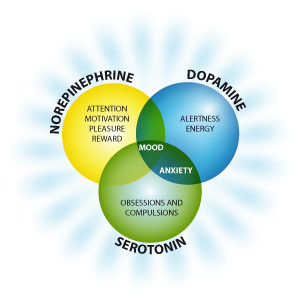
Your tilt, your mood, your energy levels, your tension and anxiety, even your sex drive are all mediated by a neurotransmitter called Dopamine, as well as a physical response to stress that helped your ancestors survive and give rise to the poker playing cyborg you are today.
How dopamine works in the brain
The brain, as you now know, is a collection of cells called neurons with bodies and extensions linking to other neurons. Bundles of these connections along certain activated routes form conceptual pathways. Dopamine is involved in a few different pathways, and its activity is crucial in all of them. The motor loop is the motor pathway through a subcortical region called the basal ganglia which governs your physical nature and is influenced by exercise.
The limbic loop runs through the limbic system, the emotional region in your subcortex, and extends into your frontal lobes. There are also many reward pathways that will be discussed in part 4, which utilize dopamine to make you feel pleasure when winning, or depressed and potentially obsessive when losing.

You may recall that dopamine is highly active in the frontal lobes of your brain. Your ability to rationalize, plan, predict, and remain poised are all functions of dopaminergic activity. Ensuring healthy levels of this neurotransmitter is crucial, not only to your poker success, but also to your overall physical and mental well-being. As you may have guessed, dopamine does not act alone; the effects are produced both directly and indirectly by this neurotransmitter and its counterparts.
Norepinephrine is a hormone synthesised from dopamine. In fact, when originally discovered, dopamine was considered to synthesise norepinephrine as its primary function. We now know better and appreciate both its complexity and diversity. The relationship between these two neurotransmitters is nevertheless very important and very relevant to your poker play.
Your homo sapien ancestors, originating somewhere between 150000-250000 years ago, succeeded in surviving partly because of their response to stress. When encountering a threat or any other substantial stress factor requiring an act of advance or retreat, their bodies experienced what is called the ‘fight or flight’ response.
As your body prepares to take drastic action, either to attack or run away, norepinephrine is released, triggering an increase in blood pressure and blood flow in your body. There is a dramatic release of glucose to energise your response, and your body is prepared for serious action. This response allowed your ancestors to chase after their prey and kill for their dinner.
If there was a predator lurking, it allowed them to flee the scene as quickly and dramatically as physically possible in order to escape the threat. This mechanism was crucial for the survival of your evolutionary ancestry, and still is today. Fortunately and unfortunately, this process still takes place in your body. However the stress factors you face today are generally quite different to those your ancestors experienced. Your body is built for survival, and because mere survival is easy today, this response is activated by relatively trivial situations.
Last time you were involved in an argument with a loved one, you most likely exhibited some of the following symptoms: your heart began to beat faster, perhaps you began to sweat and tremble; you began to feel the uncontrollable urge to dramatize your responses and boiled to a point of intense action, either towards or in retreat of your social opponent. This is the same response your body undergoes when confronted with a stress factor on the poker table.
Surely with a response this dramatic it is no wonder you end up tilting away stacks in dramatic displays of poker action as you make improper folds or worse very unprofitable bets and raises. There are pros and cons to this stress induced biological process, and understanding them can help you mediate their activity.
With your blood pumping and your body ready for action, the heightened norepinephrine levels can help your brain at the poker table. The elevated state of arousal you are in at this point increases your concentration and attention. You feel more awake and alert, which is definitely better than a subdued, half-asleep auto-pilot state at this point. But as you’ve just read, there is a serious risk of being too tense in this situation and this level of arousal can leave you more sensitive to continued stress factors from the table action.
An example might help clarify things. Say you are playing 5/10 No Limit Hold’em at a 6-max table. In fact, you are playing at 4 tables. Sounds profitable? It may very well be, but what if you just lose a preflop all-in with QQ vs AK.
No sweat, you do this all the time, flipping pre-flop is a common occurrence and something you are very used to. Your play continues without being influenced too much. 30 seconds later on another table you get it in preflop again, this time you have KK and your opponent shows AA and holds. Now, you feel it a little more. “Ah just my luck” you might think to yourself. Perhaps you’re adjusting the way you’re sitting in your chair. Still, business as usual you think, but your brain is already feeling the effects. At this level of neural activity, it cannot tell the difference between a potential predator rounding the corner and losing 2 flips at the poker table.

Put simply, there is enough stress to elicit a response, and the body is already starting to react. Nevertheless, you continue playing, maintaining your A-game and composure. 2 minutes pass and you hit a set: wonderful! Surely now you can regain some of your losses. You check/call the flop, the turn and then check/raise the river and your opponent snap-calls. Your microseconds of joy turn into horror as your opponent reveals a bigger set. This time your response is more dramatic, perhaps you look away from the screen and grimace. Your shoulders move closer to your neck, you hunch a few more inches over the keyboard, your heart-rate increases a little bit more.
Being a professional poker player, you shake it off and continue playing, still maintaining your A-game. However, your body already has something different in mind. It has already begun to secrete norepinephrine at dramatic levels. All of a sudden you feel more energetic, yet tense, attentive and excited, too excited perhaps. You continue playing, and whether you realise it or not, you’re making decisions faster, clicking buttons quicker and not thinking as clearly. You might be able to continue playing profitably; nevertheless, you are not as profitable as you were before the session began.
This example might not describe you exactly. It might take your body 1 buy-in to begin this response and activate this process, or it might take 10. Everyone is different. Your level of poker training and physiological baselines can make a huge difference. Regardless, your body and brain undergo real physical changes as a response to what is occurring at the poker table that can drastically alter your play and thus your profits. It is crucial for you to understand exactly how this happens. Not only in order to tailor your play accordingly, but also to understand how to influence these mechanisms and become the best poker player you can be.
The importance of healthy dopamine levels
Exercise is important, not only to be generally healthy but as an athlete it is crucial (and yes, poker players are very much athletes). Okay, you don’t have to run miles or exert physical dominance against others, but poker, and especially online poker, is a very intense mental and physical exercise. I don’t have to convince you online poker is a mind and body sport, you know that already. As such, you train accordingly. You do train, right? If the answer to that is not a resounding yes followed by a fist-pump, it’s time for you to spring into action.
You read earlier that dopamine is active in the motor pathway. This pathway extends into the frontal lobe and, being physical, should generally increase the dopamine levels in our frontal lobes. Luckily, this is exactly what happens. In fact, it has been shown that just 10 minutes of walking when feeling lazy and unenergetic can increase your energy for the next 1-2 hours, while simultaneously lowering your tension. Of course, it can’t be a slovenly, snail-paced walk, but it doesn’t have to be a speedy race to the finish line either. A pace similar to one that powers you into work every morning will definitely be sufficient.
Oh wait, you don’t have to go to work every morning, I forgot: how lucky you are! Regardless, simply moving for a short period of time when you feel lazy will stimulate the motor pathway in your brain, releasing dopamine and boosting your energy, both physically and mentally, and it lasts for hours. And that’s just walking, imagine what would happen if you made a routine of going to the gym, swimming, running, biking, playing sports, rock-climbing or anything else that piques your interest. The one thing gyms don’t lie about is that the result can definitely be a new and better you.
You might be asking a question at this point? “But Ali,” you might begin, “if dopamine is involved in the synthesis of norepinephrine, won’t increased dopamine levels lead to more norepinephrine and the subsequent physiological negatives for our poker play?” Good question. Increased dopamine does not necessarily mean more norepinephrine.
As you learned, dopamine is involved in many different systems along various pathways. In fact, healthy dopamine levels can lower stress, increase confidence, heighten your mood, and increase your resilience. Maintaining a work-out regime can make you less sensitive to stress factors and thus delay the fight-or-flight response. It’s not fully understood if this is accomplished by actually lowering the physiological level of stress hormones or simply creating a baseline that counter-acts them more intensely. Nevertheless, the more active you are, the higher your baseline dopamine levels, the less tense/anxious you are generally, and thus the more robust.
Okay so dopamine can help ward off tilt, but what else can it do? Like serotonin, the drug industry profits a great deal from drugs that boost dopamine. The main reason being that dopamine helps mediate your mood. Healthy dopamine levels can make you feel happier, more in control, more reasonable. You can also expect heightened attention and concentration on top of this boost in self-control. There is quite a bit to look forward to when you maintain a healthy ‘dopamine high’. What can happen when it’s too low?
Well beyond the opposite to what is mentioned above, the lowered concentration and attention, lack of control and increased sensitivity to stress, there are other influences. Depression is a very common manifestation of lowered dopamine. You can also expect less energy and coordination. To reiterate, physical action activates dopamine along the motor pathway, boosting your mood and leading to more action. It’s a snow-ball effect. When you get off the couch and begin walking, you might feel the urge to jog, then to play sports, motivating you to be more active while maintaining higher energy levels in general.
Unhealthily low levels of dopamine can also bring a deficit in episodic memory. This is the memory that helps you remember autobiographical events, such as times, places and dates. For your poker, this could mean weakened memory of the context surrounding your poker hands. This could be very important. If you had remembered more factors surrounding a hand played against a specific opponent 2 days ago, your analysis of their range could be drastically different. Or perhaps it could allow you to have a better grasp on your own image as perceived by the opponent in question. More importantly, lowered dopamine also hinders your executive functioning.
Executive functioning is a theorized concept about how the brain works. These are higher order mechanisms employed to manage important cognitive processes and flexibility. Cognition again refers to thought and information processing. This means that lowered dopamine levels can make it more difficult to think abstractly, to acquire and form rules, to initiate appropriate action and stop yourself from taking inappropriate action. This is all very important for your poker.
Considering multiple abstract concepts on the fly while incorporating contextual cues when forming a read using previous hands, and using that information to form rules that govern your actions, ultimately ensuring you take the rational action and not the tilted one, is all down to our dopamine levels. And more specifically, as you might remember, it is our frontal lobes that utilize these dopamine levels for the complex reasoning profitable online poker requires.
You get the point, the link is clear and you understand why and how dopamine is so important to your poker profits. So, what can be done to boost it and maintain healthy levels, apart from exercise? What can be done to ensure the proper moods are guiding our poker actions?
Well for one, the time of day can have great influence. When you wake up your energy and mood are at their lowest of the day; both of which increase by the afternoon, and then start to decrease again until you go to bed. You might surmise then, that late morning to early evening are the best times to engage in poker, in order to ensure an A-game. You would generally be right. There is more to the story though.
Your physiology has something to say about it too. Studies have shown that there are morning types, and night types. The former are better with intellectual tasks in the morning, the latter, better in the evening. Through practice and recognition you can analyse which type you might be. Generally though, regardless of physiology, late mornings and early afternoons are when you are most likely to be calm, with the least amount of tension.
There are other ways to avoid lower and unhealthy baseline dopamine levels. Stress, whether as a result of social disturbances or other shortcomings, can lower dopamine levels. Poor nutrition, lack of sleep, drugs, alcohol, caffeine and sugar can also lower dopamine levels. Having that coffee and donut before playing a session is probably not the best idea. Isolation can also lower dopamine levels, as well as general activity in the frontal lobes.
On that note, lowered dopamine levels can also hinder your sex drive. So what’s the bright side? Sex boosts your dopamine and mood. So have more sex, as if that needed to be prescribed! Certain foods can also help. Almonds, avocados, bananas, dairy products, lima beans, pumpkin seeds and sesame seeds also increase dopamine levels. So put down that candy and go to your local health food store.
Conclusion
What more can I say, we have all been there: depressed and lethargic, moody and tense, sensitive and stressed. Energy is hard to come by, especially when things aren’t going well for you at the tables. It takes a lot of work to push yourself into action. Achieving and then regulating a high intensity exercise regime, work schedule, and nutritious diet takes time and discipline.
Fortunately, the next part of this series will tackle motivation and discipline. Until then, rejoice in the fact that getting out of a slump and optimising your mental health and poker profits is a science. A game of numbers, with knowledge as your weapon and dopamine being your target.
As you envision all that can be in the days ahead, and your frontal lobes spring into action, helping you conceptualize your goals and success, rejoice, because although plenty of work lies ahead, fortunately, it all starts with a walk. Well then, you’re not still sitting around…are you?


