


How wide can you call the 'complete-shove' from the BB?
If you are convinced the Big Blind shoves every time you complete the Small Blind, how wide should you be calling them?

In the self study series Barry Carter shows you how he tried to solve a poker problem then consults a coach or solver to get feedback on his method.
Today I have a super simple question for HoldemResources Calculator and I thought you would like to see the answer too.
An incredibly reliable exploit in the games I play, when stacks are shallow, is to complete the Big Blind from the Small Blind when I have a strong hand. The frequency at which my opponents will shove against my weak-looking limp is very high.
I wanted to see how wide I can limp-call a shove if I am to assume my opponent is doing it with almost every hand?
In GTO world, this is the limping range:

This is almost 60% of hands. The BB is supposed to shove this range:
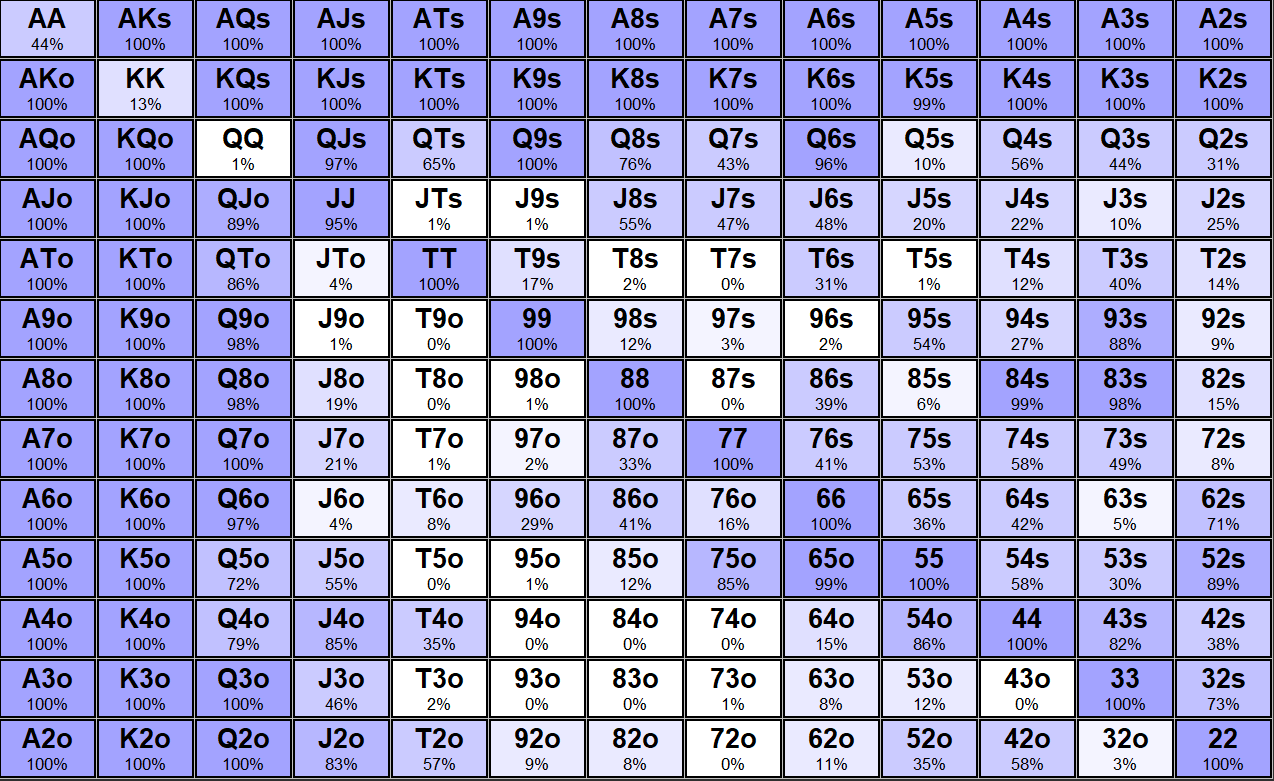
They shove 56% of hands, so what I am seeing in my own games might not even be much of a mistake from my opponents. I'm probably under-calling massively in this spot.
When the BB shoves, this is the GTO calling range:
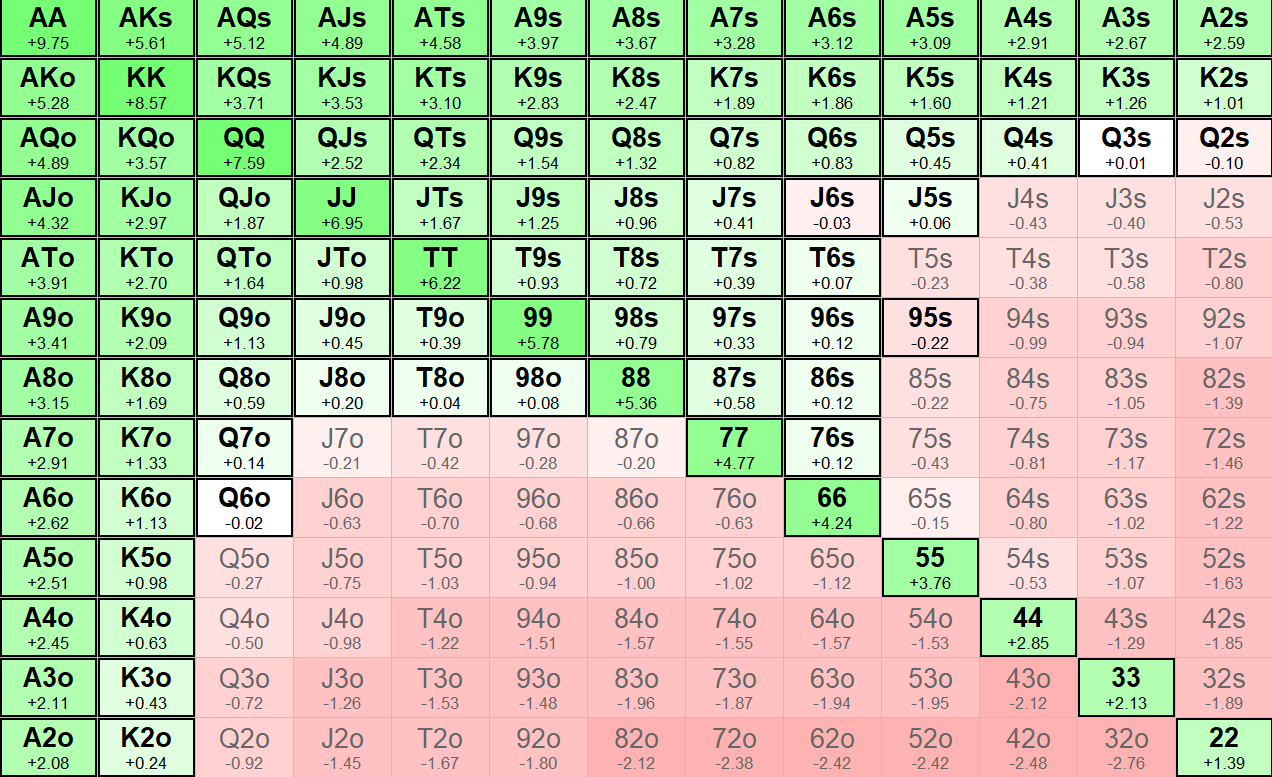
We call with the top 20.8% of hands, which is wider than I expected already.
I then adjusted HRC to make it so my opponent shoves 100% of hands, except for TT+ and AK. I figured the same opponents would try and milk extra value with those hands.
Knowing this the solver limps the same range they will be prepared to call, which is 66% of hands and looks like this:
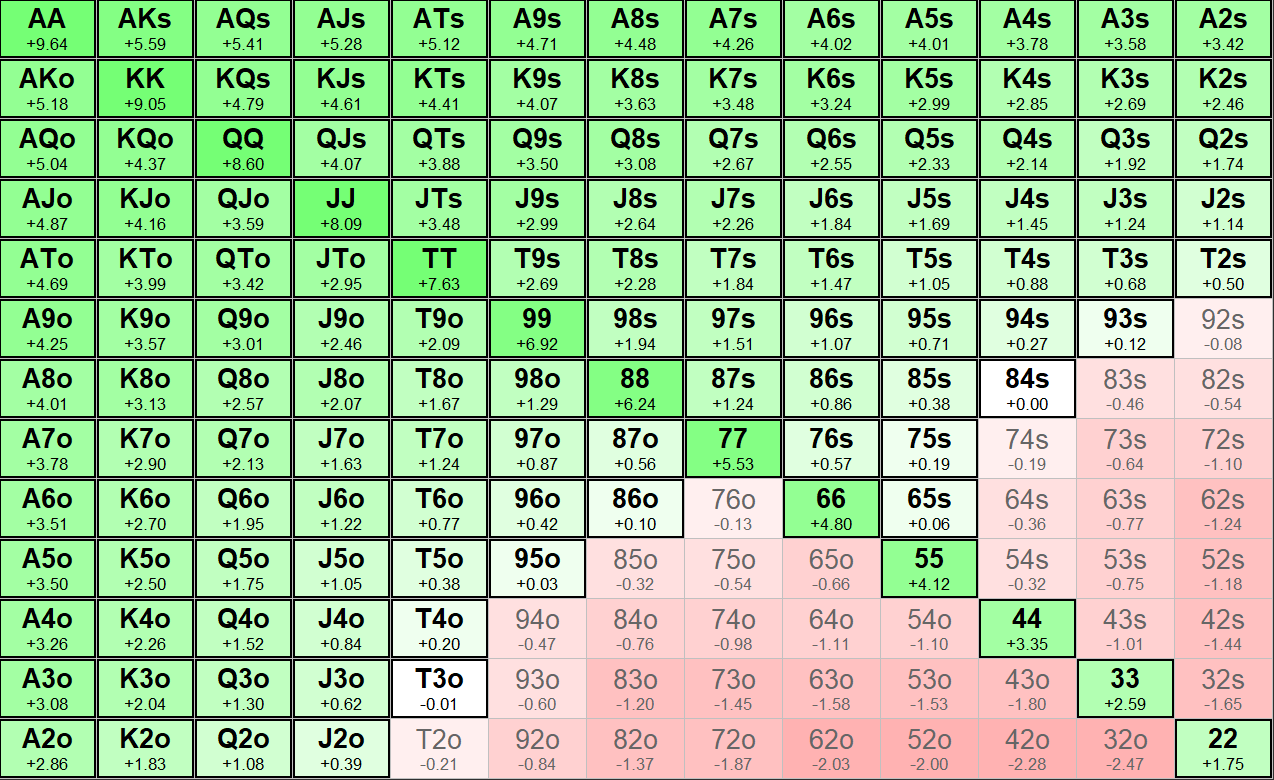
It's crazy to me that we are supposed to limp/call with hands like 94s. The example hand I gave was Chip EV, no doubt this will be tighter with ICM being a factor.
I assumed the reason for this had to be because antes are involved, making it profitable to get it in behind because of all the extra chips. To a lesser extent, the fact our opponent's range is capped will have played a role.
I ran it again with no antes, and it didn't change much. So I ran it again but included the TT+ and AK hands as well in the BB's shove range, and that did tighten the range to 55% of hands:
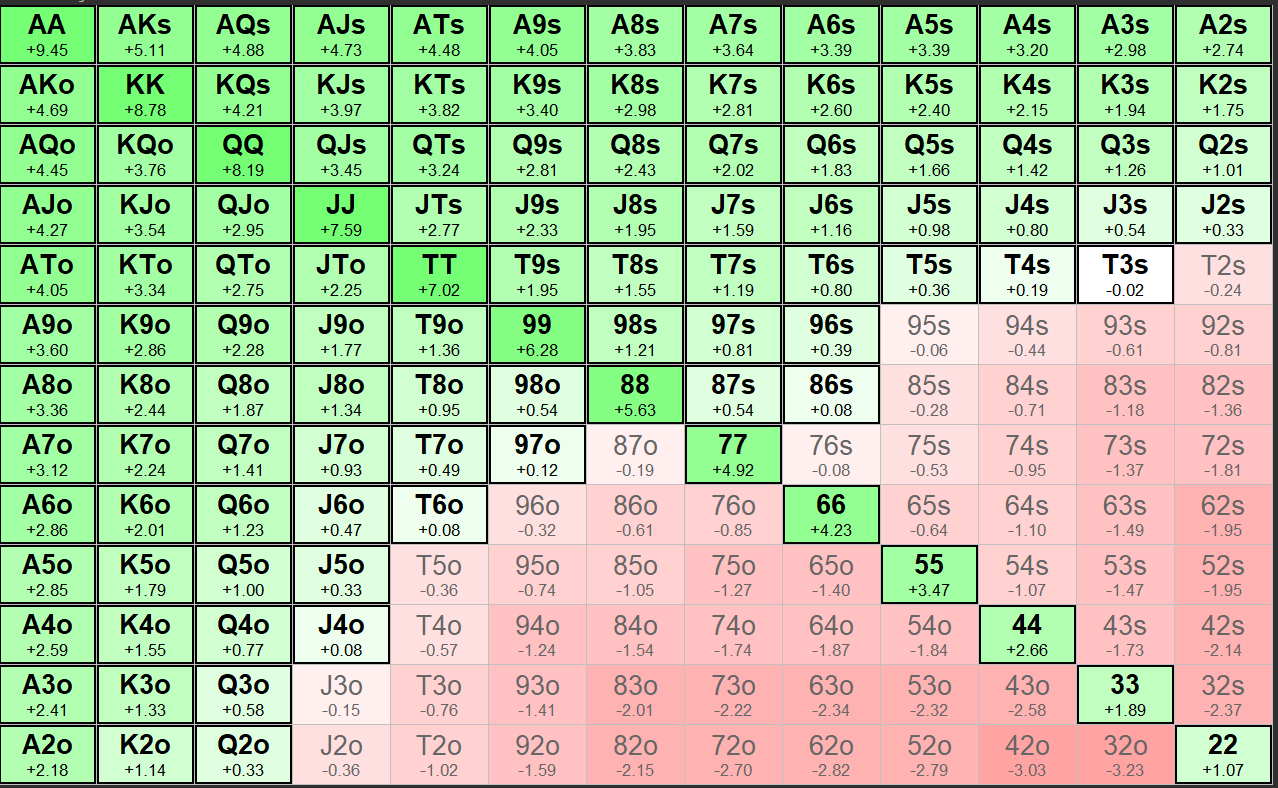
When our opponent shoves 100% of hands, we can call 55% of our time. However, when they are capped, we can call 65% of the time,
Either way, this was quite mindblowing to me, as I had only been limp-calling the top 20% of hands when I was quite sure my opponent was shoving everything. Rather than this helping me identify an exploit, it made me realise I had been way too tight in this scenario.
Previous self study articles
- Playing against disconnected players
- Overbetting with Ace King
- Why do we check back with Range Advantage?
- Why do I turn top pair into a bluff?
- How I use ICMIZER
- How wide can we go with Antes?
- Why can we bluff missed straight draws more than missed flush draws?
- How to play a strong underpair on a wet board
- How to play a 15BB stack
- How often does Villain have an Ace?
- Why do we not check/raise with the nut flush draw?
- Why do we bet small on the turn?
- When do we open shove the flop?
- The difference between SB and BB defends
- Blocker/Unblocker
- How to pick your bluffs
- When NOT to bluff a big draw
- Which hands over realise equity?
- When to check to induce bluffs on the river?
- What do we do when the check/raise backfires?
- The let's keep it friendly bet
- Post flop ICM analysis
- How do bounties change post flop strategy?
How do you study away from the tables? Let us know in the comments:
