


PokerStrategy.com: How to start your poker career
In a single article, we have collected all the info you need for a successful start in the world of online poker.
Before you get started - the basics!
The great thing about poker is that you can start playing for real money without risking your own bank balance. That's because online poker rooms give away free starting money to give you a taste of the game. We have some of the best free poker money deals from €5 free at bet365 to $88 for free at 888poker.
You are required to make a deposit into a new account to activate the free money offer, for example if you donate $20 you get a free $20, meaning you actually have $40 to play with. In many cases the free poker money is more than the required deposit, for example a deposit of £10 to Betfair Poker gets you €25 in benefits. Pick one (or more) rooms and get started today!
Play real money poker for free
Now you are playing poker for real money at no risk to your bank balance, the rules have to be clear! Skip the following video only if you already know how poker is played:
Poker also involves psychology
Don't try this at home! In this hand, you can witness one of the best players in the game taking care of business. His great bluff only works because besides perfectly reading his opponent Tom "durrrr" Dwan is also familiar with hidden probabilities.
Jump-start your career with our beginner strategies!
Games are learnt by playing them. In the beginning, you should first gain some experience and develop a feel for the game. Here are out best strategies for beginners:
- Beginner strategy for cash games (recommended)
- Beginner course for tournaments
- Beginner strategy for Sit & Go
- Beginner strategy for Spin & Go
Now take a look over the shoulders of our more experienced players:
Play Loose, Win Big
Climbing the Stakes
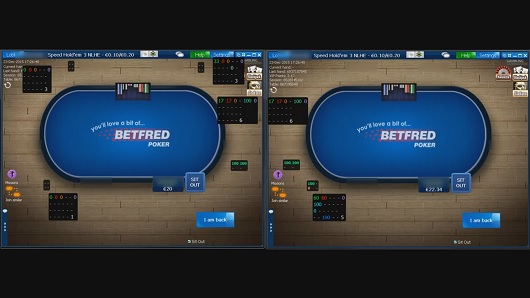
Fishing on Speed
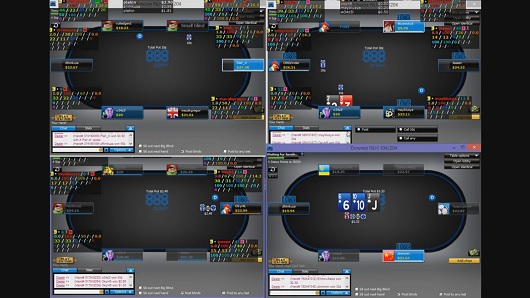
Crush NL20 with w34z3l
So far, your approach to the game will still be a bit static. In order for you to play more freely, enabling you to make your own decisions, we've created a video for every single hand you can be dealt. Besides specific tips for each possible hand, you will also learn more about the relevant concepts:
| AA | AKs | AQs | AJs | ATs | A9s | A8s | A7s | A6s | A5s | A4s | A3s | A2s |
| AKo | KK | KQs | KJs | KTs | K9s | K8s | K7s | K6s | K5s | K4s | K3s | K2s |
| AQo | KQo | QJs | QTs | Q9s | Q8s | Q7s | Q6s | Q5s | Q4s | Q3s | Q2s | |
| AJo | KJo | QJo | JJ | JTs | J9s | J8s | J7s | J6s | J5s | J4s | J3s | J2s |
| ATo | KTo | QTo | JTo | TT | T9s | T8s | T7s | T6s | T5s | T4s | T3s | T2s |
| A9o | K9o | Q9o | J9o | T9o | 99 | 98s | 97s | 96s | 95s | 94s | 93s | 92s |
| A8o | K8o | Q8o | J8o | T8o | 98o | 88 | 87s | 86s | 85s | 84s | 83s | 82s |
| A7o | K7o | Q7o | J7o | T7o | 97o | 87o | 77 | 76s | 75s | 74s | 73s | 72s |
| A6o | K6o | Q6o | J6o | T6o | 96o | 86o | 76o | 66 | 65s | 64s | 63s | 62s |
| A5o | K5o | Q5o | J5o | T5o | 95o | 85o | 75o | 65o | 55 | 54s | 53s | 52s |
| A4o | K4o | Q4o | J4o | T4o | 94o | 84o | 74o | 64o | 54o | 44 | 43s | 42s |
| A3o | K3o | Q3o | J3o | T3o | 93o | 83o | 73o | 63o | 53o | 43o | 33 | 32s |
| A2o | K2o | Q2o | J2o | T2o | 92o | 82o | 72o | 62o | 52o | 42o | 32o | 22 |
Time for a break and a bit of entertainment
Before diving deeper into the content, you should allow yourself a small break in our fun & facts section in order for the things you've learnt so far to sink in:



The basics to develop your own game
After learning the basis of the initial strategy, you'll start to develop your own game. You'll learn to understand the fundamental correlations, to express your approach in specific ranges and to derive your winning probabilities from that.
Assessments like "My opponent bluffs a lot!" will turn into a more detailed analysis like: "I assume that my opponent is bluffing here with AQ, AJ, QJ, JT while only betting AA, KK, AK as the best hand."
The basics
Ranges & Equity
Hand Reading & Exploits

The main factor for playing successfully is analysing and exploiting the weaknesses of your opponents. The analysis of your opponent's playing style is called hand reading, while using the gained knowledge about your opponent's game to your advantage is called exploiting.
Hand Reading
- The Five Player Types
- The Average Range
- The Funnel Principle
- Things to Consider at Showdown
- Four Tips for Successful Hand Reading
- The Value to Bluff Ratio
- Notes
Exploits
Playing with an adaptive game plan

The next step in becoming a great poker player is being able to reasonably adjust your entire range in any given situation. This enables you to notice other frequency-based leaks in your opponent's game and to shape ranges beforehand in order to always have the optimal range in the right situation.
Game Plan
- Game Plan: Introduction
- Range Protection
- Steal-EV
- NL 6-max Preflop Ranges
- Calldown Frequencies
- Calldown Frequencies: River
- Barreling Frequencies
- Barreling Frequencies: River
Seeing the bigger picture
Of course, the above is only a small part of what PokerStrategy.com has to offer and you will be able to find lots of more content on our website on any conceivable topic.
On a final note, we would like to point you to an interview with one of our most successful players, Polish coach and high stakes player vicktor:
NL100 to High Stakes in a Year: Myth or Reality?
We also recommend thinking outside the box once in a while, for instance with this psychology lesson, helping you to generally get ahead in life:
Video Series: Setting and Reaching Goals
The team of PokerStrategy.com wishes you lots of fun and success during your poker career!
